


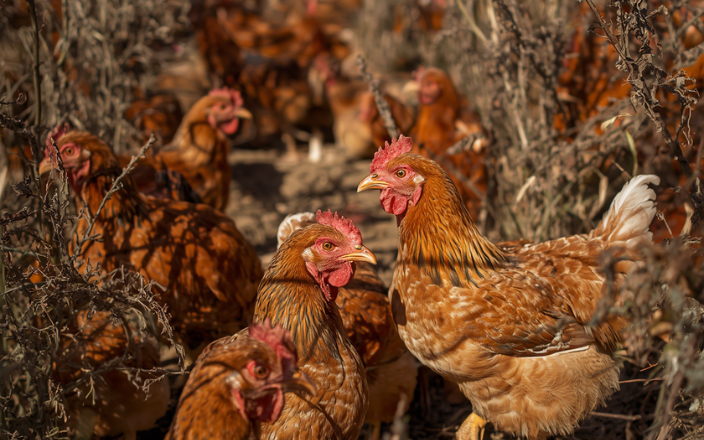
France is facing its deadliest agricultural crisis in decades: an extreme heat wave has killed hundreds of thousands of poultry in Brittany and Pays de la Loire, overwhelming carcass collection services and forcing emergency measures. Authorities and farmers warn this event highlights the vulnerability of Europe’s food systems to climate change1.
Record-Breaking Temperatures
- France recorded 44.3°C (111.7°F) in Pissos, the hottest day since records began in 19472.
- Paris reached 40.9°C, setting a June record for the capital.
- Météo-France confirmed June 24–25 as the hottest days ever documented in the country.
Poultry Death Toll
- Hundreds of thousands of birds died in Brittany and Pays de la Loire, which together account for nearly 60% of France’s poultry flock.
- Farmers reported catastrophic losses:
- Stéphane Delapré in Normandy lost half of his 17,600 chickens in one day.
- Clement Blanchard in Pays de la Loire saw 700 chickens die in days, compared to a normal rate of 1–2 per day.
Emergency Measures
- Carcass collection services collapsed under the scale of deaths, forcing authorities to allow on-farm burials until July 1.
- Farmers were advised to use sawdust or wood shavings to absorb fluids from carcasses while awaiting disposal.
- Veterinary experts explained poultry are highly vulnerable because they lack sweat glands and rely on rapid breathing to dissipate heat, which becomes fatal under extreme temperatures.
Wider Agricultural Impact
- The heatwave disrupted grain harvests, forcing farmers to work at night.
- Milk output and crop yields are expected to decline, while food prices may rise across Europe3.
- France’s nuclear power plants reduced output by 7% of national demand due to cooling water shortages.
Climate Change Connection
- Experts link the heatwave to an Omega block weather pattern, trapping heat over Western Europe.
- Poultry deaths expose systemic risks: poor ventilation, high stocking density, and inadequate cooling systems in barns3.
- Adaptations such as misting systems, emergency fans, shaded housing, and cooler water supplies are increasingly seen as essential for survival.
Conclusion
The French poultry catastrophe underscores how climate change is no longer a distant threat but a direct disruptor of food security. With hundreds of thousands of birds lost, overwhelmed infrastructure, and rising consumer risks, the event is a wake-up call for Europe’s agricultural resilience.
Sources:
1. Extreme heat wave in France kills hundreds of thousands of poultry (2026).
2. Dozens dead, temperature records broken as Europe swelters (2026).
3. Hundreds of thousands of poultry deaths in France reveal Europe’s farming heat risk (2026).