Disinfection of Fertile Broiler Breeder Eggs
Eggshells naturally contain a mixed microorganism community or microbiota with bacteria, fungi, protozoa, mycoplasma, and even viruses originating from the hen’s cloaca and reproductive tract. Bacterial counts will range from hundreds (300-500) to thousands of colony-forming units (CFU) within minutes. One day after the egg is laid, the bacterial count can reach 20,000-30,000 CFU.
In contrast, dirty eggs can have more than 80,000 CFU bacteria on the eggshell surface and organic matter that protects them from sanitizers and disinfectants. However, contamination primarily arises from dust, litter, excreta, other broken eggs, contaminated surfaces, equipment, and hands. Eggshell integrity and manipulation play a pivotal role in controlling pathogens.
- Eggshell microorganisms from hens are a fundamental component of egg protection mechanisms, chicken immunity, and microbiota development.
- Excessive egg disinfection can reduce microbiota diversity and adversely affect immune development in newly hatched chicks.
- This factor should be considered when implementing egg sanitizing and disinfection procedures.
- Clean eggs from healthy, pathogen-free breeder flocks with intact eggshells and good cuticle may not require disinfection before incubation, without causing internal contamination or chick infection.
On the other hand, the sanitization and disinfection of surfaces, equipment, and hands that will come into contact with eggs are always required. Once the egg is laid, a change of temperature occurs that generates a vacuum in the egg’s internal structure, allowing the surface bacteria to enter through the pores. This natural phenomenon can be enhanced by washing or spraying eggs with water or solutions at temperatures below 32 °C.
Egg Cuticle Integrity During Disinfection
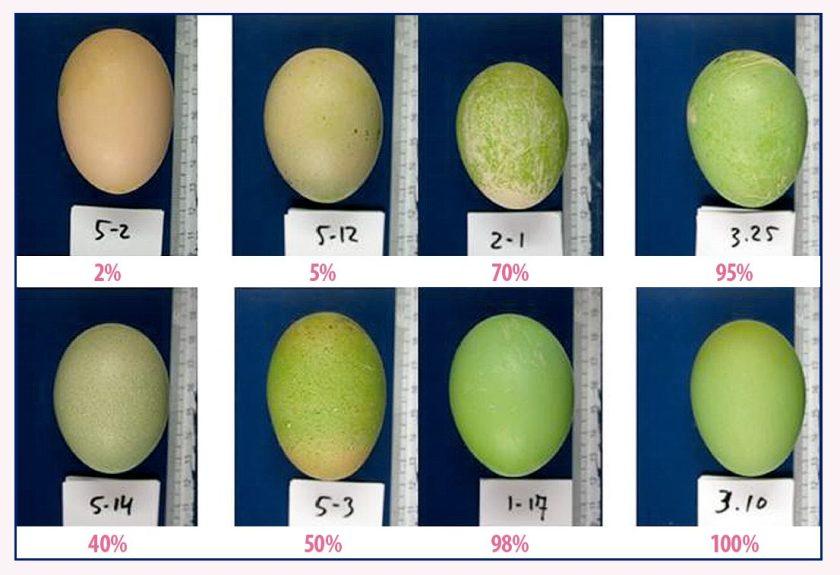
Additionally, it is important to consider that the part of the egg most exposed to the disinfectants is the outermost organic layer, the cuticle, an important barrier to microbial invasion. Any damage to the cuticle due to sanding, washing, or disinfecting eggs may have serious consequences with recontamination during egg storage and incubation (Figure 1).
Under commercial conditions, reducing microbial contamination on eggshells through effective cleaning and disinfection programs is fundamental to preventing contamination of eggs and chicks and maintaining good performance. This is more important in antibiotic-free systems or for integral pathogen control programs.
The need for egg disinfection
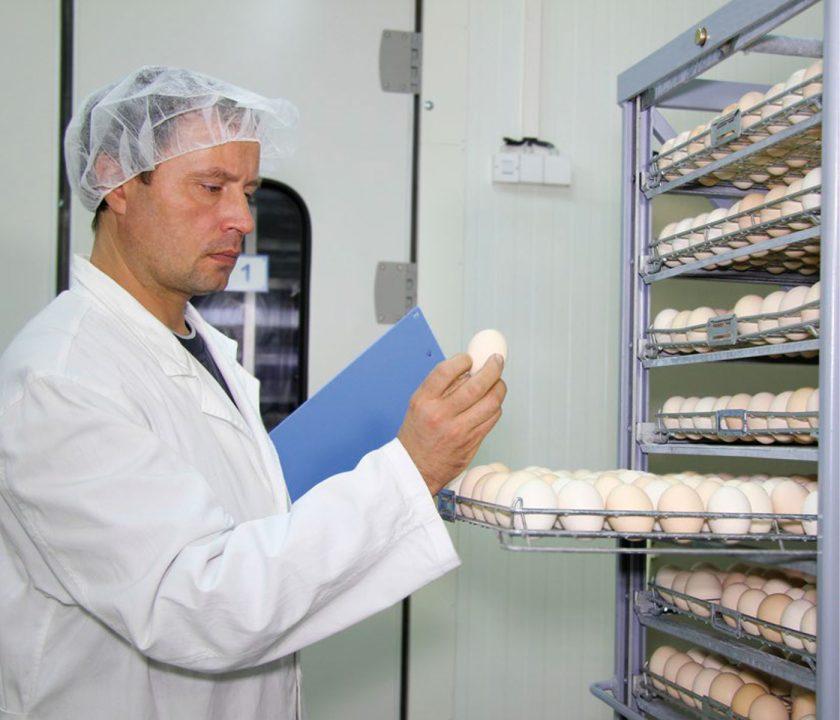
The need for egg disinfection has been recognized since the early 1900s. Disinfecting commercial hatching eggs before incubation is a common strategy to reduce potential vertical transmission of bacterial, fungal, viral, and mycoplasma infections from the eggshell to one-day-old chicks, which may persist in birds, contaminate poultry products, and eventually reach the end consumer.

The objective of egg disinfection is to reduce microbial counts and minimize adverse effects of contamination whilst causing as little damage to the developing embryo, the eggshell, and egg microbiota diversity as possible. Then, independently of the procedures selected for this purpose, a balance must be achieved between these objectives.
Egg disinfection with formaldehyde or paraformaldehyde
Fumigation with formaldehyde or paraformaldehyde has been the most widely used disinfectant worldwide for more than a century.
- Formaldehyde is inherently hazardous and corrosive for farm and incubation equipment.
- Ensuring proper ventilation after application and the use of appropriate protective equipment are essential.
- It is never recommended to fumigate these products during the first 9 days of incubation.
- Repeated and prolonged exposure to formaldehyde can harm human health and may also affect the mucosa of chickens.
- In the presence of an oxidizing agent and a small amount of water, formaldehyde spontaneously polymerizes to form solid paraformaldehyde, which coats the eggshell during fumigation.
Formaldehyde Protocols for Egg Disinfection
The optimal disinfection of fertile eggs typically involves using 4 to 6.07 g/m³ of paraformaldehyde to reduce bacterial contamination on eggshells. However, protocols vary significantly with product concentration. Alternatively, egg disinfection before incubation with formaldehyde gas should have a minimum concentration of 600 mg/m³ (489 ppm) for at least 20 minutes and at 25 oC (room temperature). This concentration can also be obtained with 11 mL/m³ of 40% formalin, typically prepared by mixing 10 g of paraformaldehyde with 30 g of potassium permanganate in 45 mL of 40% formalin at 21 °C.
Smaller amounts of formalin can be used in chambers by combining 1.2 mL of formalin (37.5%) with 0.6 g of potassium permanganate (KMnO4) per cubic meter, yielding a concentration of 565 mg/m3 for a maximum of 20-minute exposure.
These concentrations should not damage the eggshell cuticle or cause changes in egg conductance. It is feasible that formaldehyde gas, which diffuses into the egg during early embryonic development, alkylates the nitrogen atoms of purine and pyrimidine bases in DNA and RNA, thereby inhibiting their function. This, in turn, can block embryonic development at an early stage, even before incubation.
Developing embryos are particularly sensitive to formaldehyde gas between 24 and 120 hours of incubation, or even up to 9 days of incubation, and embryonic mortality increases if exposed during this period.
- The concentrations previously discussed are enough to kill 99.8% of microorganisms after 20 minutes of exposure.
- Higher concentrations of formaldehyde (1,696 mg/m3 and 2,827 mg/m3) have not demonstrated improved efficacy.
- After completing the disinfection process, a minimum of 10 minutes of exhaust time is required before opening the disinfection chamber.
Formaldehyde Limits on Hatchability
Some microorganisms persist after formaldehyde disinfection, even after 3 hours of exposure. Eggs heavily contaminated (floor or dirty eggs) with microorganisms, with counts of 105 CFU or more, show a lower reduction in microorganisms than those with clean eggshells, reaching a maximum of 104 CFU after 30 minutes of exposure. Hatchability can be reduced by up to 8% when eggs are exposed for more than 20 minutes to formalin concentrations of 56 mL formalin and 28 g KMnO4, releasing 747 mg formaldehyde/m3.
The effective concentration of formaldehyde depends upon the temperature in the fumigation chamber. At an incubation temperature of 37.5 °C, the terminal formaldehyde concentration for effective 20-minute disinfection should be at least 6-7 mg/ft3 (212-247 mg/m3). At room temperature (25 °C), the value should be at least 17 mg/ft3 (601 mg/m3). If a 10-minute exposure period is used at an incubation temperature of 37.5˚C, the maximum final formaldehyde concentration should be 25 mg/ft3 (883 mg/m3).
Formaldehyde Exposure
However, formaldehyde disinfection is recommended for periods of no more than 20 minutes at temperatures not exceeding 25 °C to avoid adverse effects on embryo development. Exposure exceeding 40 minutes or 32 oC is always detrimental to incubation parameters.
- Studies using electron microscopy have shown that pre-incubation fumigation of eggs for as little as 20 minutes adversely affects the tracheal epithelial cells of 18-day-old embryos and 1-day-old chicks (Hayretdag and Kolankaya, 2008).
- Fauziah et al. (1996) reported that exposure of hatching chicks to 130 ppm formaldehyde vapour during the last 3 days of incubation had adverse effects on the health of chicks.
- Moreover, Zulkifli et al. (1999) reported that exposure of hatching chicks to 23.5 ppm formaldehyde vapour resulted in poor production performance.
Fumigation with formaldehyde may have different effects on embryos obtained from flocks of different ages. Higher embryo mortality is observed in embryos of young-parent stock. Smaller eggs have a higher surface-to-mass ratio, a thinner cuticle, and would absorb a relatively greater amount of fumigants than larger eggs. Thus, embryos in smaller eggs may be exposed to a higher dose of fumigant when the gas penetrates the shell and negatively affects the germinal disc. In contrast, eggs from older hens have a lower surface-to-mass ratio and thicker cuticles, thereby reducing the effectiveness of the fumigant.
Alternatives to formaldehyde
Since the 1990s, the poultry industry has sought alternative methods of egg disinfection that do not rely on formaldehyde. Physical, chemical, and organic methods have been evaluated.
- Diverse methods of disinfecting fertile eggs have yielded highly heterogeneous results, attributable to variations in dosages, treatment durations, application methods, combinations of products in a single treatment, and the use of bacterial challenges.
Most reports indicate that the evaluated products can reduce microbial loads, and no significant differences in hatchability have been observed. Even when sanitizer concentration increased, hatchability was unaffected and was slightly higher than with formaldehyde. However, depending on the product concentration and the time of exposure, some numeric differences in hatchability are observed, and some lesions in chicken tissues have been reported.
Exposure to ultraviolet light has been the physical method evaluated. The eggs are exposed to UV light at a mean intensity of 8.09 mW/cm2 for 120 s. Ozone gas is used at 5-15 ppm for 30 minutes.
Chemical Disinfectants
- Chemical products evaluated include ozone, halogens such as sodium hypochlorite and chlorine dioxide, and oxidant disinfectants (peroxygen and peroxyacetic acids, hydrogen peroxide (H2O2), glutaraldehyde-quaternary ammonium, peracetic acid, benzalkonium bromide, propionic acid, oxidation of electrolyzed water, and slightly acidic electrolyzed water (SAEW).
- Other disinfectants are generally applied via low misting, which produces a very fine fog with a maximum droplet size of 10 µm, or via nebulization, which produces smaller particles (<5 µm).
- The H2O2 is applied to eggs by spraying a fine mist of a 3 or 5% vol/vol (1280 ppm) aqueous H2O2 solution at approximately 0.69 mL/egg.
- Nebulization with 6% H2O2 can cause air quality to exceed recommended safety limits.
Glutaraldehyde–Quaternary Ammonium vs. Peracetic Acid in Egg Disinfection
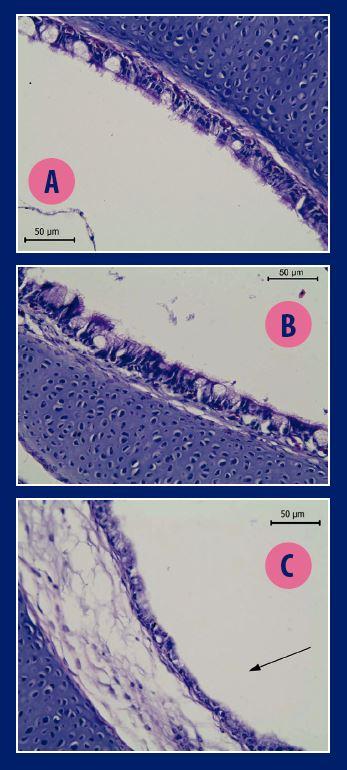
Several combinations of glutaraldehyde with quaternary ammonium are available in the market. These products are highly effective in reducing bacterial loads in eggs. However, a few reports indicate that hatching may have negative effects on the mucosa and ciliated epithelium of hatchlings (Figure 2), effects not observed with peracetic acid. Peracetic acid is applied to eggs by spraying a fine mist of 0.3% PAA with a handheld manual sprayer. The use of chemicals also requires observing exhaust times before the disinfection chambers are opened.

Electrical Chemical Activation (ECA)
Electrical Chemical Activation (ECA) of a saturated sodium chloride solution has been developed by the Dutch company Watter BV to deliver a disinfectant solution that contains active chlorine compounds, hydroxyls, hydroxyl radicals, and oxygen-containing compounds.
The SAEW with a pH value of 5.0-6.5 is a novel disinfectant for egg sterilization at 150 mg/L ACC, 0.5 mL/egg spray volume, and a disinfection time of 180 s, owing to its high efficiency and lack of residue. The disinfecting efficacy of SAEW has been comparable to that of formaldehyde or benzalkonium bromide, and eggshell quality and hatching performance have been equal to or better than controls.
For visibly dirty eggs, adding a chlorine wash can improve disinfection efficiency and maintain a similar microflora after the final disinfection step.
The application of natural or biological products has also been evaluated in multiple experiments.
- These products include propolis, allicin, oregano essential oil, garlic, thyme essential oil, lysozyme, clove oil, eucalyptus extracts, trans-cinnamaldehyde nanoemulsion, lavender oil, cayenne pepper, essential oils of Citrus aurantifolia and Ocimum basilicum, and phage suspension.
- In most cases, the efficacy in reducing bacterial loads is comparable to that of chemical products.
- Some tests indicate no significant differences in hatchability, but in many cases, reductions in average hatchability values are evident.

Conclusions
- Egg disinfection in many countries still relies on formaldehyde, but there is a clear trend toward alternative methods and chemical products.
- There are multiple chemical options, but to minimize residues, cuticular and chick’s mucosa damage, and costs, options such as ECA and SAEW are gaining market share.
- Even natural or biological products are receiving greater attention, at least for research purposes.