


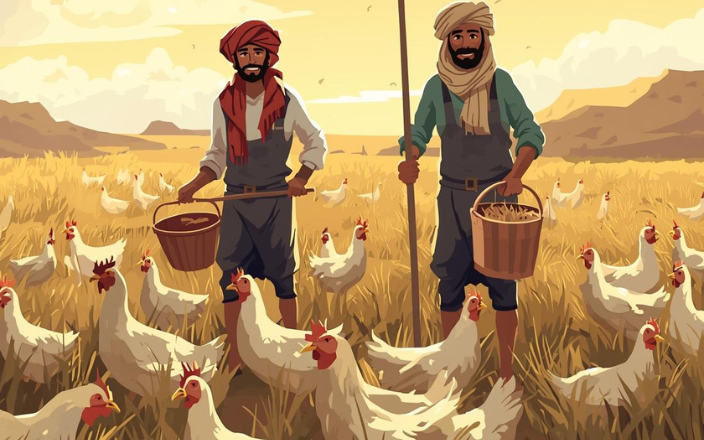
Egypt poultry sector is experiencing long‑awaited relief as feed prices, which had soared to unprecedented levels earlier in the year, have now fallen by nearly half. According to Sameh El‑Sayed, head of the poultry division in the Chamber of Commerce in Giza, feed prices dropped from EGP 40,000 (US$842) per tonne to EGP 19,000–22,000 (US$399–462) per tonne in December 2025.
- This dramatic decline follows a period of severe pressure on the broiler meat industry caused by soaring feed costs and weak farm‑gate poultry prices.
- Government intervention, along with eased import barriers, has been key to allowing essential feed components—corn, soybean, and wheat—to re‑enter the market without restrictions.
Reforms and market disruptions
- The crisis in feed availability did not emerge in isolation.
- In December 2024, the Egyptian government introduced a controversial reform, appointing the Future of Egypt agency as the new state grain buyer, replacing the General Authority for Supply Commodities (GASC).
- This transition caused significant disruptions in grain imports, with Egypt’s total imports falling by more than 27% in the first half of 2025, and the government’s share of procurement dropping by 57%.
- These shortages contributed directly to feed scarcity throughout 2025.
Poultry farms on the brink
Before the recent price relief, the sector was facing a near‑collapse. Up to 40% of poultry farms were at risk of shutting down due to the combined effects of high feed prices and depressed poultry selling prices. Many breeders were forced to cull their flocks when they could no longer secure enough feed, flooding the market with poultry and further depressing prices. This feedback loop pushed producers deeper into financial distress and threatened long‑term production capacity.
Short‑term relief, long‑term uncertainty
- While the reduction in feed prices has brought immediate relief, the future of Egypt’s feed and poultry industries is far from stable.
- Egypt continues to struggle with foreign currency shortages, which complicate import planning for grain and other essential commodities.
- The government is attempting to cut its massive wheat import bill by boosting local production, promoting water‑efficient agriculture, and redefining private‑sector roles in procurement.
- However, progress has been limited, and earlier goals—such as reducing wheat imports by one million tonnes annually—have not been fully achieved.
Conclusion
The halving of feed prices offers crucial breathing room for Egypt’s embattled poultry producers. Yet the sector’s long‑term resilience will depend on broader structural reforms, reliable import flows, and a more stable economic environment. For now, producers welcome the relief—but uncertainty still hangs over the future of Egypt’s poultry industry.
Sources: Available upon request