


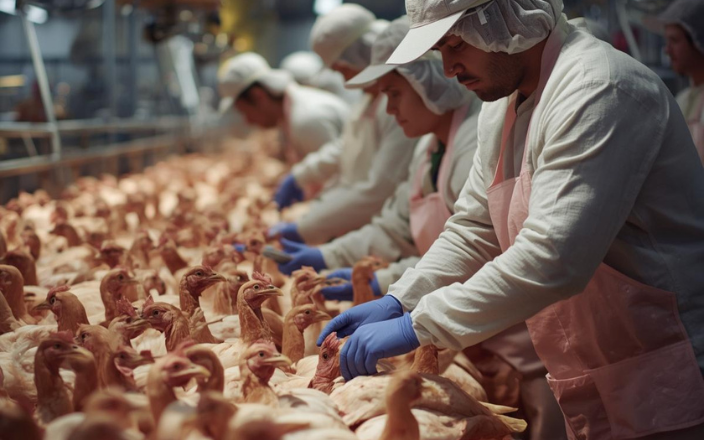
France has issued new public‑health guidance urging seasonal influenza vaccination for professionals who work closely with poultry. The recommendation targets individuals regularly exposed to highly pathogenic avian influenza (HPAI), including poultry farmers, veterinarians, animal‑inspection officers, and wildlife‑surveillance personnel. Authorities note that the French health insurance system fully covers the cost of this vaccination for eligible workers.
Rationale behind the recommendation
- According to the French Agency for Food, Environmental and Occupational Health & Safety (Anses), vaccinating exposed professionals reduces the risk of co‑infection between seasonal flu viruses and avian influenza viruses.
- Such dual infections can facilitate viral mixing, potentially increasing the likelihood of a new strain capable of infecting humans more easily or enabling human‑to‑human transmission.
- This strategy is designed to protect workers and limit the evolution of more dangerous influenza variants.
Rising Avian Influenza cases in France
Despite extensive avian‑influenza vaccination campaigns in poultry over the past two years, the number of HPAI cases in professional poultry farms has risen sharply. As of December 5, French authorities recorded 89 cases, concentrated mainly in western regions of the country. This uptrend prompted the Ministries of Agriculture and Health, along with Anses and the Directorate General for Public Health, to intensify their preventive, surveillance, and control measures.
Human health considerations
- Avian influenza occasionally infects humans, with several hundred cases reported worldwide in recent years.
- However, France has not reported any human cases to date, and global health monitoring indicates no evidence of human‑to‑human transmission.
- Nevertheless, the circulation of HPAI in various species—including recent detections in four foxes and an otter in France—signals a widening ecological footprint of the virus.
- This increases opportunities for spillover events, making protective measures for at‑risk workers even more crucial.
Environmental and wildlife factors
Migratory birds continue to play a central role in spreading HPAI across Europe and within France. High viral circulation levels, especially during migration periods, heighten exposure risks for both farmed birds and wildlife. With multiple animal species now affected, authorities stress the importance of combining vaccination, stronger biosecurity measures, and coordinated surveillance efforts to reduce viral transmission across ecological boundaries.
Conclusion
France’s advisory underscores a proactive strategy to mitigate influenza risks at the animal‑human interface. By vaccinating high‑risk professionals against seasonal flu, health authorities aim to curb co‑infection risks, support disease‑control efforts, and minimize the emergence of more transmissible influenza strains. Ongoing cooperation across health, agriculture, and environmental sectors remains essential to managing the evolving threat of avian influenza.
Sources: Available upon request