


A Renewed Hatchery Health Alert
Hatchery health is receiving renewed attention following a major 2026 Salmonella outbreak linked to backyard poultry, with U.S. health authorities tracing outbreak strains to eight hatcheries. The investigation involved more than 1,200 human cases across 46 states and Puerto Rico, highlighting the potential consequences of introducing contaminated chicks into the poultry supply chain (1).
The outbreak investigation also identified antimicrobial resistance in several Salmonella strains, adding another layer of concern for poultry health professionals and emphasizing the importance of early detection and control of bacterial hazards associated with hatchery operations (1).
Hatchery Surveillance Becomes More Critical
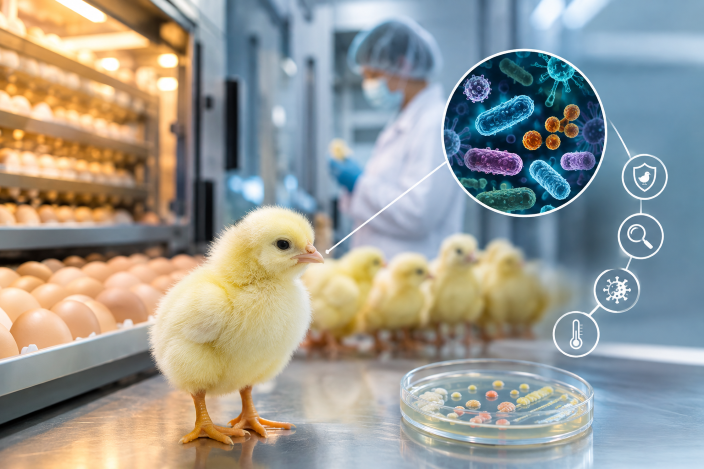
The issue comes as the poultry industry places greater emphasis on environmental surveillance and microbial monitoring inside hatcheries. Industry experts have highlighted eggs, water, personnel and air as potential routes through which bacterial and fungal contamination can enter hatchery environments (2).
At the 2026 USPOULTRY Hatchery-Breeder Clinic, flock health and hatchery performance were also major themes, with experts stressing ventilation, sanitation, equipment performance and close monitoring of incubation conditions as key components of preventing early health problems (3).
From Detection to Prevention
The latest developments reinforce a crucial message: hatchery pathology cannot be separated from environmental health. Routine surveillance, rapid identification of contamination sources and strong preventive programs can help protect chick quality while reducing the risk of disease entering downstream production.