


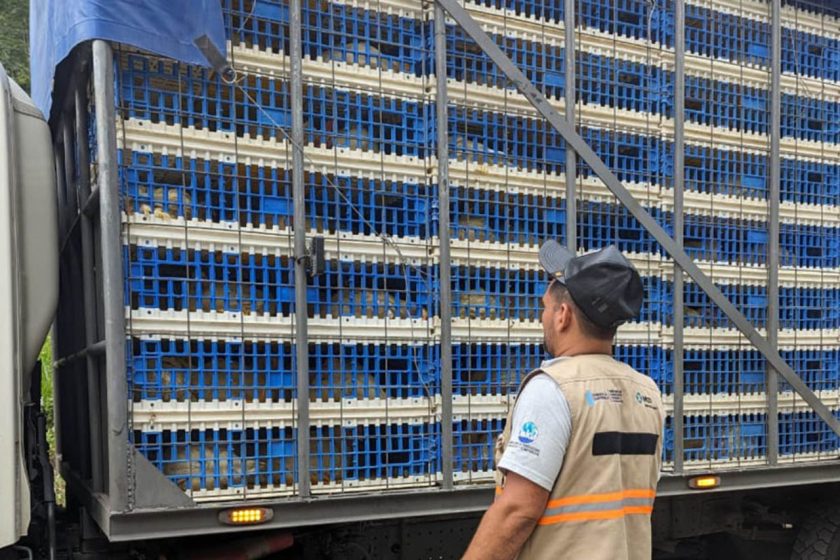
India’s poultry sector grows nearly 7% annually, but pre‑slaughter transport practices continue to raise serious concerns for animal welfare and meat quality.
In a study published in March 2025, researchers examined how different transport durations affect broiler chickens’ health, stress responses, and meat quality under Indian field conditions. The trial involved 120 birds divided into four groups:
- T1: No transport (0 h)
- T2: Short transport (2 h)
- T3: Medium transport (4 h)
- T4: Long transport (8 h)
Meat quality and sensory traits
Meat quality indicators shifted with longer transport times.
- Ultimate pH: Highest in T4 (6.22), lowest in T1 (5.88).
- Drip loss: Ranged from 0.30% to 0.51%, not statistically significant.
- Shear force: Rose gradually, reaching 1.73 kg/cm² in T4.
Sensory attributes declined after four hours of transport.
- Appearance and color: Dropped from 7.2 in T1 to 5.4 in T4.
- Texture: Fell from 6.0 in T1 to 5.2 in T4.
- Juiciness: Declined steadily, lowest in T4 at 5.4.
- Overall acceptability: Highest in T3 (6.4), lowest in T4 (5.6).
Flavor remained stable across all groups, showing no significant difference.
Stress biomarkers
Blood analysis revealed sharp increases in stress indicators with longer transport.
- Creatinine: Rose from 1.36 mg/dl in T1 to 21.4 mg/dl in T4.
- ALT and AST: Both liver enzymes increased significantly with transport time.
- H/L ratio: Climbed from 0.40 in T1 to 1.13 in T4.
- Corticosterone: Nearly doubled between control and transported groups.
Oxidative stress markers also shifted.
- Glutathione peroxidase: Declined sharply, from 1.44 in T1 to 0.04 in T4.
- Superoxide dismutase: Increased significantly, highest in T3 and T4.
- Packed cell volume: Dropped from 32.1% in T1 to 26.8% in T4.
These biochemical changes confirm that prolonged transport disrupts homeostasis and damages liver health.
Implications for poultry welfare
The study concludes that transporting broilers for more than four hours under Indian conditions significantly harms welfare and meat quality.
Shorter journeys reduce stress, improve product value, and protect farmer income. Limiting transport time is therefore essential for both animal welfare and economic sustainability.