


The government of Indonesia is launching a large-scale intervention to rescue poultry farmers currently trapped in a severe pricing crisis, according to a report by Journal Arta.
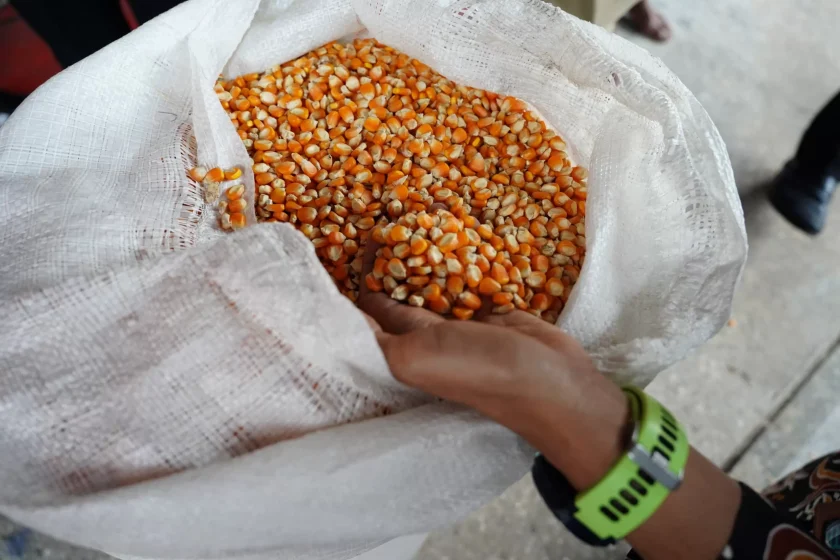
The National Food Agency (Bapanas) has initiated a USD 38 million feed corn subsidy program under the Food Supply and Price Stabilization (SPHP) scheme, aiming to prevent a total collapse of the domestic poultry industry.
Broiler prices at the farm gate have plummeted to a dismal USD 0.72-0.78 per kg. This figure sits far below the production cost, which hovers between USD 1.22 and USD 1.28 per kg. Faced with this unsustainable gap, the government is mobilizing Perum Bulog to distribute 213,200 tons of subsidized corn throughout 2026.
Subsidy rollout reaches 5,543 smallholders
The feed corn subsidy program has been active since May 9. As of June 29, the government has successfully delivered 55,500 tons of corn to 5,543 micro and small-scale farmers across 26 provinces, covering a total poultry population of 53 million birds.
Bapanas Head Andi Amran Sulaiman explained that the government secures the supply by purchasing directly from local farmers at a guaranteed price of USD 0.31/kg.
“We buy early to protect the farmers. We store this as the Government Corn Reserve (CJP) to be released whenever poultry producers need support,” Mr Sulaiman stated.
The corn is then sold to registered cooperatives or farmer associations at a price ranging from USD 0.28 to USD 0.31 per kg, significantly lower than fluctuating market rates.
The wide gap between farm and table
Despite the subsidy, the disparity between producer and consumer prices remains stark.
Maino Dwi Hartono, Director of SPHP at Bapanas, highlighted that while eggs are still sold to consumers at the official reference price of USD 1.67/kg, farmers are receiving as little as USD 1.17/kg. In major production hubs like Blitar and Magetan, East Java, the farm-gate price has even dipped to USD 0.95/kg.
“Our fellow farmers are struggling because of the massive price gap between the market and the farm,” said Mr Hartono.
To bridge this, Bapanas is pushing regional governments to connect high-cost consumer regions directly with farmer associations. This ‘link and match’ strategy aims to improve producer margins without necessarily hiking prices for the end consumer.
Production costs strangle small farmers
The current market crash is largely driven by soaring input costs. With production expenses hitting over USD 1.22/kg, the poultry sector is facing a critical juncture. Smallholders are the most vulnerable, with many fearing they will be forced to shut down operations if prices do not recover soon.
Asep Saepudin, representing the Indonesian Independent Poultry Farmers Association (Permindo), described the situation as a disaster.
“Prices at USD 0.72-0.78 per kg in West Java [on June 27] are unbearable. This is a catastrophe for independent farmers,” he said.
Future market outlook
The government is now looking toward the Free Nutritious Meal (MBG) program to help absorb excess supply.
By encouraging the program’s management to source directly from local poultry farmers starting in mid-July, the government hopes to create a sustained demand floor. While the subsidy program continues, the speed of its distribution remains a key factor.
As the industry navigates this volatile period, officials expect a gradual market recovery. Seasonal factors, including school holidays and increased consumer spending, are projected to provide a much-needed boost for poultry demand in the coming months.
Ensuring a stable supply chain remains the priority to secure the livelihoods of thousands of farmers across the archipelago.