


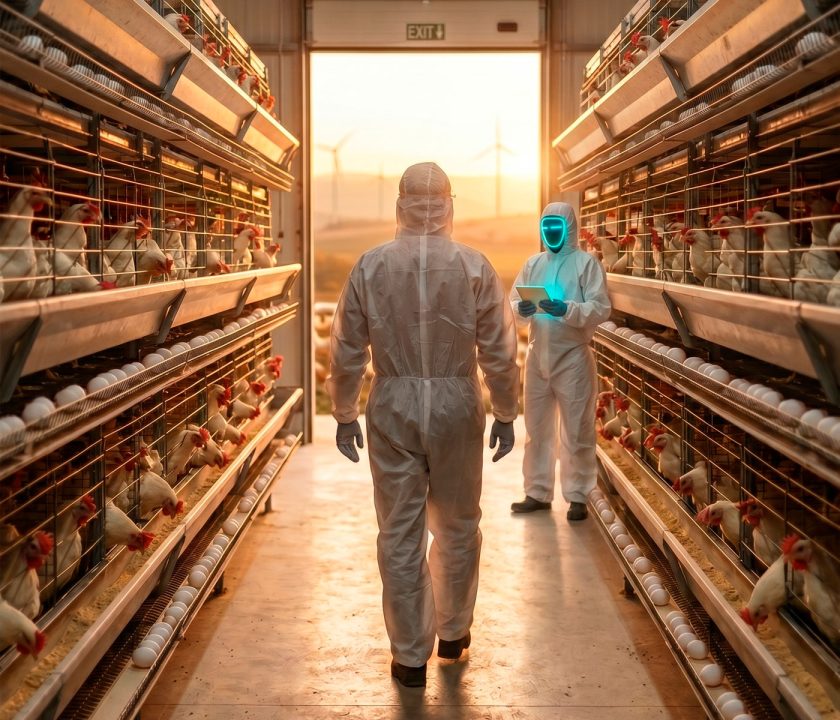
The poultry production chain is still considered “labour-intensive” despite the rapid adoption of technology for most commercial companies worldwide. Modern poultry production has adopted significant automation, reducing the overall demand for labor per bird compared to older systems. However, around the world, the poultry industry faces severe labor shortages in both processing plants, farms, and hatcheries.
- This shortage is driven by an aging workforce, and the physically demanding and time-consuming nature of the work.
- Farm activities need to be performed every day independently of being a weekend or holiday.
- Major activities in hatcheries and processing plants are conducted during times not considered regular office hours and often conflict with modern standard family or social activities.

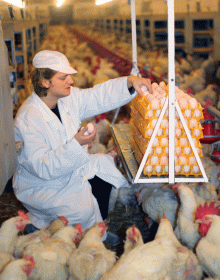
Turnover rates
The turnover rates in poultry processing plants are very high. High turnover industries can exceed 50%, but in many countries poultry companies are observing over 60% of workers in slaughterhouses quitting within 90 days. “Healthy” labor turnover rates for any production sector are around 10%. Higher levels indicate poor work conditions, poor management, low compensation and morale.
The US Bureau of Labor Statistics indicates by November 2024 the manufacturing sector in the USA had 2.4% turnover rates, construction 3.6% and hospitality 5.4%. Experts in human resource management indicate that 42% of the labor turnover is preventable by companies, but maybe this does not apply to the poultry industry anymore due to the competition for human capital with other types of businesses. Consequently, the production system may need to be modified to cover the lack of workers.
Need for skilled workers
Poultry production demands stable and consistent labor and skilled personnel are necessary for the success of the process. Compared to other agricultural sectors that require temporary or seasonal workers that may have low impact on productivity, poultry can be greatly affected by the labor factor.
- Poultry farms often need specialized personnel to monitor automated feeding, drinking behavior, make decisions about feeding amounts, feed and other supplies inventory and orders, climate control, equipment maintenance, and rapid disease detection and interventions in large flocks of several thousand birds.
- Hatcheries, feed mills, and processing plants require skilled personnel to manage and maintain properly the specific equipment of those facilities. Even aspects such as feather sexing and subcutaneous vaccination of newly hatched chicks require abilities, attention, and experience to obtain high accuracy on the results.
Poultry workers are frequently needed in high-density environments. The definition of high density is related to the large numbers of birds produced or processed and high density of equipment and workers present in most facilities. Then, poultry workers require higher technical abilities and team-work skills than those people who work with other animal species or other agricultural sectors.
Additional challenges for poultry workers
Labor in poultry processing plants characterized by high-speed, repetitive, and physically demanding work. The risks of injuries, including carpal tunnel syndrome and knife and sharp tools accidents, slips and falls due to wet floors, and exposure to hazardous cleaning chemicals is higher than in other meat processing sectors. Another common issue reported among poultry workers is the respiratory irritation from the ammonia and small particle matter or dust in farms.
- The Covid-19 pandemic increased the issues observed for more than a couple of decades.
- Once workers exited industry, a great majority did not return, and the evident issues became better known making the poultry sector less appealing than other sectors.
The broiler and turkey industries grapples with a scarcity of workers for tasks ranging from bird catching on the farms to processing within the plants. Processing plants are cold, damp, loud, and often dangerous conditions. Consequently, it is a difficult environment, and workers tend to seek other jobs rather than working in the poultry plants. This industry has relied heavily on immigrant and minority labor for many years. However, governmental policies in several countries are limiting immigration, creating a bigger challenge for the poultry industry.
Strategies to attract and retain poultry workers
Poultry producers will have to make a bigger effort to minimize turnover rates, attract and retain skilled workers. Some of the strategies may include:
- Ensuring wages and benefits match or exceed standards of the local industries.
- Benefits often include transportation, recreational and social activities for the employees and their families.
- Improving company culture to provide career growth and enhancing training for managers to become coaches and motivators able to contribute to the group morale.
- Enhancing the onboarding process to get them involved in the diverse processes and sectors of the job and interested in staying in the company.
- Improving working conditions in breakrooms, restrooms, clothing, personal protective equipment.
- Implementing automation to reduce reliance on manual labor to create less physically demanding roles.

Automation, robotics and AI to address labor shortages
Automation, robotics, and use of sensor technology have become increasingly important in poultry production. Using machine vision and artificial intelligence many robots can develop tasks that for years were limited to humans since standard machines and robotic arms could not have the ability to make modifications when conditions change in farms, hatcheries or processing plants.
In hatcheries, robotic arms have been able to minimize labor in loading and unloading eggs and chicks, de-stack, restack, and transfer trays and crates, and wash trays, baskets, and racks. Equipment can set eggs in trays, identify the correct egg positioning, remove eggs with broken or dirty shells, remove non-viable embryos or contaminated eggs, vaccinate and sexing In-Ovo, and transfer to machines with minimum human assistance. New systems can automatically feather sex, provide accurate eye vaccination, and classify day-old chicks by quality.
- In farms, sensors help with house environmental management, monitoring and reporting issues, robots can already help collect floor eggs, detect dead birds, and facilitate body weight collection, grading, and classification.
- The use of humanoids can soon help to improve these activities, act to solve the issues, pick and dispose mortality, and make these processes more efficient.
The automatic lines in processing plants take care of almost all steps in primary processing, cutting parts, and big parts of deboning. Machine vision helps to detect carcasses for reprocessing and condemnation. Humanoids also have the potential to take care of some of those manual activities.
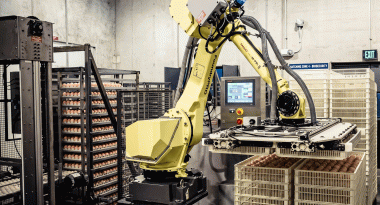

Nevertheless, people still need to manage this equipment, robots, and computer systems.
In the years to come, people will be necessary for people to help in their development of these technologies until these machines and robots reach a reliable level of independence.


- There are many robotic applications under development and variable levels of implementation worldwide.
- But all the experiences indicate that machines can only replace partially poultry workers.
- The challenge with animal production is that there are so many factors involved that require periodic intervention of humans to analyze conditions, make decisions, and take actions.
- We are very far from having totally automated poultry production.
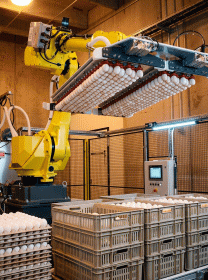

When more automatization, sensors, data and technology are involved it is often necessary that technical and highly skilled personnel are available to intervene anytime independently of being out of the office hours, weekends, holidays, and many times conflicting with personal or family time. This big conflict with common time preferences of workers and professionals is one of the biggest challenges that poultry and animal professionals will still face because birds require constant attention. This trait of animal production differs from factories and offices that can close activities at specific times, at night, and during weekends and holidays.
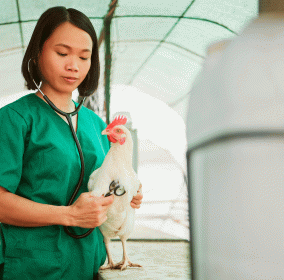
Shortage of poultry veterinarians
There is a shortage of food-animal veterinarians in general in many countries. Despite being one of the sectors better paid in veterinary medicine worldwide, new generations of veterinarians have low interest in food-animal production. In many schools and colleges of veterinary medicine the number of professors specialized in food-animal production has been reducing. There are only six poultry science departments in the USA at this moment, when in the 1940s, there were 45 universities offering this area of knowledge. In many countries, poultry production professors are a minority and classes specifically related to the sector are not taught anymore.
Despite being one of the most common meats consumed globally, commercial poultry production has been receiving criticism from non-governmental groups due to welfare, environmental impact, and working conditions. Those negative comments have been influencing the perception of the public, the work force, and potential students. The interest in animal and poultry production among veterinary students has decreased dramatically in the past decades. Potential solutions to attract more veterinary students to this sector include:
- Reducing the costs of studying veterinary medicine for those interested in animal production.
- Involve veterinary students in technical and professional poultry meetings.
- Include more poultry training opportunities in the curriculum of veterinary schools to provide more awareness about the diverse and exciting opportunities of this business, and its high technical and ethical level.
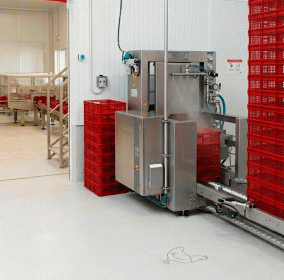
Human resources are pivotal to the success of any production system. We are living in times of societal and educational changes. The poultry industry must adapt to those changes, take advantage of the new technological developments, adopt them quickly, and reconfigure the work force to face the new realities of production.
PDF