


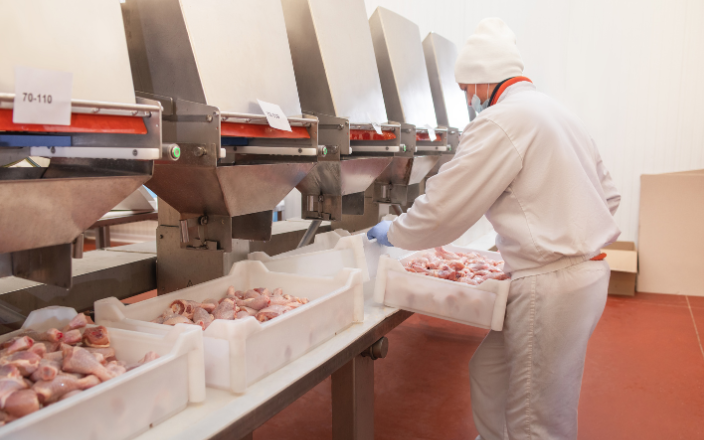
The global poultry industry has evolved far beyond the sale of live birds and freshly slaughtered meat. Changes in lifestyle, urbanization, food safety awareness, and the growing need for convenience have created a distinct and fast-growing segment within poultry, processed or value-added chicken.
- While raw chicken continues to dominate volumes in many regions, processed chicken has emerged as a critical driver of value, brand differentiation, and organized market growth.
- Understanding what constitutes processed chicken, how it differs from fresh, chilled, or frozen poultry, and how it is marketed across regions is essential for industry stakeholders seeking sustainable growth.
What is Processed Chicken?
Processed chicken refers to poultry meat that has undergone intentional transformation beyond basic slaughter and preservation, with the objective of improving convenience, consistency, taste, shelf life, or functionality.
Processing involves value addition, which may include:
- Marination or seasoning
- Breading or coating
- Cooking or partial cooking
- Curing
- Smoking or formulation
- Portioning
- And combining with other ingredients.
Products such as nuggets, sausages, kebabs, patties, marinated cuts, and ready-to-eat meals fall squarely within this category.
In simple terms, all value-added chicken products are processed chicken.
Why Fresh and Chilled and Frozen Chicken are not Considered Processed
Fresh, chilled, and frozen chicken are often confused with processed chicken, especially in emerging markets. However, from a regulatory, nutritional, and marketing standpoint, they are fundamentally different.
- Fresh and chilled chicken involves slaughter under hygienic conditions followed by temperature control to slow bacterial growth.
- Freezing extends shelf life further by lowering temperature, but neither method alters the meat’s natural structure or composition.
No ingredients are added, and the product remains raw poultry. These categories are therefore classified as minimally handled or preserved, not processed.
Advantages of Processed or Value-Added Chicken
For Consumers
- Processed chicken addresses modern consumer needs in ways raw poultry cannot. Convenience is the most visible benefit.
- Ready-to-cook and ready-to-eat products reduce preparation time and simplify meal planning.
- Standardized cuts and formulations provide consistent taste and portion control, which is particularly valued in urban households.
- From a safety perspective, processed products are typically produced under controlled conditions with traceability and quality checks, building consumer confidence.
For Producers
- For producers, processed chicken represents higher value realization per bird.
- Value addition allows better utilization of raw material, reduces wastage, and creates differentiated products with brand identity.
- Processing enables longer shelf life, wider distribution reach, and entry into organized retail, foodservice, and export markets.
- It also reduces dependence on volatile live bird pricing and enables more predictable margins.
The Global Scenario of Processed Chicken Marketing
Europe
Europe represents one of the most structured processed chicken markets globally. Strict food safety regulations, strong cold chain infrastructure, and high consumer awareness define the region.
- Marketing focuses on quality assurance, transparency, ethical sourcing, and nutritional labeling rather than aggressive price competition.
- While fresh and chilled chicken remains dominant, processed products such as ready meals, marinated cuts, and convenience foods continue to grow steadily.
Asia
Asia presents a diverse and rapidly evolving landscape.
- In developed Asian economies, processed chicken is well integrated into retail and foodservice channels.
- In other parts of Asia, traditional consumption patterns coexist with modern formats.
- Marketing strategies emphasize local taste adaptation, affordability, and convenience.
- Export-oriented countries have also positioned processed chicken as a globally competitive product category.
India
India stands out as a unique case. Poultry consumption remains heavily influenced by live bird markets and freshly slaughtered chicken.
- However, processed chicken is gaining ground in urban centers, among younger consumers, and through foodservice and e-commerce channels.
- The Indian market is less about replacing traditional consumption and more about adding new consumption occasions such as quick meals, snacks, and convenience-led formats.
Current Scenario of the Processed Chicken Market in India
Processed chicken in India is still an emerging segment, but its growth rate outpaces that of raw poultry in organized channels. Products such as nuggets, sausages, marinated cuts, and ready-to-cook items are increasingly visible in modern retail and online platforms.
Quick-service restaurants, cloud kitchens, and institutional catering have played a major role in familiarizing consumers with processed chicken. However, household penetration remains limited.
Marketing Processed Chicken Through the 4Ps
Product
Product strategy lies at the heart of processed chicken marketing. Success depends on consistent quality, food safety, taste, and convenience. Clear labeling, portion control, and differentiated product ranges help build trust.
Price
Pricing must balance affordability with perceived value. Tiered pricing allows brands to cater to mass, mid-segment, and premium consumers.
Physical Distribution
Efficient cold chains, reliable logistics, and strong retail partnerships are essential. E-commerce and direct-to-consumer models are expanding reach.
Promotion
Promotion is as much about education as persuasion. Marketing communication must address concerns about freshness, safety, and quality.
Current Trends, Challenges, and Opportunities
Health consciousness, demand for convenience, and flavor innovation are key trends. Challenges include infrastructure gaps, consumer skepticism, and price sensitivity.
Exploring New Possibilities
Future growth depends on consumer education, deeper market penetration, product innovation, and partnerships across retail and foodservice.
Challenges in Marketing Processed Chicken in India
Key challenges include consumer preference for live slaughter, limited cold chain reach, regulatory complexity, and fragmented distribution.
- Processed chicken represents the future of value creation in the poultry industry.
- Global markets are at different stages of maturity, but the underlying drivers of growth remain consistent across regions, namely convenience, safety, and product consistency.
In India, processed chicken is not yet a mass consumption category. However, the direction of growth is clear. Thoughtful marketing, disciplined management practices, and consumer-focused innovation will determine how successfully the category transitions from niche to mainstream adoption.
Sources: Available upon request