


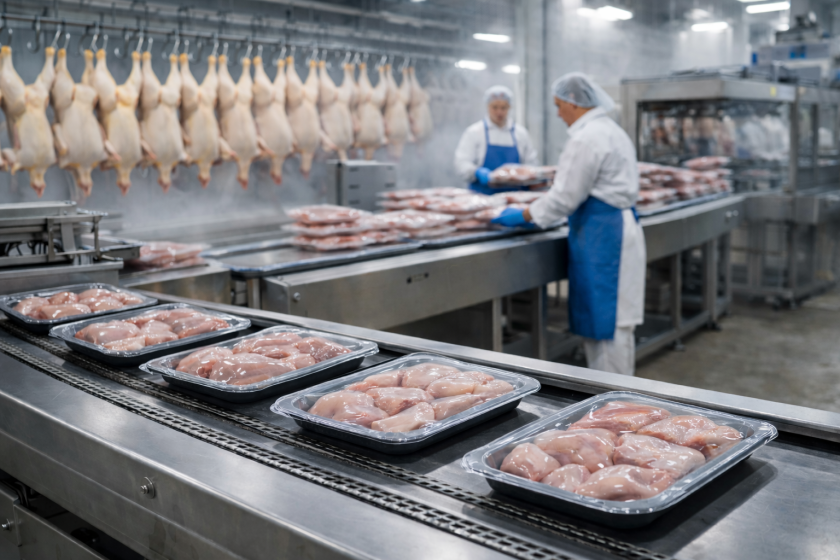
Cooling and packaging are crucial for meat quality, safety, and shelf life. Though often overlooked, these steps ensure consumers receive products that are fresh and in top condition.
Why cooling matters
Fresh meat is highly perishable. Once processing is complete, natural changes begin quickly. Without rapid cooling, bacteria can multiply rapidly, reducing safety and shortening shelf life.
Controlled cooling slows down spoilage while preserving texture and quality. Cooling must be carefully managed. Too slow, and risks rise. Too fast, and texture suffers. Balanced cooling ensures meat remains safe, appealing, and ready for consumers.
Cooling and packaging are not just steps – they define the quality that reaches the consumer.
Common cooling methods
To meet safety and quality demands, processors rely on several cooling techniques, each with distinct advantages.
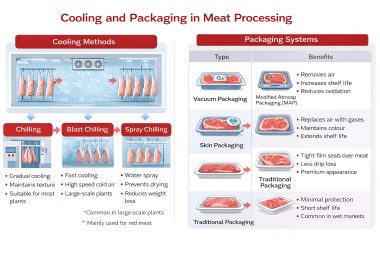
- Chilling: Gradually lowers meat temperature, slowing spoilage.
- Blast chilling: Uses very cold air for rapid cooling, common in large plants.
- Spray chilling: Reduces weight loss and enhances appearance, especially in red meat processing.

Packaging: more than just wrapping
Packaging goes beyond appearance. It shields meat from contamination, preserves freshness, and plays a key role in extending shelf life. Effective packaging safeguards product safety while strengthening consumer confidence in quality.
There are various types of packaging:
- Vacuum packaging: Removes air, slowing oxidation and extending shelf life.
- Modified Atmosphere Packaging: Replaces air with gases to preserve color and freshness, especially for retail display.
- Skin packaging: Creates a tight seal, improving presentation and reducing moisture loss.
- Traditional methods: Still common in some markets but offer limited protection.
The importance of the cold chain
Cooling and packaging must be supported by a strong cold chain. Consistent temperature control during storage, transport, and retail is essential. Any break quickly reduces quality and increases safety risks.
Challenges in the industry
The industry faces persistent challenges, including inconsistent and weak cold chain infrastructure, rising energy costs, and limited awareness and training. Investing in modern systems is essential to close these gaps.
Avoiding common mistakes
Many quality issues in meat processing stems to small lapses in cooling and packaging. Common mistakes include:
- Delayed chilling after processing
- Overloading chillers
- Poor temperature monitoring
- Inadequate sealing in packaging
- Breaks in the cold chain during transport
Addressing these issues strengthens product quality and prolongs shelf life.
The way forward
Consumer expectations demand efficient cooling, advanced packaging, and strong cold chain management. These steps ensure meat products remain safe, fresh, and of the highest quality.
Cooling and packaging may not always be visible to consumers, but they are essential in ensuring meat quality. Getting these steps right helps the industry deliver safe and fresh products every time.