


The antimicrobial resistance (AMR) crisis is intensified by the absence of new antibiotic classes, with no discoveries made since 1984, only modifications of existing compounds.
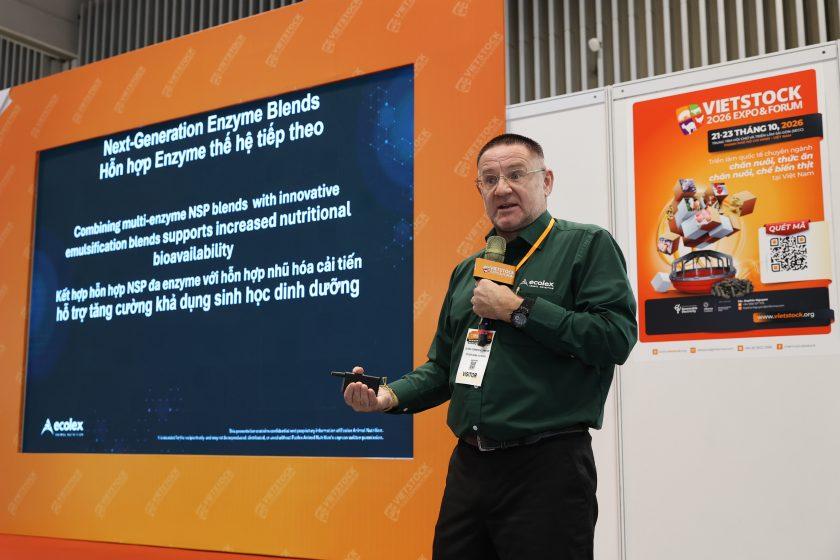
Edward Manchester, Global Commercial Director of Ecolex Animal Nutrition, emphasized the crisis during his presentation at the Vietstock 2025 AMR Forum.
He advocates for integration of nutritional interventions into a feed strategy as part of a comprehensive and integrated ‘One Health’ approach that also includes biosecurity and hygiene and good farm management practices aligned with Vietnam’s National Action Plan on AMR.
The selection of alternatives to antibiotics should consider specific gut health challenges, farm management systems, economics, and regulatory requirements, Mr Manchester said.
He offers some nutritional interventions to enhance gut health and reduce AMR:
1️⃣ Mitigating mycotoxins
Mycotoxins indirectly drive AMR by harming gut health and weakening immunity.
Conventional clay mineral mycotoxin binders, such as aluminosilicate clays and bentonites work by physiochemical adsorbing mycotoxins in the gastrointestinal tract.
Notably, binders are generally effective against polar mycotoxins like aflatoxins and smaller mycotoxins like ochratoxin A. However, larger and more complex mycotoxins such as deoxynivalenol, zearalenone, fumonisins and trichothecenes (including T-2 toxin) are poorly absorbed.
In contrast, enzymatic detoxification selectively and permanently bio-transform specific mycotoxins into non-toxic forms.
2️⃣ Reducing pathogen load and increasing digestion
Acidifiers can help mitigate AMR primarily by their ability to favorably manipulate the gut environment and microbial populations.
Acidifiers, which include organic acids and their salts, work to lower gut pH and create conditions that inhibit the growth of harmful bacteria, such as E. coli and Salmonella, that may damage the gut lining. They also allow beneficial bacteria such as Lactobacillus to flourish, but unlike antibiotics, acidifiers do not lead to the development of resistant bacteria.
Acidifiers also stimulate proteolytic enzymes like pepsin by optimizing stomach acidity, improving protein digestion and nutrient absorption, which supports overall gut health and immune function.
Furthermore, organic acids may slow gastric emptying, extend digestion time and allow more thorough nutrient breakdown and uptake.
3️⃣ Maximizing nutrient absorption
While enzymes are well recognized and commonly used to break down hard to digest substrates such as non-starch polysaccharides, there is increasing interest in the use of innovative blends of emulsifiers such as the Lipo range that combines both lipophilic (fat-attracting) and hydrophilic (water-attracting) emulsifiers, allowing to stabilize and dissolve both lipid and water components of feed—unlike traditional emulsifiers.
The different emulsifiers effectively separating the key nutrients—carbohydrates, lipids, and proteins—increasing their surface area available for enzymatic activity.
4️⃣ Novel antibacterials
While searching for antibiotic growth promoter (AGP) alternatives, researchers found that AGPs significantly reduce bile salt hydrolase (BSH) activity—an enzyme that weakens the antibacterial effects of bile salts.
Bile salts have strong antibacterial (and emulsification) properties by disrupting bacterial cell walls and damaging DNA. However, BSH enzymes from gut bacteria neutralize bile salts by converting them into less effective forms, diminishing their ability to control harmful microbes.
The bile salt hydrolase inhibitor (BSHI) reduces BSH activity to preserve the antimicrobial function of bile salts. This innovative strategy supports intestinal health and enhances lipid metabolism, improving feed efficiency and animal growth without the risks associated with antibiotics.
5️⃣ Medium Chain Fatty Acids (MCFAs)
Monolaurin, derived from MCFA lauric acid, shows antimicrobial effectiveness based on its molecular structure.
Monolaurin is effective against gram-positive bacteria like Bacillus subtilis and Streptococcus suis but not against gram-negative bacteria. However, a microemulsion of alpha-monolaurin disrupts the protective membranes of pathogens, increasing membrane permeability and causing them to disintegrate.
This form effectively inhibits gram-negative bacteria such as E. coli, molds like Aspergillus niger and Penicillium digitatum, and enveloped viruses.
In inhibition tests, Ecolex’s proprietary emulsified alpha-monolaurin at 600 ppm and 1200 ppm showed strong inhibition of E. coli and S. suis, while monomeric alpha-monolaurin only showed minimal effects.
MCFAs are also rapidly absorbed and metabolized by intestinal cells, providing quick and efficient energy that promotes epithelial cell regeneration and preserving mucosal integrity.
MCFAs strengthen the gut barrier, preventing harmful pathogens and toxins from entering the bloodstream, thus reducing inflammation and infection risk.
MCFAs also help balance the gut microbiome by inhibiting pathogenic bacteria and encouraging beneficial microbes, enhancing digestion and nutrient absorption.
Industry collaboration
Ensuring a sustainable future for animal agriculture requires strong industry collaboration. This includes uniting farmers, veterinarians, nutritionists, feed millers, and feed additive suppliers under a comprehensive ‘One Health’ approach, according to Mr Manchester.
By working together across disciplines and sectors, stakeholders can implement integrated strategies that combine nutritional interventions with biosecurity, hygiene, and good farm management practices.
Such collective action is essential to effectively reduce AMR, safeguard animal and public health, and support resilient and productive livestock systems.