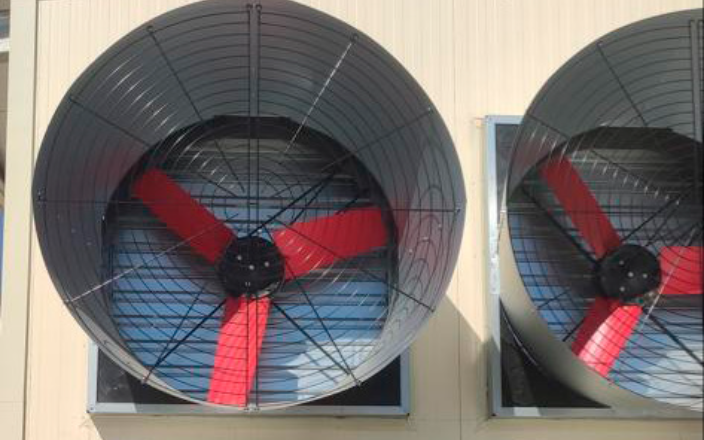
Modern poultry production faces the constant challenge of keeping birds in an environment that allows them to express their maximum productive potential.
- Factors such as temperature, relative humidity, gas concentration, and air movement within the facilities directly influence the well-being, health, and productivity of the flocks.
- For this reason, optimizing ventilation and environmental control systems has become a strategic priority for producers around the world.

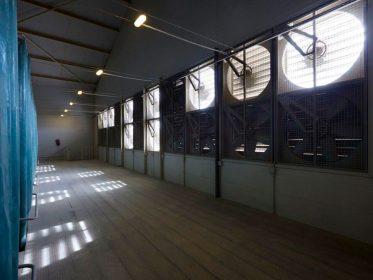
1. Importance of ventilation in poultry farming
Ventilation not only serves to renew the air inside the sheds, but also regulates temperature, controls humidity, eliminates harmful gases such as ammonia and carbon dioxide, and reduces the concentration of dust and airborne pathogens.
Proper ventilation:
- Maintains birds’ body temperature within optimal ranges.
- Prevents heat stress and production losses.
- Promotes efficient feed and water consumption.
- Contributes to flock uniformity and better feed conversion rates.
2. Types of ventilation systems in poultry farming
There are different systems that are applied depending on the design of the facilities, climatic conditions, and the stage of growth of the birds:
- Natural ventilation
- It is based on air currents generated passively through windows, curtains, or openings in the buildings. Its effectiveness depends on external factors such as wind or ambient temperature, which limits its use in intensive production.
- Mechanical ventilation
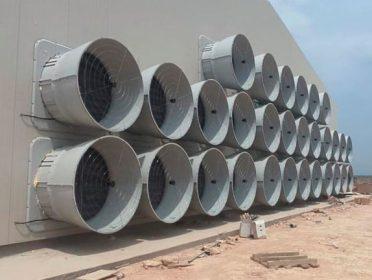
- It uses extractors, fans, and controlled air intakes to maintain a constant and regulated air flow. There are two main types:
- Minimum ventilation: ensures air renewal during the initial stages of rearing and in cold climates, preventing gas accumulation.
- Transitional ventilation: used in temperate climates when it is necessary to increase air circulation to regulate the temperature without creating excessive drafts.
- Tunnel ventilation: widely used in hot regions, it creates a high-speed longitudinal airflow, generating a convective cooling effect that helps reduce the impact of heat stress.
- It uses extractors, fans, and controlled air intakes to maintain a constant and regulated air flow. There are two main types:

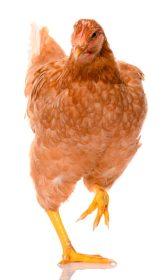
3. Environmental control: beyond ventilation
Environmental control integrates different parameters that must be managed jointly:
- Temperature: Thermal comfort is vital for birds. Newborn chicks require higher temperatures (90–93°F), while adult birds are best kept between 64–75°F. Automatic systems allow for precise monitoring and adjustment.
- Relative humidity: The ideal range is between 50 and 70%. High values cause condensation, mold growth, and bed deterioration, while low levels increase dust and respiratory susceptibility.
- Air quality: High concentrations of ammonia (>25 ppm) cause eye irritation, respiratory problems, and loss of productivity. Controlling gases and particles through ventilation and filtration is essential for poultry health.
- Lighting: Although not directly linked to ventilation, lighting is part of environmental control, as it influences behavior, feeding, and productivity. Its regulation must be integrated into the overall automation system.

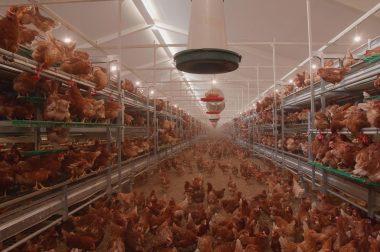
4. Impact on productivity and animal welfare
A stable and controlled environment translates into:
- Reduced mortality and respiratory diseases.
- Better feed conversion and greater weight gain.
- Uniformity of batches and superior quality in meat or egg production.
- Less heat stress, contributing to animal welfare and compliance with international regulations.

Conclusions
- Optimizing ventilation and environmental control systems in poultry farming is not a luxury, but a necessity to ensure the sustainability of the sector.
- Efficient management of air, temperature, and humidity not only protects the health and well-being of birds, but also ensures the competitiveness of producers in the face of growing climatic and production challenges.
- Investing in technology, training, and constant monitoring is the key to moving toward more efficient, responsible, and future-ready poultry farming.