


This post is also available in:
Halal food production is expanding rapidly across regions, driven by consumer demand for quality, safety, and ethical standards. Poultry meat remains central to this growth because of its affordability, versatility, and compliance with religious requirements. Countries in Asia, the Middle East, Europe, and beyond are investing in certified halal facilities to meet international demand. Ukraine is highlighted as one example of export potential, but the principles apply globally.
A study by researchers from Ukraine highlights these challenges and examines solutions for halal compliance.
Pre‑slaughter practices shape outcomes
Pre‑slaughter handling, including catching, transportation, feed withdrawal, and lighting, directly influences meat quality everywhere. Stress or poor management can cause bruising, fractures, or contamination.
Feed withdrawal, typically lasting 8–12 hours, reduces contamination risks but must be balanced carefully. Short withdrawal leaves intestines partially filled, while prolonged fasting depletes glycogen, raising muscle pH and reducing texture. Environmental factors such as temperature, lighting, and water access affect outcomes, making local adaptation essential.
Catching and loading challenges
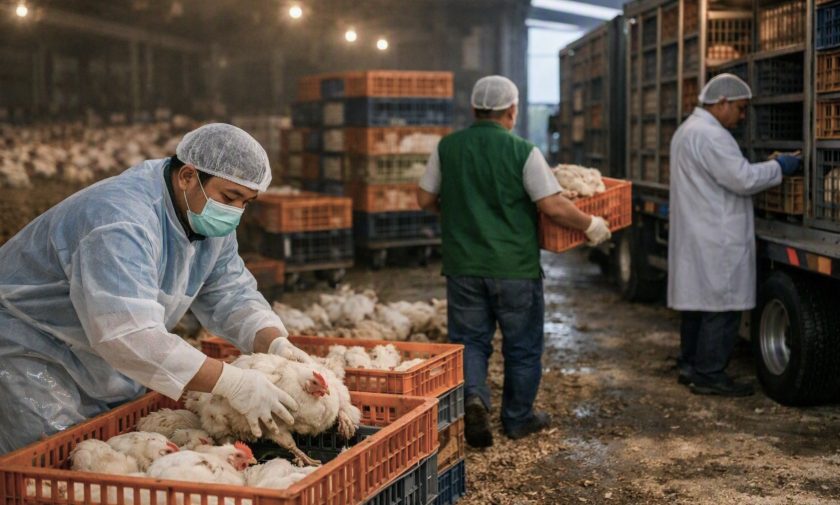
Catching and loading are critical stages across all production systems. Manual catching requires careful lifting, while mechanized systems reduce labor and injury risks. Vacuum devices and conveyor belts improve efficiency and welfare, enabling rapid collection with minimal stress.
Stocking density must be adjusted to climate conditions, with fewer birds per crate in hot weather to prevent overheating. Transportation adds further risks, including vibrations, noise, and temperature fluctuations, requiring strict ventilation and humidity control.
Inspection and preparation for slaughter
Unloading at processing facilities demands careful handling to avoid falls or impacts. Automated unloading systems improve efficiency and reduce stress. Ante‑mortem inspection ensures only healthy birds enter the food chain. Veterinary officers assess physical condition, external appearance, and test for pathogens or residues.
Halal inspectors supervise compliance with religious standards, ensuring animals are alive, healthy, and free from contamination. Humane handling measures, such as controlled lighting and ventilation, reduce stress indicators and preserve meat quality.
Stunning and slaughter requirements
Preparation for stunning must follow strict hygienic standards to prevent contamination. Electrical water‑bath stunning is common globally, though gas systems are used in larger facilities. Parameters must ensure loss of consciousness without excessive trauma.
Traditional halal slaughter without stunning remains practiced in many regions, ensuring effective bleeding and compliance with religious norms. Dedicated slaughter zones, sterile conditions, and observance of prayers are mandatory for halal certification.
Technology and traceability
Modern halal production increasingly relies on traceability systems, including RFID tags and blockchain, to enhance transparency and consumer confidence. Automation supports monitoring of critical control points, reducing risks of contamination or non‑compliance. Integrating HACCP principles with halal assurance systems strengthens food safety and quality.
These innovations improve efficiency while ensuring adherence to religious and international standards.
Strengthening global competitiveness
The review highlights that violations at any stage—catching, transport, inspection, stunning, or slaughter—can compromise halal status and product quality. By adopting modern technologies, improving welfare practices, and enforcing strict inspections, producers worldwide can meet rising demand. Whether in Southeast Asia, the Middle East, Europe, or Eastern Europe, aligning with international halal standards enhances competitiveness in global markets.