



Global chicken production is growing steadily year after year. Proof of this is that between 2010 and 2023, chicken production has increased by 29.4%.
- All of this reflects great opportunities to have raw materials available, provide added value, and differentiate oneself from the competition.
- In the case of Spain, chicken consumption increased by 16% in 2023 compared to 2022, which also represents a significant increase.
Having sufficient raw materials to develop these added values and a large market makes developing ready-to-cook seasoned chickens an excellent option for the sausage industry, but also for poultry companies that process chicken, to manufacture these products and thus improve profitability and competitiveness.
The main raw material is whole, fresh, refrigerated chicken.
- If it has been frozen, it must undergo a proper thawing process that never exceeds 3°C to prevent microbiological proliferation.
- The quality of thawed meat will depend on the freezing process, storage, and thawing process. It is important to understand the effects of freezing and the types of freezing on meat quality.
Slow freezing causes the water crystals formed in the meat to be large, and many of these crystals form outside the fibers and in the connective tissue, leading to high losses and denaturation of the proteins once the meat has been thawed.
For this reason, rapid freezing with the formation of small crystals is recommended. This better preserves the color and water retention capacity, as well as reducing shrinkage due to thawing and the possibility of attack by microorganisms.
- The thawing process is generally slower than the freezing process because the thermal conductivity is lower in frozen meat than in unfrozen meat.
- The purpose of thawing is to bring the products as close as possible to their pre-thaw state.
- The thawing process is the reverse of the freezing process, where the coldest point this time is the innermost point of the cut of meat, with or without bone, which must ensure complete thawing.

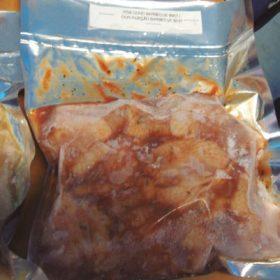
Defrosting methods must guarantee the safety of the meat as an essential requirement, preventing any part of the meat from being exposed to temperatures above 4º Celsius during this process, where bacterial growth would occur, leading to deterioration.
We have to provide energy to a mass of meat to raise its temperature as quickly as possible, normally from -18°C to 0°C. However, we have significant limitations:
- We must not alter or lose proteins, as we would lose the technological function of the meat.
- Control and reduce risk conditions that favor microbial growth.
- Do not delay the process, which can lead to protein denaturation, lipid oxidation, and a negative effect on the organoleptic characteristics of the meat.
- Avoid water loss, with the resulting economic loss.
There are several traditional thawing mechanisms, and thawing equipment has also been developed with the aim of obtaining the best results in terms of quality and reducing thawing times.
- In order to distribute the seasoning evenly throughout the chicken meat, a brine for injection in a needle injector.
- These needles deliver the brine from a pressure pump contained in the injector, which is driven at different force levels depending on the pressure programmed on the touchscreen display.
- In addition to the pressure, the speed of the belt is also programmed, and this programming will result in a greater or lesser amount of brine being added to the chicken, which in simplified terms is called the injection percentage or injection level.
- The chicken must be positioned breast-side up so that the needle penetrates the area where there is the most meat.
HOW DOES THE INJECTION MACHINE WORK?
Injectors can be of various sizes to suit each process and production need. Injection machines are manufactured with several dozens of needles to hundreds of needles for high production of seasoned chicken. There is also the option of purchasing low-pressure or high-pressure injectors, each with its own advantages, adapting to the process of each poultry company and the injection levels required.
- When preparing the brine, it is important to consider its components, which will depend on the attributes the customer is looking for in the chicken and the flavors the consumer is accustomed to.
- In the brine, ingredients that participate in biochemical processes with the chicken meat to give it desirable organoleptic attributes, improve its juiciness and increase its market value.
- The use of most of these additives is regulated by the Codex and regulatory institutions in each country or region to prevent excess consumption from harming consumer health.

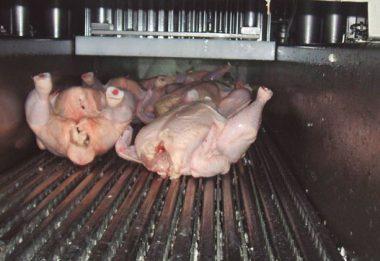
Any product that is incorporated into a meat formulation with a specific function, providing intrinsic organoleptic characteristics to the product and/or contributing to its availability by extending its shelf life, is classified as an additive.
- Additives are generally used in small quantities, except for those classified as GRAS.
- Additives are not consumed on their own.
- They must comply with purity and processing requirements under GMP regulations.
Among the most commonly used ingredients in brine are:
- Phosphates, which help improve water retention.
- Soluble proteins, of plant , animal, or both origins .
- Small amounts of carrageenan, used to improve texture.
- Salt, an essential component in the formulation.
- Flavor enhancers, which enhance the product’s flavor profile.
- Seasonings, which must meet the essential requirement of being soluble and dissolve completely in water, just like the other ingredients.
To provide an additional barrier to the shelf life of fresh seasoned chicken, sodium lactate can be used at 2 to 3%, which is a very effective bacteriostatic agent widely used in the poultry industry. Remember that proper concentrations of salt, phosphates, and other ingredients must be calculated with respect to the final product.
Functions of each ingredient:
Salt or sodium chloride can be of marine or mineral origin. It is considered a fundamental element of all foods as it provides flavor.
- In the case of sausages, it also plays a very important role in solubilizing myofibrillar proteins and enhancing water retention capacity.
- The usual salt concentration ranges from 1.6 to 1.8%, although in some regions or countries, chicken with a salt profile higher than 1.8% is consumed.
- The indicated salt concentration must be calculated for the final product, i.e., the salt concentration in the brine must be higher than 1.8% so that we can ultimately obtain the expected amount of salt.
Sodium phosphates: The most commonly used is sodium tripolyphosphate, but diphosphates and hexametaphosphates or mixtures of these are also used.
- It is considered an emulsifier. It is used in a range of 0.3 to 0.5% and is obtained through a chemical process from marine rocks, achieving a purity of over 95%.
- For its use, it is essential to ensure that it is food grade quality.
- One of the key parameters to consider is its content of arsenic, fluoride, and heavy metals. Its main function is to improve water retention in myofibrillar proteins, optimizing their functionality to the maximum.
- In addition, phosphate helps stabilize the pH of chicken.
Sodium erythorbate E316: It is derived from sugar beets or sugar cane. It is the most commonly used antioxidant to prevent the oxidation of iron-containing myoglobin.
- If not treated properly in the presence of oxygen and heat, it oxidizes and turns greenish, then brown, and finally dark. A maximum of 0.1%.
- Ascorbic acidis used as an antioxidant, which can be added in a proportion of 0.1% to the final product.
Note: In order to include an ingredient, the producer must consult the specific regulations of the country or region.
It is essential to ensure that, once prepared and homogenized, the brine is completely free of lumps and remains below 4°C to preserve the cold chain. This will promote greater retention, which is the result of several factors in the injection process, such as:
- Use of suitable ingredients correct proportions.
- Precise execution of the injection, taking into account the efficiency of the injection machine.
- Temperature control both for brine and cold storage.
- The closer the brine is to 0°C, the better the results.

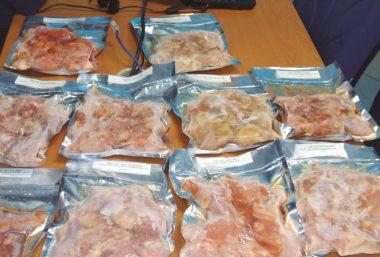
Once the chicken has been injected, it is essential to weigh it to calculate the injection percentage, which must match the percentage used in the ingredient formulation.
- A significant difference between the two values could affect the flavor and aroma of the seasoned chicken.
- After injection, the chicken is packaged, preferably in vacuum bags, and sent to cold rooms, ensuring that it remains in the cold chain during distribution and final shipment.
- This overview of the processes and opportunities for a product in constant growth in the market seeks to add value and interest for readers, especially those who have not yet incorporated added value to their broiler chicken production.
- This could be the first step toward developing products with greater commercial value, generating higher profits, and strengthening the brand.