


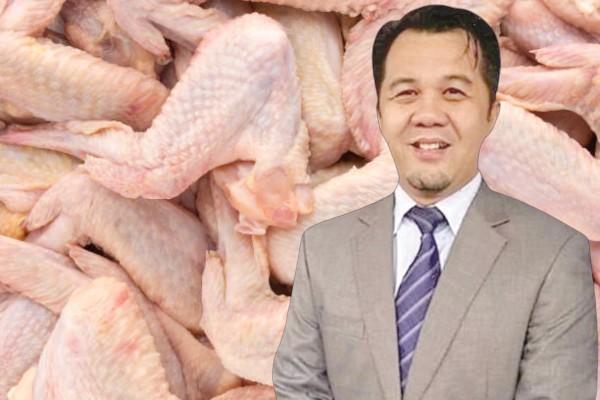
Sabah’s Agriculture, Fisheries and Food Industry Ministry is preparing a major intervention to address rising chicken prices and the alleged influence of middlemen within the poultry supply chain.
The East Malaysian State Agriculture Minister Jamawi Jaafar said the ministry is developing strategies to reduce middlemen’s impact, which he believes is contributing to higher prices for locally produced chicken compared to imported products.
Mr Jamawi said the ministry will convene an engagement session involving poultry farmers, importers, and consumers to address the widening price gap and the broader issues affecting Sabah’s poultry market.
The session is expected to take place before Christmas, immediately after the upcoming State Legislative Assembly sitting.
Reducing middlemen influence
Mr Jamawi stated that the core objective is to minimize the role of intermediaries whose pricing practices may be distorting the market.
“Consumers are seeking affordable prices, but the pricing from producers to consumers is often unduly influenced by middlemen, creating an imbalance in the market,” he said.
He added that the current price disparity is driving consumers toward cheaper imported chicken, a trend that places local producers at a disadvantage.
By reducing middlemen involvement, the ministry aims to stabilize prices and strengthen Sabah’s domestic poultry industry.
Strengthening SAMA’s role
Mr Jamawi highlighted the State Government’s commitment to empowering the Sabah Agricultural Marketing Authority (SAMA), a marketing agency recently reinstated under the ministry.
SAMA will play a key role in regulating and stabilizing the marketing chain for agricultural, livestock, and fisheries products.
“Over the next five years, we will focus on strengthening SAMA’s capabilities to effectively address and mitigate the impact of middlemen in the market,” he said.
Managing supply, demand, and smuggling risks
Sabah currently has a chicken self-sufficiency level of around 95%. However, the remaining supply depends on imports, which face complications including smuggling and inconsistent pricing.
Mr Jamawi stressed that improving supply-demand coordination and ensuring competitive local pricing are essential to curbing smuggling and protecting local producers.
While some imports—such as chicken wings—remain necessary due to high demand, he said the priority is to ensure fair and stable pricing for local chicken.
Collaborative solutions ahead
The government’s proposed measures include streamlining market data, enhancing supply chain coordination, and improving local production capacity.
Mr Jamawi emphasized that the upcoming engagement session aims to unite producers, importers, and consumers to identify effective solutions.
“Our priority is to ensure reasonable prices for consumers, maintain competitiveness for our producers, and minimize the role of middlemen,” he said.