


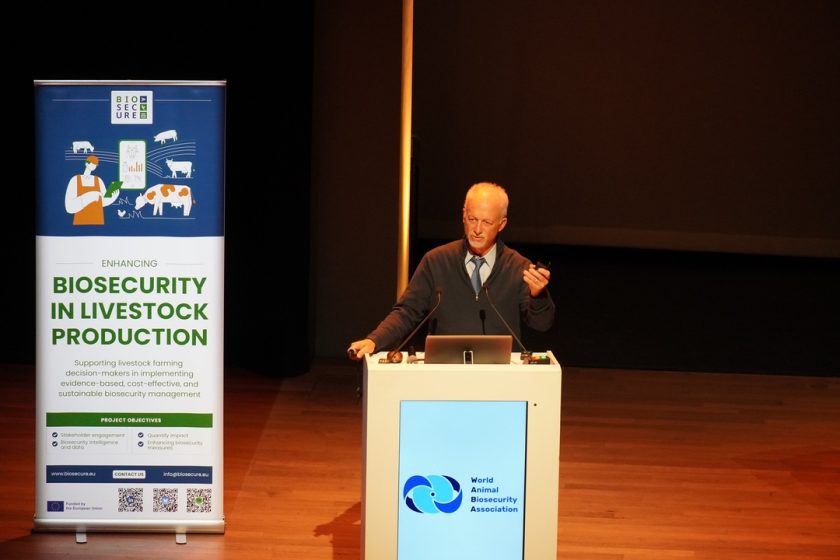
November 26, 2026 | Ghent, Belgium
The second and final day of the World Animal Biosecurity Association (WABA) Conference focused on operational biosecurity, antimicrobial resistance, economic sustainability, technological innovation, and international cooperation.

Two keynote presentations opened the scientific program. Dr. Maria Fernanda Serrano De La Cruz, a Colombian veterinarian from the Norwegian Veterinary Institute, addressed multidisciplinary approaches to improving aquaculture biosecurity assessment in Norway, Colombia, Brazil, and other countries. Dr. Bruce Stewart-Brown, from Perdue Farms in the USA, one of the largest broiler integrator companies, explored how to evaluate and communicate the value of poultry biosecurity programs, emphasizing their relevance to commercial production.
The morning scientific session examined continuous water chlorination, disinfectant efficacy under organic contamination, relationships between biosecurity and antimicrobial resistance, and associations between biosecurity practices and antimicrobial use in livestock. Additional presentations addressed preventive investments, productivity, and the relationship between biosecurity standards and the long-term viability of pig farms.
The afternoon program featured eight flash talks covering machine learning for animal health surveillance, antibiotic resistance in live bird markets, African swine fever risk assessment, evaluation of biosecurity improvement programs, backyard poultry, lessons from avian influenza outbreaks, economic simulation of biosecurity failures, and porcine coronaviruses.
The program also included FAO perspectives on global biosecurity initiatives and collaboration with WABA, alongside industry presentations by the two Platinum sponsors, Huvepharma and CID LINES, an Ecolab Company.
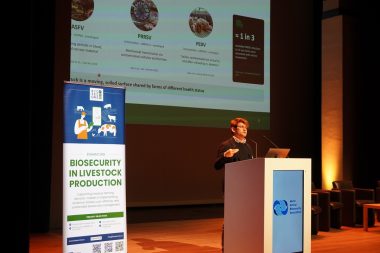
Huvepharma presented an approach to improving biosecurity through coccidiosis control in poultry and swine. Meanwhile, CID LINES discussed its research activities and partnerships with universities and consultants, highlighting examples of Salmonella control in poultry.
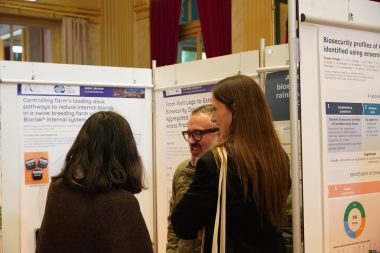
Finally, the WABA Annual General Meeting was conducted, and the conference concluded with awards recognizing outstanding scientific presentations and posters.
Closing statement and conclusion
The Second WABA Congress highlighted that biosecurity must evolve beyond regulatory compliance into a scientifically grounded, measurable, economically justified, and integrated management strategy. Across poultry, swine, cattle, and aquaculture, disease prevention represents an essential investment in animal health, welfare, food security, environmental sustainability, and business resilience.
This second congress reinforced the importance of interdisciplinary research, emerging technologies, continuous education, stakeholder engagement, and international collaboration within the One Health framework. The challenge ahead is to translate scientific advances into practical, accessible, and sustainable solutions, making biosecurity a shared responsibility and an integral component of animal production worldwide.