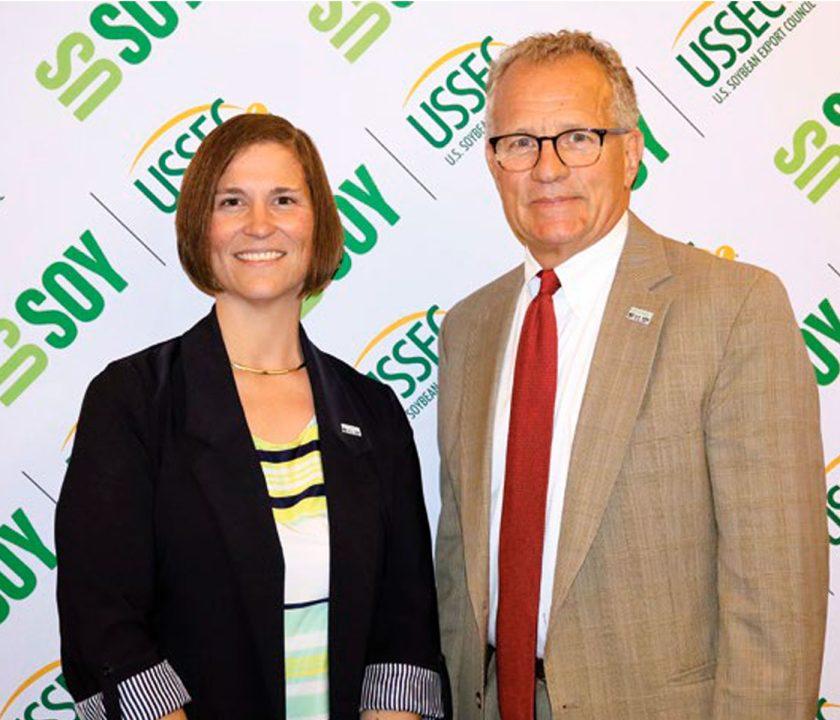
Soy Connext 2025 convened over 700 soybean suppliers and customers in Washington DC in August to shape the future of sustainable soy.
Hosted by the U.S. Soybean Export Council (USSEC), the three-day event showcased cutting-edge insights from producers, buyers, researchers and innovators across the value chain.
From climate-smart farming to aquaculture expansion, the event underscored U.S. Soy’s evolving role in global food security and trade resilience.
GLOBAL MARKETING AND MARKET ACCESS
The event kicked off with the Trade Team Invitational (TTI), a series of oneon- one meetings between U.S. Soy stakeholders and international soybean users. This structured matchmaking effort connected buyers, sellers, and supply chain partners to explore new
opportunities, negotiate deals, and strengthening long-term relationships.
- Trade teams from 59 countries representing key markets across Asia, Latin America, Europe, and Africa participated. These teams visited U.S. soybean farms, processing facilities, grain terminals, and key industry groups before and after the main Soy Connext event, gaining firsthand insight into the U.S. soy value
chain. - During a press briefing, USSEC CEO Jim Sutter explained that differentiating U.S. soy from those from other origins is a key objective because “all soy are not created equal. We have to educate consumers on why soy grown in the U.S., in temperate climate, is different from soy grown in other climates.

Mr Sutter highlighted US Soy’s key advantages: high quality, strong nutritional profile, and a low carbon footprint. These are attributes increasingly valued by global buyers.
“We want to elevate the preference. We want to be the soy that everybody wants to buy,” Mr Sutter remarked, noting that among the key advantages of U.S. Soy are its high quality and nutritional characteristics and its low carbon footprint, which is very important to soy buyers today.

MORE SOYBEAN MEAL AVAILABLE
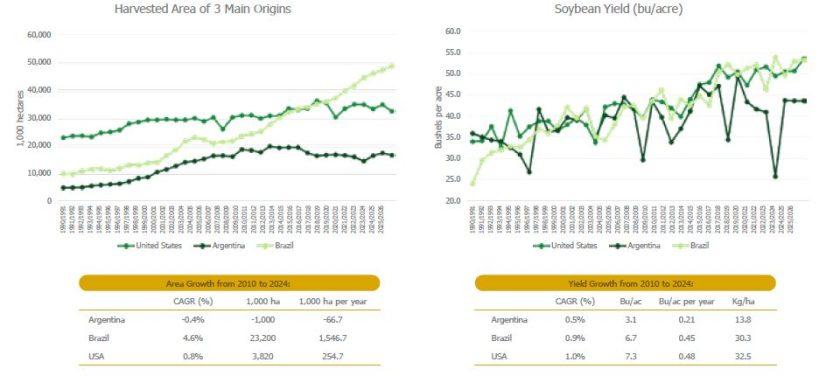
During the event, Bruno Coletti, Lead Market Analyst – Oilseeds at Cargill Inc, described U.S. soy as a resilient and strategic asset in a changing global market. While Brazil leads in production growth, U.S. Soy stands out for its reliability, quality, and infrastructure. Backed by transparent standards and robust logistics, it remains a cornerstone of global supply.

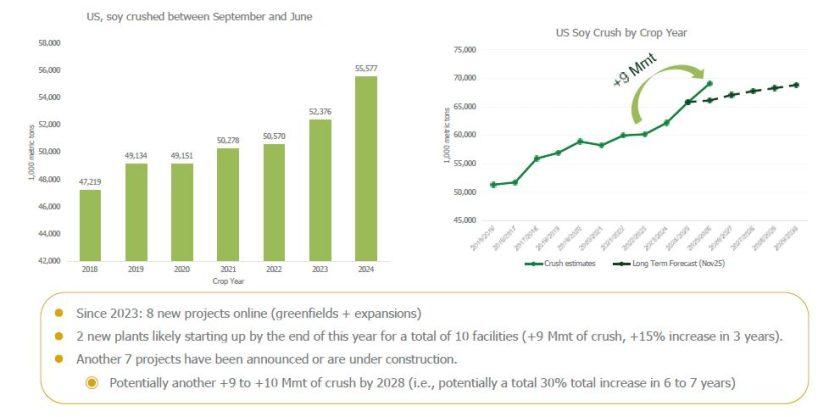
U.S. crush capacity is expanding rapidly, with 10 new facilities expected by the end-2025. This will add an estimated 9 million tons of crush capacity, translating into roughly 7 million tons of extra soybean meal.

As global incomes rise, demand for animal protein and soybean meal continues to grow. U.S. soybean meal is prized for its consistency and nutritional quality, making it a preferred choice in key growth markets like China, India, and Southeast Asia.
SETTING THE GLOBAL STANDARD
As supply expands, quality remains a key differentiator. German Bosch, founder of AG Com, said consistency is king—and U.S. soybeans continue to lead the pack. He compared the quality of soybeans from the US, Brazil, Argentina, and Uruguay, revealing why U.S. soybeans remain the benchmark for reliability.
- Infrastructure advantage: The U.S. boasts a mature logistics network of highways, railroads, and inland waterways, ensuring efficient transport and minimal damage farm to port.
- Favorable climate: Temperate harvest seasons and lower humidity result in soybeans with lower moisture levels and reduced heat and total damage. In contrast, Brazil’s tropical climate, while boosting oil and protein content, also increases variability and risk.
- Quality metrics: U.S. soybeans average lower moisture and damage rates, with stable table oil and protein levels across seasons. While Brazil allows up to 8% total damage and 1% heat damage, U.S. standards cap those at 3% and 0.5%, respectively. This ensures a cleaner, more uniform product.
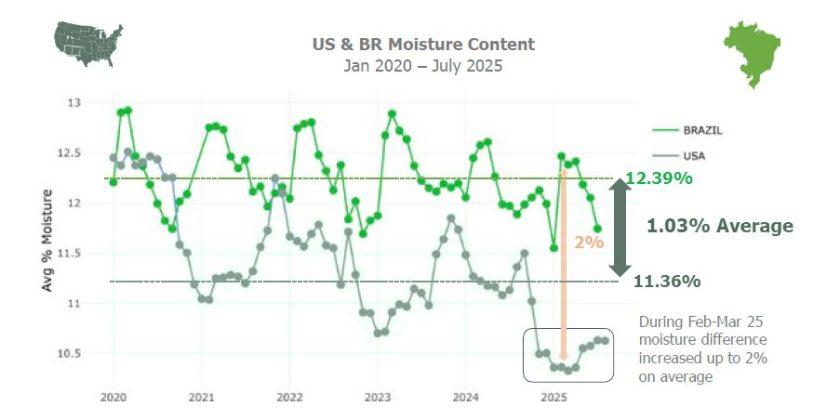


Mr Bosch concluded that while Brazil’s soybeans offer nutritional highs, U.S. Soy delivers dependable quality. This positions U.S. Soy as the gold standard for buyers prioritizing consistency, lower risk, and strong infrastructure.
RECOGNIZING SUSTAINABLE BUYERS
As part of Soy Connext 2025, USSEC also honored companies from across the globe that are making sustainability a core part of their business.

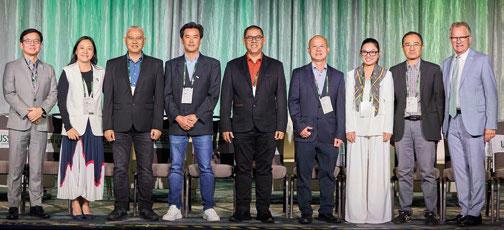
USSEC recognized companies from across the globe, including those from Vietnam and Indonesia, that are making sustainability a core part of their business.
Sustainability is a core strength of U.S. Soy, thus it is the preferred choice of environmentally conscious buyers.
147 companies across 12 countries that now carry the ‘Sustainable U.S. Soy’ or ‘Fed with Sustainable U.S. Soy’ label on their products:
- Americas – 48
- South Asia – 16
- Greater China – 27
- Northeast Asia – 36
- Southeast Asia – 20
This growing global footprint reflects rising demand for responsibly sourced ingredients, with U.S. Soy setting the benchmark for sustainability worldwide.

NAVIGATING COMPLEXITY, SEIZING OPPORTUNITY
As global trade adapts to shifting demographics, inflationary pressures, and geopolitical uncertainties, Mr Sutter noted that challenge often breeds innovation. He reaffirmed the enduring relevance of comparative advantage, with U.S. agriculture—especially soy— standing as a prime example of how trade enables both export strength and consumer choice.
- Demand is rising in new markets, driven by population growth and expanding disposable incomes. While global supply may tighten slightly, the long-term outlook remains stable. Farmers are navigating unpredictability with resilience and ingenuity.
- What sets U.S. Soy apart, he argued, are the “little extras”: From amino acid profiles that boost animal performance to nutritional benefits for human health. These differentiators, backed by data, drive real value across industries.
- He also emphasized that sustainability is no longer optional. With the lowest carbon footprint among global soy sources, U.S. producers are raising the bar through yield improvements, not land expansion.
Finally, Mr Sutter underscored the power of connection. Whether through shared insights or collaborative partnerships, relationships are the engine of smart business.

“Great things in business are never done by one person,” he said. “They’re done by a team.”
His message: collaboration is key to building a resilient, sustainable soy future.