


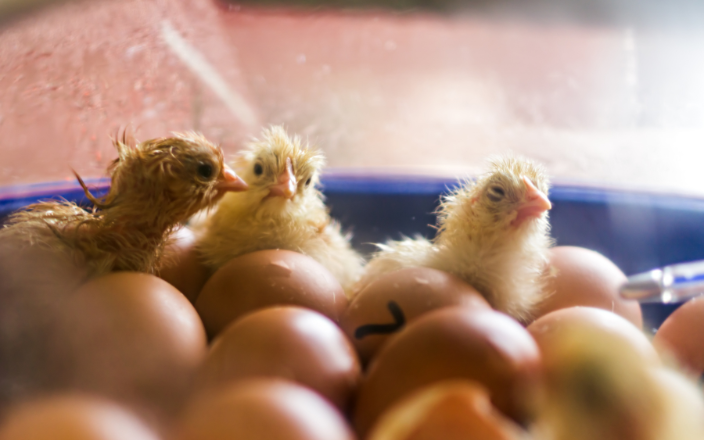
Understanding Why Chicks Hatch at Different Times
Genetic and Egg Quality Factors
Genetic inheritance has a significant influence on the rate of embryonic development. Older hens tend to lay eggs that hatch earlier, while eggs from younger hens may take longer to hatch. Egg size, shell thickness, and yolk composition also affect gas exchange and nutrient supply, which in turn determine hatching time. Research shows that the age of the breeding stock and egg quality significantly affect hatching synchrony, and that poor nutrition in the parents leads to delayed or uneven hatching results1.
Temperature Variations in Incubation
Temperature is the most critical environmental factor. The ideal incubation temperature is 37.5°C, but even a 0.5°C deviation can shift hatch timing. Higher temperatures accelerate development but may cause weakness or deformities, while lower temperatures delay hatch and increase mortality. Large incubators often have temperature gradients, meaning eggs in different zones hatch at different times2.
Humidity and Moisture Loss
Humidity regulates moisture loss from the egg, which is essential for proper air cell formation and successful pipping. Too low humidity causes chicks to stick inside shells, while too high humidity prevents proper air cell development, delaying hatch. Recommended humidity is 45–50% during days 1–17 and 65–70% during the final “lockdown” period. Mismanagement of humidity is a common cause of staggered hatching3.
Nutritional and Breed Differences
Breeder nutrition directly impacts embryo vitality. Hens with balanced diets rich in protein, vitamins, and minerals produce stronger embryos that hatch closer to the expected 21-day mark. Malnourished hens yield weaker embryos, often requiring more time to develop. Breed-specific genetics also matter: some chicken breeds naturally develop faster or slower, leading to predictable differences in hatch timing even under identical incubation conditions4.
Conclusion
Chicks hatch on different days due to a complex interplay of genetics, incubation environment, and egg quality. Maintaining precise temperature (37.5°C), controlled humidity (45–70%), and ensuring breeder nutrition are key strategies to synchronize hatching. While variability is natural, minimizing environmental fluctuations and improving breeder management can significantly reduce uneven hatch times, improving chick survival and hatchery efficiency.
Sources:
1. Poultry Egg Incubation: Integrating and Optimizing Production Efficiency (2016).
3. Water in the Avian Egg: Overall Budget of Incubation (1980).
4. Effects of egg storage time on spread of hatch, chick quality, and chick juvenile growth (2003).