Sources: Available upon request.





The World Health Organization (WHO) has recently confirmed the first human death related to avian influenza H5N2 in Mexico. This significant development raises concerns about public health and highlights the need for vigilance. Let’s explore the details of this case.
Differences with H5N1 avian influenza
Avian influenza is a disease caused by viruses of the Orthomyxoviridae family (H5N1, H5N3, H5N8, etc.), which usually infect wild birds and poultry, such as chickens.


One of the best known is the A virus (H5N1), first detected in China in 1996. Since then it has caused worrying outbreaks in birds around the world. And over the past few years, outbreaks have also been recorded in mammals, such as cats, lions, seals or dolphins, which revealed that the virus was mutating to adapt to new hosts.
Although avian influenza mainly affects birds, it can be transmitted to humans, especially to poultry workers or other people in contact with infected birds or contaminated surfaces. In other words, the virus does not enter the organism through the consumption of birds, but through their handling.
As for human cases, and still speaking of influenza A (H5N1), from 2003 to April 1, 2024, a total of 889 cases and 463 deaths (case fatality rate of 52%) have been reported worldwide in 23 countries.


Low risk of contagion
The WHO emphasizes that the risk of contagion from this virus to the general population is currently low. However, any human infection caused by a new subtype of the influenza A virus warrants close monitoring.
Conclusion
As health authorities continue to investigate, it is crucial to remain vigilant and take necessary precautions. The emergence of avian influenza H5N2 in humans underscores the importance of global surveillance and rapid response to potential health threats.
Sources: Available upon request.



Interview Dr. Nivin Nasser



Subscribe now to the poultry technical magazine
AUTHORS

Setting the Global Standard for Soy
Isa Tan
Importance of Eggshell Temperature, Checking and Record Keeping in a Commercial Poultry Hatchery
Rasel Ahmed
The Reality of the South African Egg Industry
Abongile Balarane
Mycoplasmosis update: Antimicrobial Resistance, Vaccines, and Control Challenges
Edgar O. Oviedo Rondón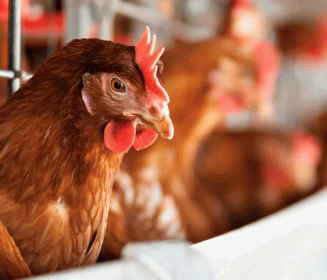
Future Flock: Antibiotic-Free Solutions for a Rising Population
Dr Ahmad Safi Dr. Faran HameedInterview Dr. Nivin Nasser
Dr. Nivin Nasser
Disinfection of Fertile Broiler Breeder Eggs
Edgar O. Oviedo Rondón
Precision Matters: Tackling Quality Issues in on‑Farm Vaccination
Jaime Sarabia Fragoso Kevin Gandon Pascal Paulet
Process Control: 30 Specific Aspects to Evaluate from Pre-Slaughter to Slaughter
Eduardo Cervantes López
Ishikawa Diagram Applied to Processing of Chickens
Eduardo Cervantes López