


A supply chain more fragile than it looks
Chicken is Malaysia’s most consumed and most affordable animal protein — and its supply is under more pressure than most consumers realize. The country’s chicken self-sufficiency level dropped from 100.2% in 2021 to 90.2% in 2023, according to the Malaysia Productivity Corporation’s Agro-Food Productivity Nexus.
The 2022 chicken shortage, which forced a government export ban and saw retail prices double in some markets, was a preview of what happens when production systems fail to keep pace with the complexity of modern disease management, climate change, and biosecurity demands.
Experts across veterinary science, diagnostics, and farm management are increasingly aligned on one point: the way Malaysia’s poultry sector, particularly its small and medium operators, currently manages disease, heat stress, and housing is not built for the environment it now operates in.
Vaccines are only as good as their application
Viral respiratory diseases remain the leading threat to flock viability. Pathogens including infectious bronchitis virus (IBV), Newcastle disease virus (NDV), and avian influenza (particularly low pathogenic avian influenza, or LPAI) are in continuous genetic evolution, regularly outpacing existing vaccine formulations and producing complex mixed infections that are difficult to diagnose and treat.
Critically, specialists point out that vaccine selection is only part of the problem, while application timing and program design are where most interventions fail. In Newcastle disease outbreaks affecting flocks of 20,000 to 30,000 birds, waiting for visible clinical symptoms before initiating a vaccination response is already too late. Structured vaccination programs built into each production cycle from the outset are not best practice, they are the baseline requirement for flock survival.
This has direct regulatory implications. Malaysia’s Department of Veterinary Services (DVS) biosecurity framework and the national AMR Action Plan 2022–2026 both emphasize the link between delayed or incorrect disease response and the broader crisis of antimicrobial resistance, a problem that moves from farm to food chain to human health.
Wrong culture, wrong diagnosis, wrong treatment
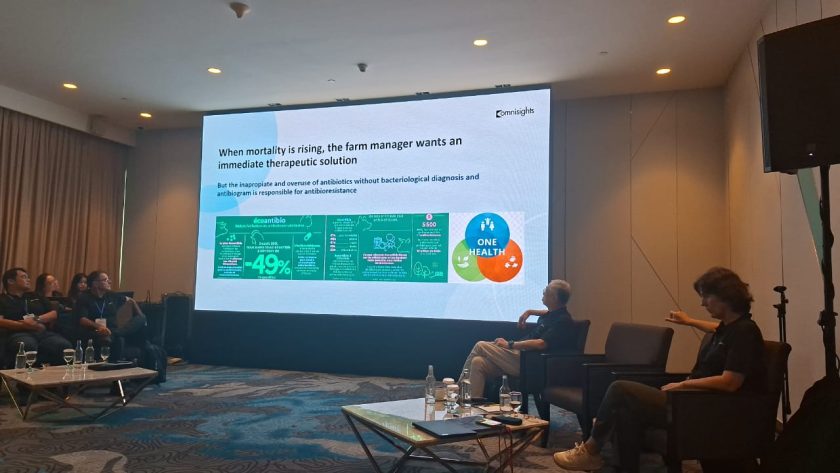
Diagnostic accuracy is another area where gaps in field knowledge are creating systemic risk. A fundamental principle in veterinary microbiology, that results depend entirely on which culture medium, temperature, and atmospheric conditions are used, is not universally understood or applied at the farm. Knowing what, when, and how to sample for targeted pathogen paired with suitable testing methods is key for pathogen identification. Inappropriate and excessive use of antimicrobials without a proper bacteriological diagnosis and antibiogram directly drives antimicrobial resistance (AMR).
Mycoplasma, one of the most common bacterial contributors to chronic respiratory disease in poultry, does not grow on standard blood agar. It requires specific selective media, microaerophilic incubation conditions, and up to 10 days before colonies are visible. Using the wrong culture produces a false negative. A false negative leads to an incorrect treatment. Repeated misuse of antibiotics across a population of farms accelerates resistance, a trajectory with consequences well beyond the production cycle.
Correct diagnosis also depends on systematic field assessment before samples reach the lab: reading mortality trends, lesion patterns at necropsy, and production history to build a picture that guides the right laboratory request.
The heat problem humans cannot detect
Thermal management is perhaps the most underestimated operational risk in Malaysian poultry production. Unlike humans, birds have no sweat glands. Their only mechanism for heat dissipation is respiratory, and by the time a flock is visibly distressed, with birds panting open-mouthed and necks lowered, immune suppression, reduced feed conversion, and elevated mortality are already underway.
Infrared thermal imaging of poultry houses reveals what the human eye cannot: dangerous heat gradients concentrated at bird level, invisible to farm workers assessing comfort by their own perception of temperature.
Cooling pads, widely used across Malaysian farms, are not sufficient as a standalone solution. Effective climate control in tropical conditions requires a combination of heat removal, moisture management, airspeed regulation, and windchill effect, elements that only a properly designed ventilation system delivers. A small miscalculation in ventilation rate or airflow direction is not an inefficiency. In acute heat conditions, it can be the cause of total flock loss.
This finding bears directly on Malaysia’s ongoing regulatory push toward closed-house farming systems. Perak has mandated full transition by January 2027. Resistance among small and medium operators, citing capital costs and doubts about closed-house efficiency in tropical climates, remains significant. The technical evidence, however, increasingly supports the policy direction.
Knowledge as infrastructure
The gap between what is known in veterinary and farm management science and what is practiced at the farm level remains wide. Bridging it requires sustained, structured knowledge transfer. This must extend not only to the veterinarians and specialists who already operate within advanced technical frameworks, but also directly to the farm managers, nutritionists, and husbandry technicians whose daily operational decisions determine whether a flock survives a severe disease challenge or an intense heat wave.
For an industry that feeds millions and operates on margins that leave little room for recoverable error, investment in that knowledge transfer is not optional. It is, by any measure, a non-negotiable food security investment.
This article draws on findings and field case studies presented at the Omnisights Poultry Respiratory Disease Complex Seminar & Workshop (June 4, 2026, Putrajaya), hosted by Omnisov. Contributing experts: Dr Chin How Cheong, Dr Marcelo Paniago, Dr Dominique Balloy, Dr Magali Charles, and Mr Jason Kwong.