


The global poultry industry is entering a new era. For decades, the success of poultry production was measured primarily through conventional indicators such as egg output, broiler growth rate, feed conversion ratio (FCR), and production efficiency. Today, however, the market has evolved far beyond those traditional benchmarks. Modern consumers are no longer simply asking how much poultry products can be produced, but rather how those products contribute to human health, environmental sustainability, and overall food quality.
Consumers now increasingly question whether the eggs they consume are healthier, whether poultry meat is produced sustainably, and whether animal-derived foods can provide additional functional health benefits. This shift in consumer behavior has driven the poultry sector toward a new paradigm: the era of functional food, beginning with functional feed.
This transformation is no longer limited to developed countries. Indonesia is also experiencing a significant rise in demand for premium poultry products such as omega-3 enriched eggs, antibiotic-free chicken, cage-free production systems, and poultry products with enhanced nutritional value. Growing public awareness of health, the expansion of the middle class, the rapid development of modern retail channels, and increasing interest in healthy lifestyles are all accelerating this trend.
At the same time, the poultry industry faces increasing economic pressure. Feed remains the largest production cost component in poultry farming, accounting for approximately 60–75% of total production expenses. Consequently, feed formulation is no longer solely about minimizing cost. Modern poultry nutrition is now focused on achieving production efficiency while simultaneously creating higher-value animal protein products for consumers.
When consumers no longer buy ‘ordinary eggs’
Today’s consumers evaluate eggs differently than they did in the past. Purchasing decisions are no longer based solely on size or price. Consumers now pay attention to yolk color, omega-3 content, cage-free labeling, animal welfare claims, and overall nutritional quality. As a result, functional eggs are rapidly becoming one of the most promising premium segments in the poultry market.
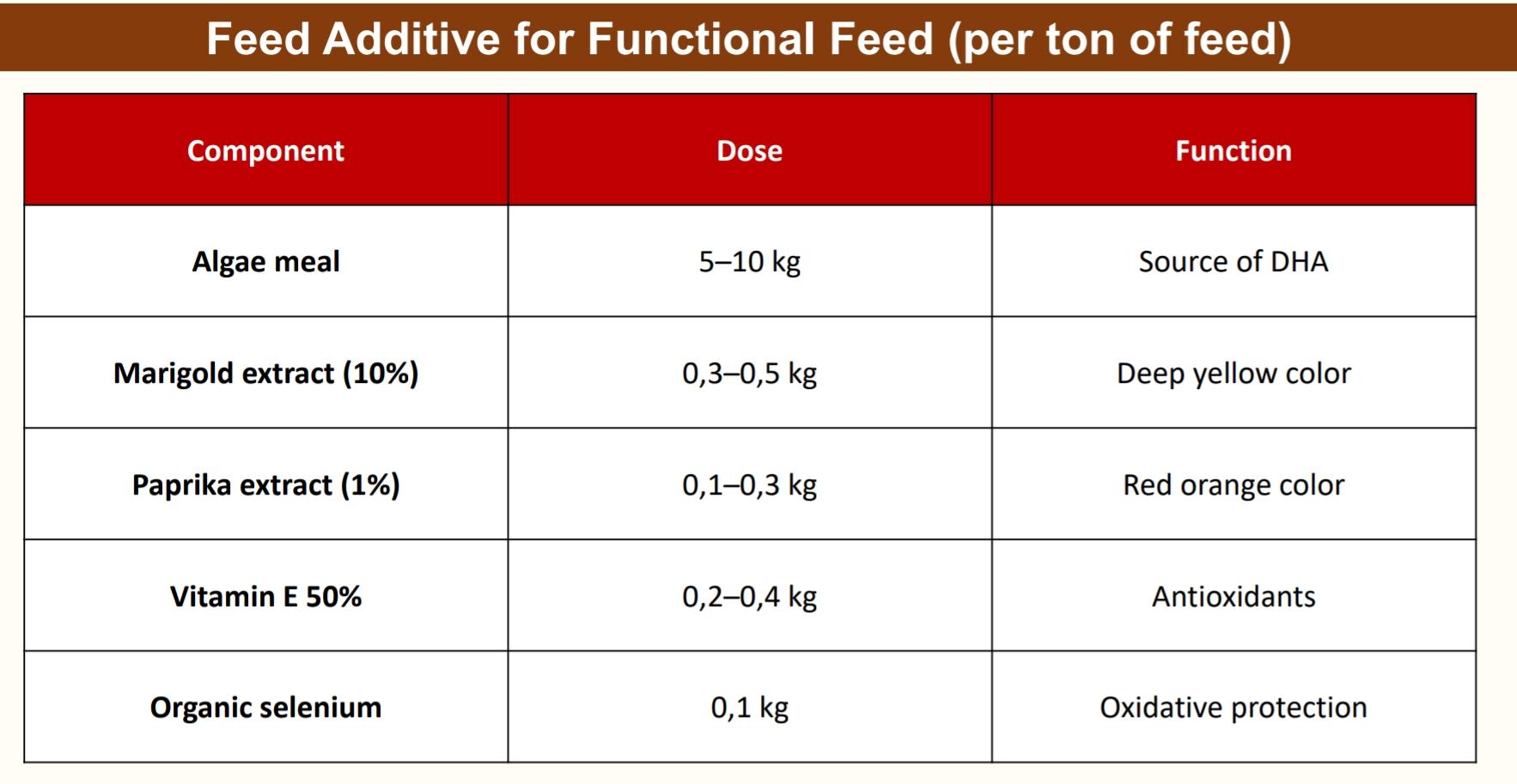
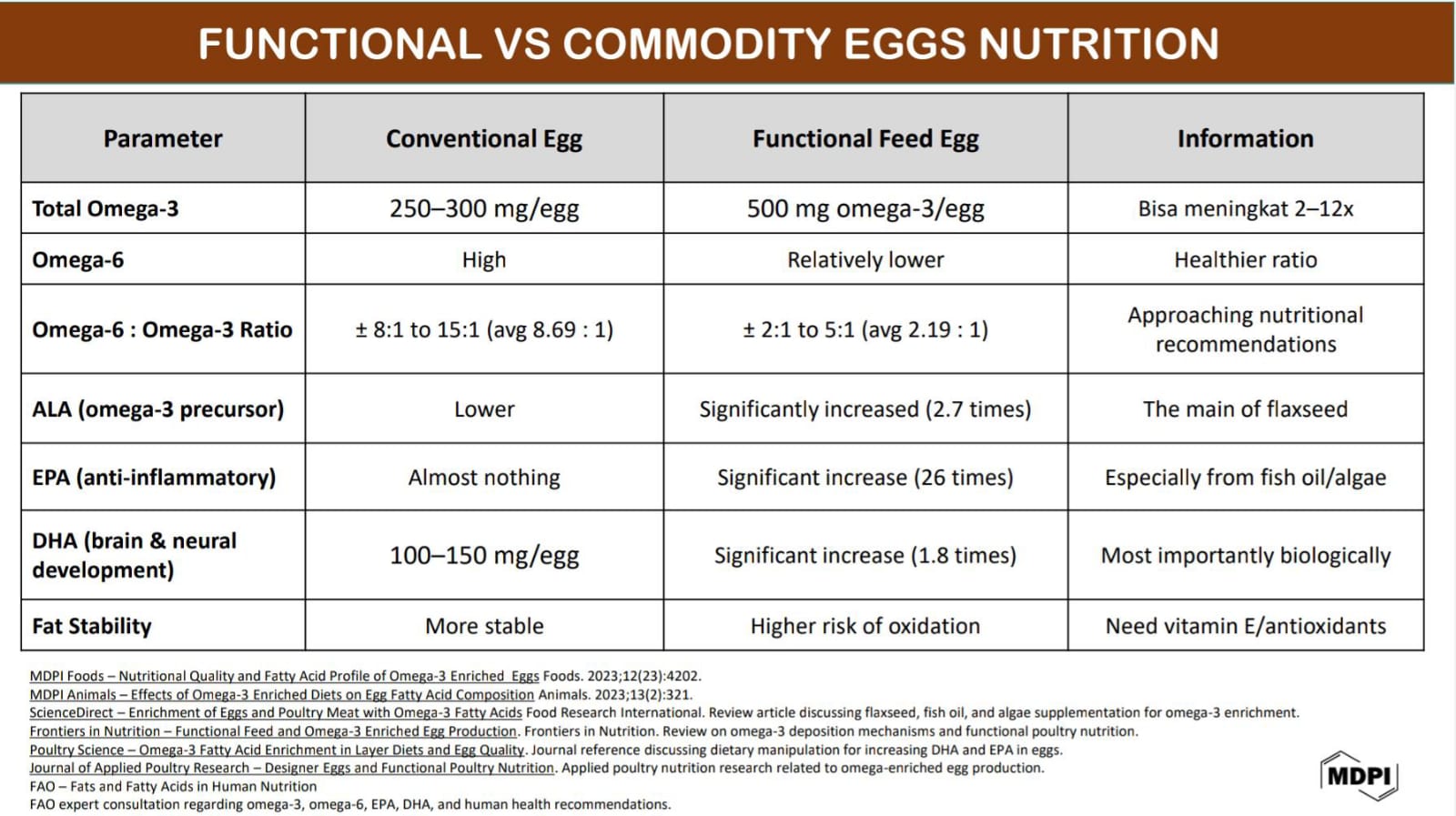
Eggs are no longer viewed merely as commodities; they are increasingly recognized as nutritional delivery systems capable of transferring specific nutrients from feed directly to humans. Through precision nutrition approaches, the fatty acid composition of eggs can be significantly modified. The inclusion of flaxseed, fish oil, and algae-based ingredients in poultry diets has proven effective in increasing levels of DHA, EPA, and ALA several-fold compared to conventional eggs. Furthermore, the omega-6 to omega-3 ratio can be optimized to better support human health.

Modern omega-enriched eggs provide consumers with a practical and affordable source of essential fatty acids without the need for expensive dietary supplements. This represents a major opportunity for poultry producers seeking to differentiate their products in increasingly competitive markets.
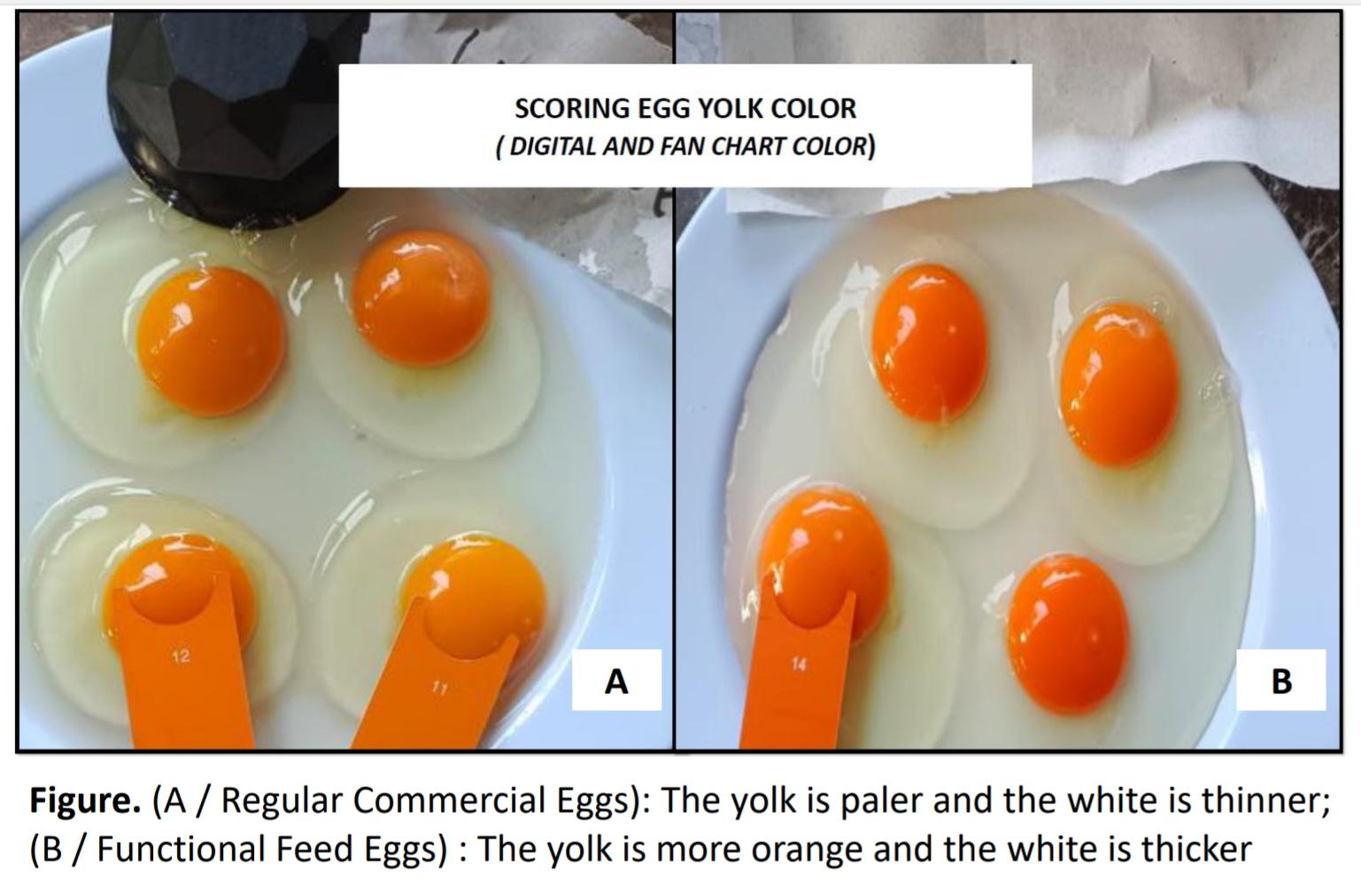
In premium egg markets, yolk pigmentation has also become an important commercial factor. Asian consumers generally prefer darker orange yolks because they are commonly associated with freshness, superior nutrition, and higher quality. As a result, natural pigments such as marigold extract, paprika extract, and carotenoids have become strategic components in modern feed formulations. The Roche Yolk Color Fan has even become a commercial parameter influencing premium egg market segmentation.

However, producing premium functional eggs is not without challenges. Elevated levels of unsaturated fatty acids such as DHA and EPA increase the susceptibility of eggs to lipid oxidation. Therefore, modern functional feed formulations often incorporate antioxidants such as vitamin E, organic selenium, and rosemary extract to maintain oxidative stability and preserve egg quality during storage and distribution.

Precision nutrition: Beyond simply feeding chickens
Precision nutrition has become the foundation of modern poultry production systems. It is no longer sufficient to merely satisfy the basic protein and energy requirements of poultry. Instead, nutrition strategies must be designed to deliver the right nutrients, at the right level, for the right bird, under the right production conditions, and with clearly defined production goals.
Different poultry strains possess distinct metabolic characteristics. Nutritional requirements for energy, protein, amino acids, vitamins, and minerals vary significantly among layer strains such as Hy-Line, Lohmann, and Novogen, as well as broiler strains including Cobb, Ross, Hubbard, and Indian River. Each genotype demonstrates unique growth patterns, feed intake behavior, and nutrient utilization efficiency.
Housing systems also play a major role in determining nutrient requirements. In cage-free systems, for example, birds exhibit higher levels of physical activity due to increased movement, perch usage, and social interaction. This additional activity may increase maintenance energy requirements by approximately 5–10% compared to conventional cage systems. Consequently, cage-free feeding programs require more precise adjustments in dietary energy, digestible amino acids, minerals, and vitamins to maintain optimal productivity and egg quality.
For this reason, future feed formulation strategies can no longer rely solely on conventional nutrient matrices. The industry increasingly depends on data-driven formulation systems based on digestibility, bioavailability, metabolic efficiency, and real-time production performance. In modern poultry production, every gram of nutrition must serve a clear physiological and economic purpose.
Sustainability will define the future of poultry production
Beyond product quality, sustainability has become one of the most critical challenges facing the poultry industry. Global soybean meal price volatility, dependence on imported raw materials, and increasing environmental concerns are pushing producers to seek more sustainable and efficient nutritional strategies.
Since 2021, global soybean meal prices have experienced substantial fluctuations before gradually stabilizing in 2025–2026. This situation has accelerated interest in alternative local feed ingredients in Indonesia. Ingredients such as DDGS, corn gluten meal, palm kernel meal, and cassava meal are increasingly being explored as part of feed diversification strategies aimed at reducing dependency on imported commodities.
Feed enzyme technologies are also becoming increasingly important. The use of phytase and NSP enzymes allows producers to improve nutrient utilization and enhance the feeding value of local raw materials with variable nutritional quality. These technologies not only improve feed efficiency but also contribute to reduced nutrient waste and lower environmental impact.
At the same time, sustainable feeding practices are now closely linked to animal welfare and circular economy principles. Cage-free systems, vegetarian-fed programs, and antibiotic-free production models are no longer niche concepts but rapidly growing market expectations. Several international certification systems have even started limiting the use of certain animal protein sources in poultry feed due to concerns regarding welfare, biosecurity, and sustainability.
Ultimately, sustainable functional poultry feeding is not simply about producing faster-growing chickens or higher egg yields. It is about developing smarter, healthier, and more responsible food production systems capable of feeding a growing population while minimizing environmental impact.

Differentiation: The key to surviving in the modern poultry industry
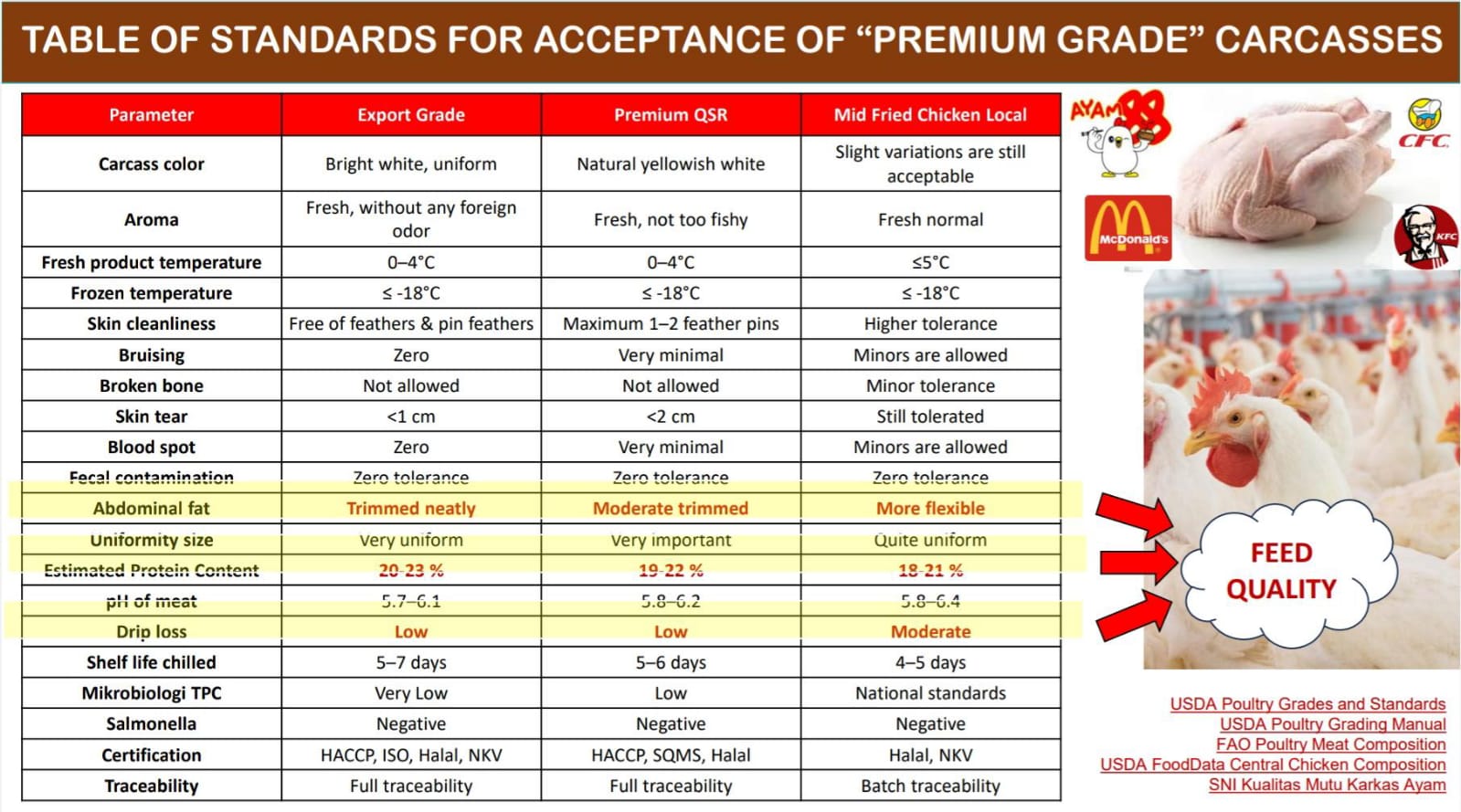
Competition within the poultry sector continues to intensify. Conventional products will become increasingly difficult to compete with if production systems focus solely on volume. As a result, product differentiation has become one of the most important strategies for improving the economic value of poultry products.

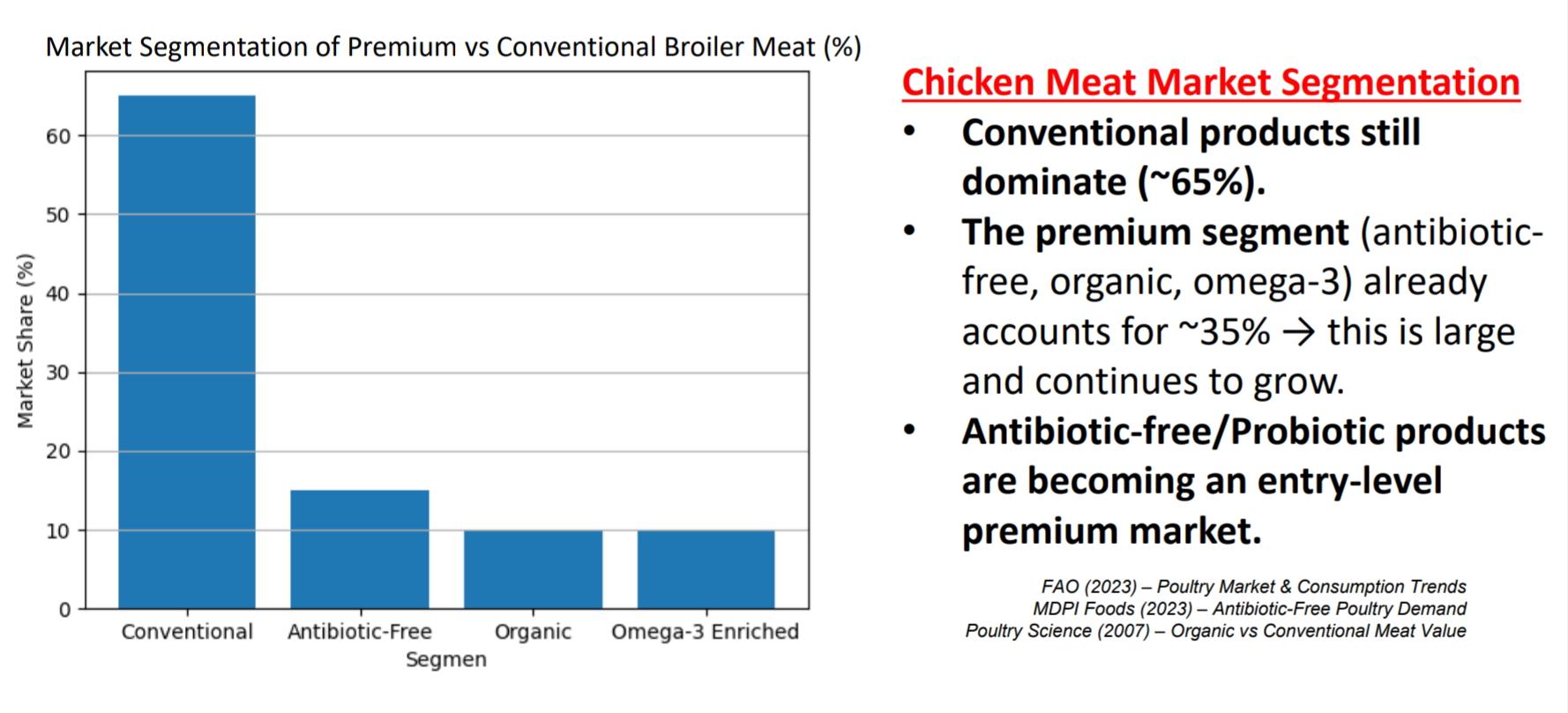
Premium markets for omega-3 eggs, cage-free eggs, and antibiotic-free chicken continue to expand rapidly, including in Indonesia. In many cases, premium eggs are now sold at significantly higher prices than conventional eggs, demonstrating that consumers are willing to pay more for products perceived as healthier, safer, and more sustainable.

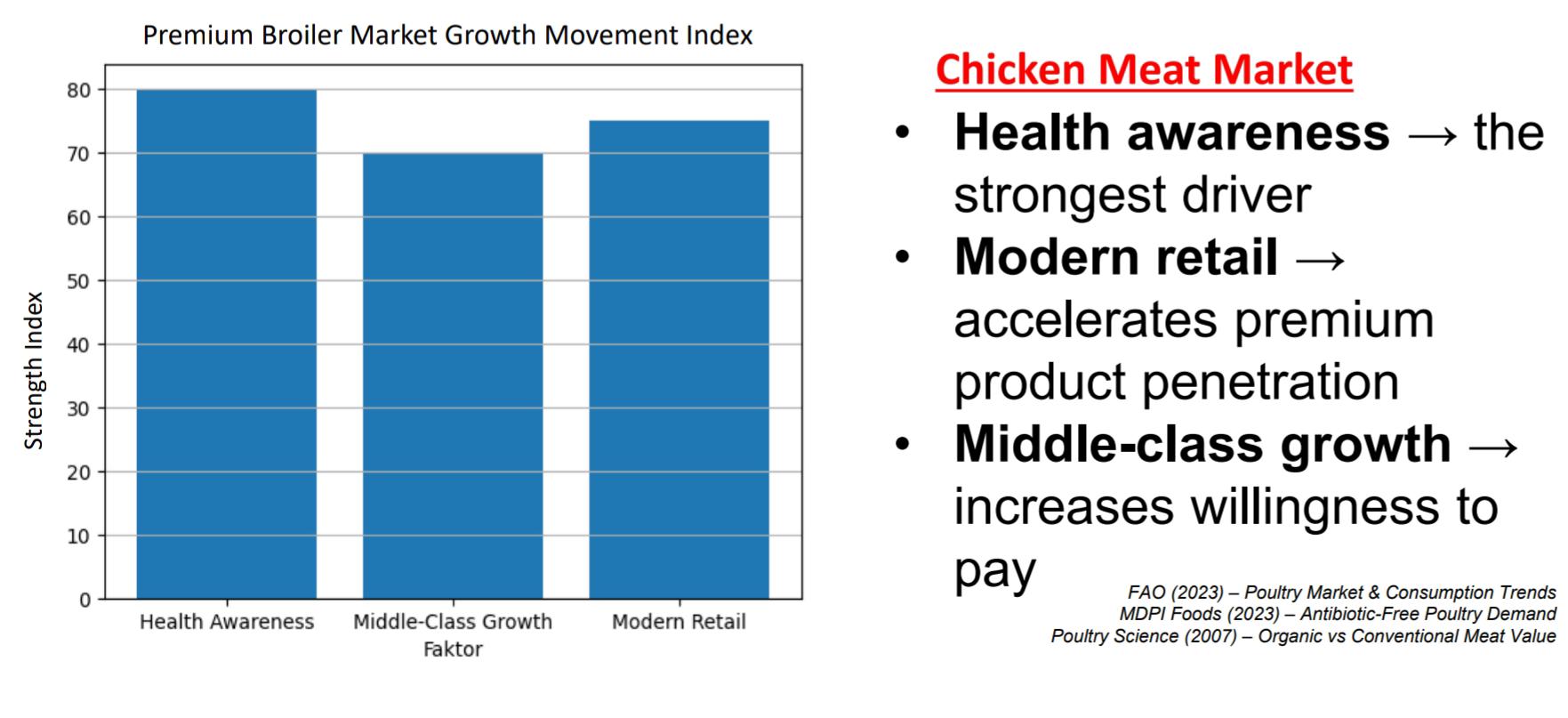
The future of the poultry industry is therefore no longer defined purely by mass production capacity. Instead, it will depend on the industry’s ability to integrate nutrition, animal health, sustainability, and evolving consumer expectations into intelligent and efficient production systems. Functional feed is no longer a temporary trend; it is becoming the new foundation of modern animal protein production.
Today, feed formulation is no longer simply about selecting the cheapest raw materials. It is about making smarter nutritional decisions to produce healthier, safer, and higher-value food for humanity.