


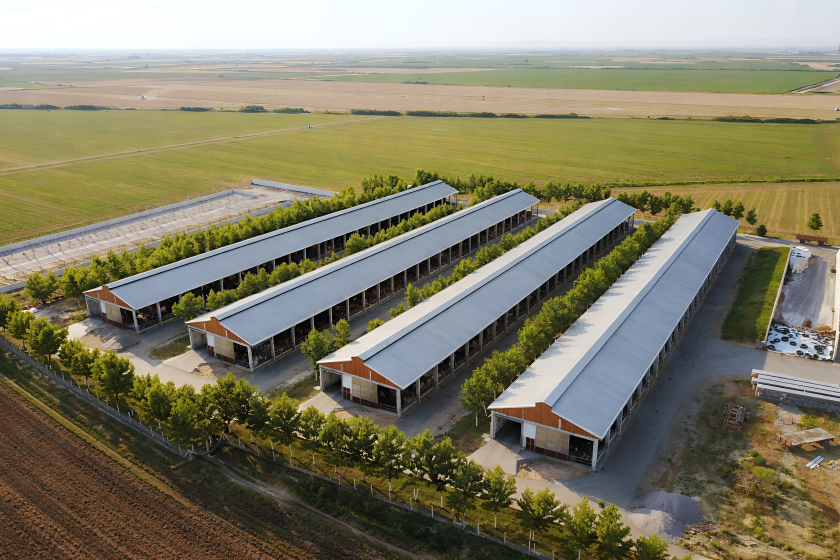
Climate change, rising costs, and geopolitical tensions are reshaping global food systems and the way food is produced and supplied worldwide. These pressures raise urgent concerns about sustainability and security.
The Food and Agriculture Organization (FAO) has highlighted that these challenges are putting serious pressure on agriculture worldwide, raising concerns about long-term sustainability and food security.
Closing the investment gap
FAO estimates that USD 680 billion is required annually to strengthen global food systems. Funds must support farming efficiency, infrastructure, climate resilience, and supply chain improvements.

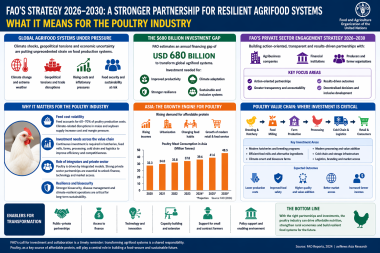
This shortfall underscores why FAO is urging stronger partnerships beyond public funding. Coordinated global and regional responses will be essential to meet future food demand.
Mobilizing private partnerships
FAO’s 2026–2030 strategy emphasizes collaboration with agribusinesses, financial institutions, and farmer organizations. Public funding alone cannot close the gap; private sector partnerships are essential.
Stronger cooperation will help mobilize resources, improve efficiency, and ensure resilience across diverse agricultural sectors.
Poultry at the center
The poultry sector is closely connected to these developments. Poultry remains one of the most affordable and widely consumed proteins, yet it is sensitive to feed costs and supply disruptions.
Feed accounts for 60–70% of production costs. Volatility in corn and soybean markets directly affects poultry margins, exposing producers to climate and trade risks.
These pressures ripple across the value chain, demanding investment at every stage of production.
Investment across the value chain
Modern poultry production depends on hatcheries, feedmills, farms, processing plants, and cold chain systems. Infrastructure gaps in countries like India continue to limit efficiency.
Closing these gaps will be critical to sustaining growth and ensuring reliable protein supplies.
Asia’s expanding market
Asia’s rising incomes, urbanization, and demand for affordable protein make it a key growth market. With proper investment, the region can expand sustainably.
Consumer preferences are shifting from wet markets to processed and packaged poultry. This trend requires stronger cold chain and processing infrastructure to meet hygiene and quality expectations.
Key takeaways
- Poultry demand will continue to grow globally
- Investment is critical for sustainable expansion
- Feed cost volatility remains a major risk
- Asia will drive much of the growth
- Private sector partnerships will shape the future
Poultry’s path forward
Despite challenges, poultry is well positioned for growth. With better investment, efficiency, and collaboration, the sector can strengthen its role in global food security.
FAO’s message is clear: food systems need urgent improvement. For poultry, this is both a challenge and an opportunity to build resilience and expand responsibly.