News 09 Nov



VietGAHP-compliant production and market linkages are helping boost the competitiveness of hill-chicken products.
Available in other languages:
This post is also available in:
Vietnam’s Ha Tinh province is advancing free-range hill-chicken production under VietGAHP standards. By combining standardized practices with market linkages, the initiative aims to raise product value, reduce disease risks, and build a sustainable production chain.
The province currently has more than 10 million birds, with chickens accounting for over 80%. However, poultry production remains fragmented and small-scale, with limited linkages among producers. Biosecurity practices and traceability systems also remains limited.
These gaps have resulted in inconsistent product quality, low added value, and difficulties in accessing modern distribution channels.
As demand for quality, food safety, and traceability grows, VietGAHP-compliant production linked to market outlets is emerging as a path to hill-chicken competitiveness.
Against this backdrop, the Ha Tinh Agricultural Extension Center launched a model in 2026 titled ‘Developing a VietGAHP-certified free-range hill-chicken production area linked to product sales’.
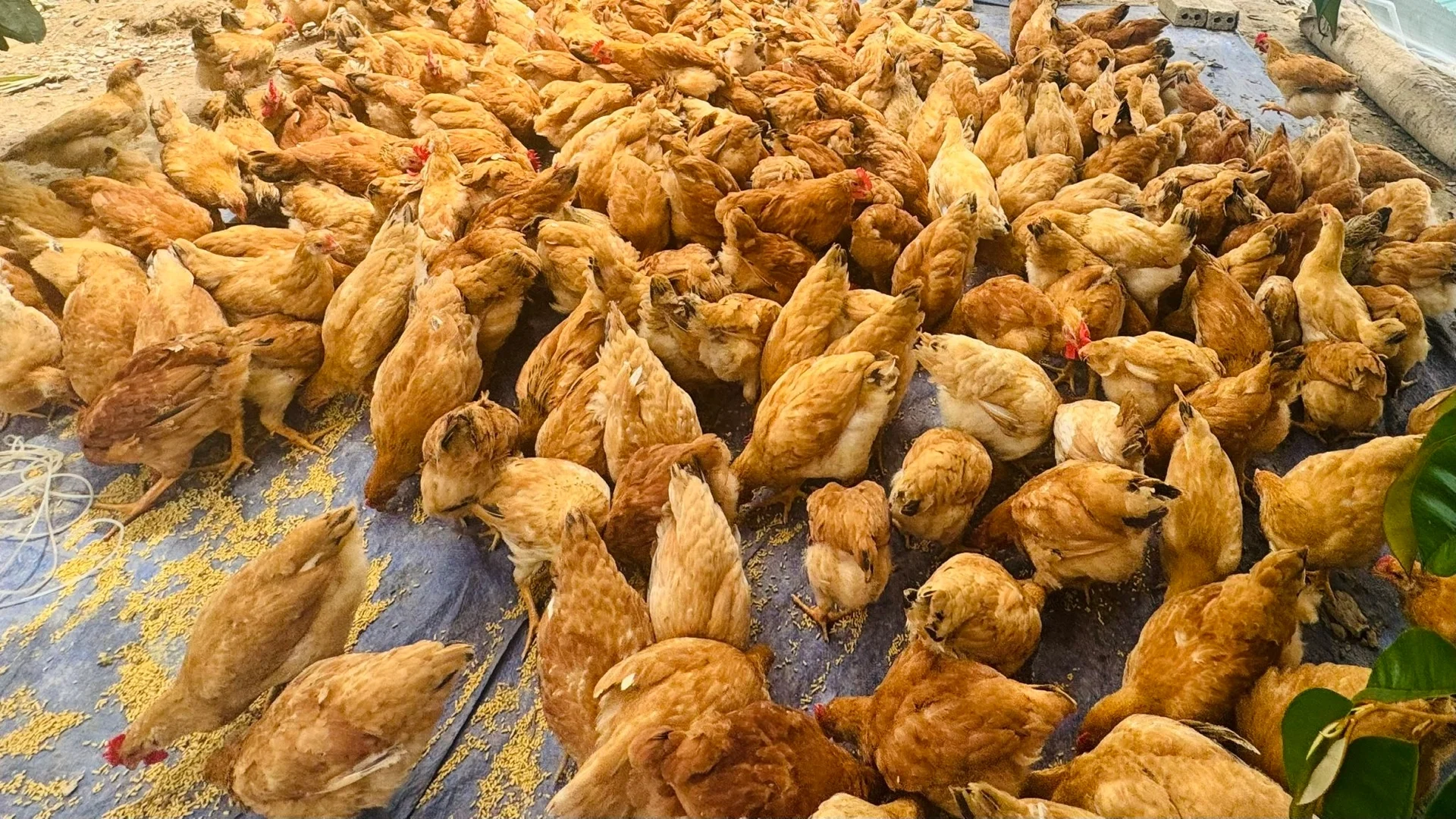
The pilot involves 3000 Ri hybrid chickens raised by seven households in Mai Hoa and Kim Hoa communes. Its goal is to establish a disease‑safe production area while gradually building a farm‑to‑market value chain.


The model applies VietGAHP practices across housing, breed selection, feeding, disease prevention, record‑keeping, and traceability. The Ha Tinh Agricultural Extension Center has also provided technical training, monitor flock growth, and support VietGAHP certification.
Participating households have maintained production records and followed guidelines on housing sanitation and flock management provided by technical staff. After one month, the chickens showed uniform growth, averaging 0.8 kg per bird, with a survival rate of 97%.
Biosecurity is central to the model, given persistent poultry disease risks. Farmers follow strict procedures for cleaning and disinfecting houses, controlling movement, adhering to vaccination schedules, and preparing outbreak response measures.
Compliance with biosecurity requirements reduce mortality, improve product quality, and limit environmental impacts. Tran Thanh Tinh, a participating farmer from Son Truong village in Kim Hoa commune, noted that technical guidance on housing, breed selection, and flock management helped reduce losses and improve uniform growth. He added that the model is shifting farmers’ focus from output alone toward quality and efficiency.
“We expect that once the products receive VietGAHP certification and a purchasing company is linked to the model, we will have greater confidence in market access and more stable prices, creating an incentive to expand production in the coming years,” Mr Tinh said.
Beyond standardizing production, the model seeks to establish stable market linkages. Participating households will form a farmer cooperative group, adopt standardized production practices, consolidate output, develop a common brand and sign contracts with purchasing companies.
The plan targets at least 60% of commercial chicken output from the first production cycle to be sold through linkage contracts. This proportion is expected to rise to 70-80% in subsequent cycles. VietGAHP compliance and traceability are expected to secure prices 10–15% above market levels, improving farmer incomes.
Nguyen Huu Ngoc, Director of the Ha Tinh Agricultural Extension Center, said the model aims to enhance household efficiency while laying the foundation for a disease‑safe hill‑chicken production area. Standardized practices, stronger biosecurity, and market linkages are expected to provide a stable path for growth and competitiveness.



Subscribe now to the poultry technical magazine
AUTHORS

The Hatch Window: A key factor in day-old chick uniformity

Mitigating Early Challenges: How gender sorting with genesys stabilizes uniformity from day one

Egg Size Versatility In Nick Chick – Part II

Interview with Leticia Orellana
Leticia Orellana
NASEM 10th Edition of the Nutrient Requirements of Poultry
Edgar O. Oviedo-Rondón
Length of Intestinal Villi in The Jejunum and Ileum of Broiler Chickens
Dra. Odette Urquiza Bravo Félix Sánchez Godoy Guillermo García Hernández Nestor Ledesma Martínez
The Importance of Water to obtain a Good Start in the First Week and have Uniformity at 7 days of Age
Winfridus Bakker
Advancing Sep‑Tox Detection: How Multispectral Imaging and AI Could Transform Broiler Carcass Inspection
Micah T. Black
When ERP met reality: A manufacturing story from 2007, and why I’m hopeful today
Udaykumar Mudbakhe
Usage of artificial intelligence (AI) tools to ensure sustainable growth of Indian poultry industry
Ricky Thaper
World’s Poultry Congress: Global Poultry Sustainability
Edgar O. Oviedo-Rondón
Biosecurity Levels In Poultry Farming: External, Internal, and Personnel Implementation
MVZ. Cesar Isaac Ascencio Pérez MVZ. José Alejandro Jiménez Ramírez