


This post is also available in:
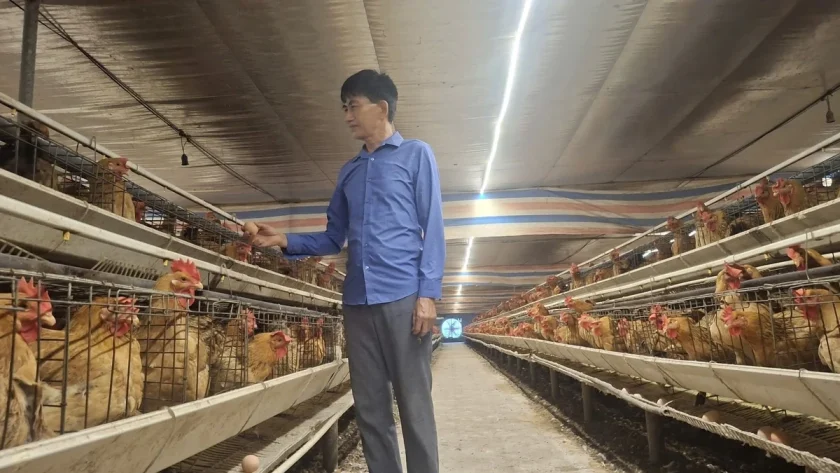
Combining closed, climate-controlled housing, automated feeding and microbial waste treatment, Dao Huu Thuan in Hai Phong, Vietnam has built a farm with 70,000 layers that supplies more than 16 million eggs a year while generating extra income from organic fertilizer.
Located in Mao Dien commune, Hai Phong City, Mr Thuan’s 2-ha farm comprises six permanent houses with a total floor area of about 7,000 sqm. The closed, climate-controlled housing system isolates the flock from the external environment, reducing disease risk and allowing tight control over rearing conditions.


The farm currently maintains a flock of 70,000 layers, producing more than 16 million commercial table eggs annually. The farm’s eggs hold a 3-star OCOP certification (Vietnam’s One Commune One Product program). Combined profit from egg production and Mr Thuan’s animal feed trading business is approximately USD 152,000 a year.
Mr Thuan started out in 1987 with 100 crossbred Luong Phuong broilers and has weathered many difficult periods caused by disease outbreaks, weather and volatile prices. In 2015, he shifted to professional layer production, investing in technology to reduce risk and improve productivity.
According to Mr Thuan, open-sided houses depend heavily on the weather, leaving birds prone to heat stress in summer and respiratory disease in cold spells. As the flock grew to tens of thousands of birds, controlling the in-house microclimate became essential.
The farm is equipped with an evaporative cooling pad system combined with high-capacity exhaust fans that create negative pressure. Incoming air passes through a water curtain that lowers its temperature and filters out dust, keeping house temperatures at 24-26°C and relative humidity at 65-70%. As a result, the laying rate regularly exceeds 90%, even when outdoor temperatures reach 39-40°C.
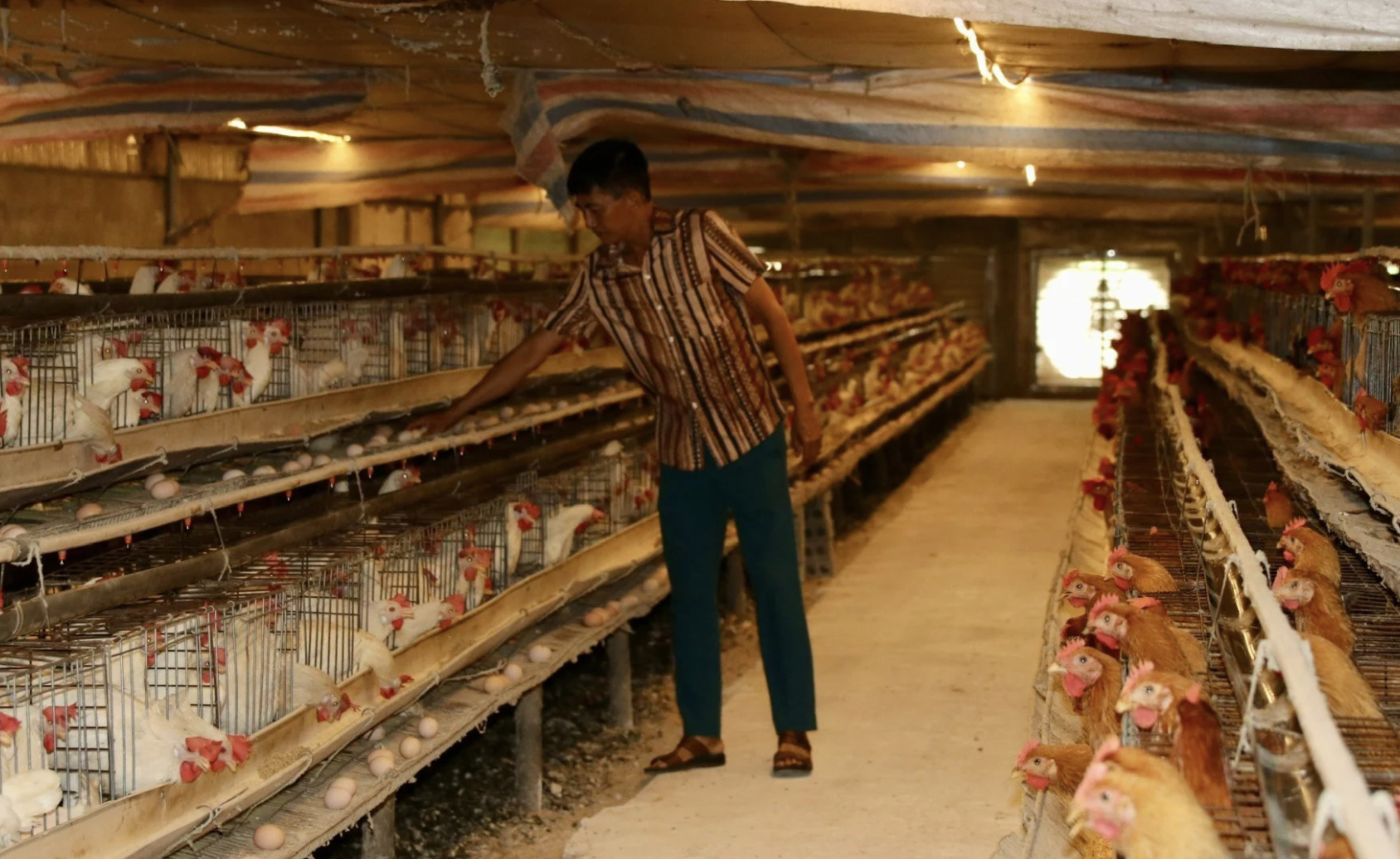
In addition to cooling, feed and water delivery are fully automated. Feed is conveyed from silos, metered by augers and distributed to feed troughs, while automatic nipple drinkers supply filtered and disinfected water. Mechanization reduces labor requirements and limits human contact with the birds, contributing to stronger biosecurity.
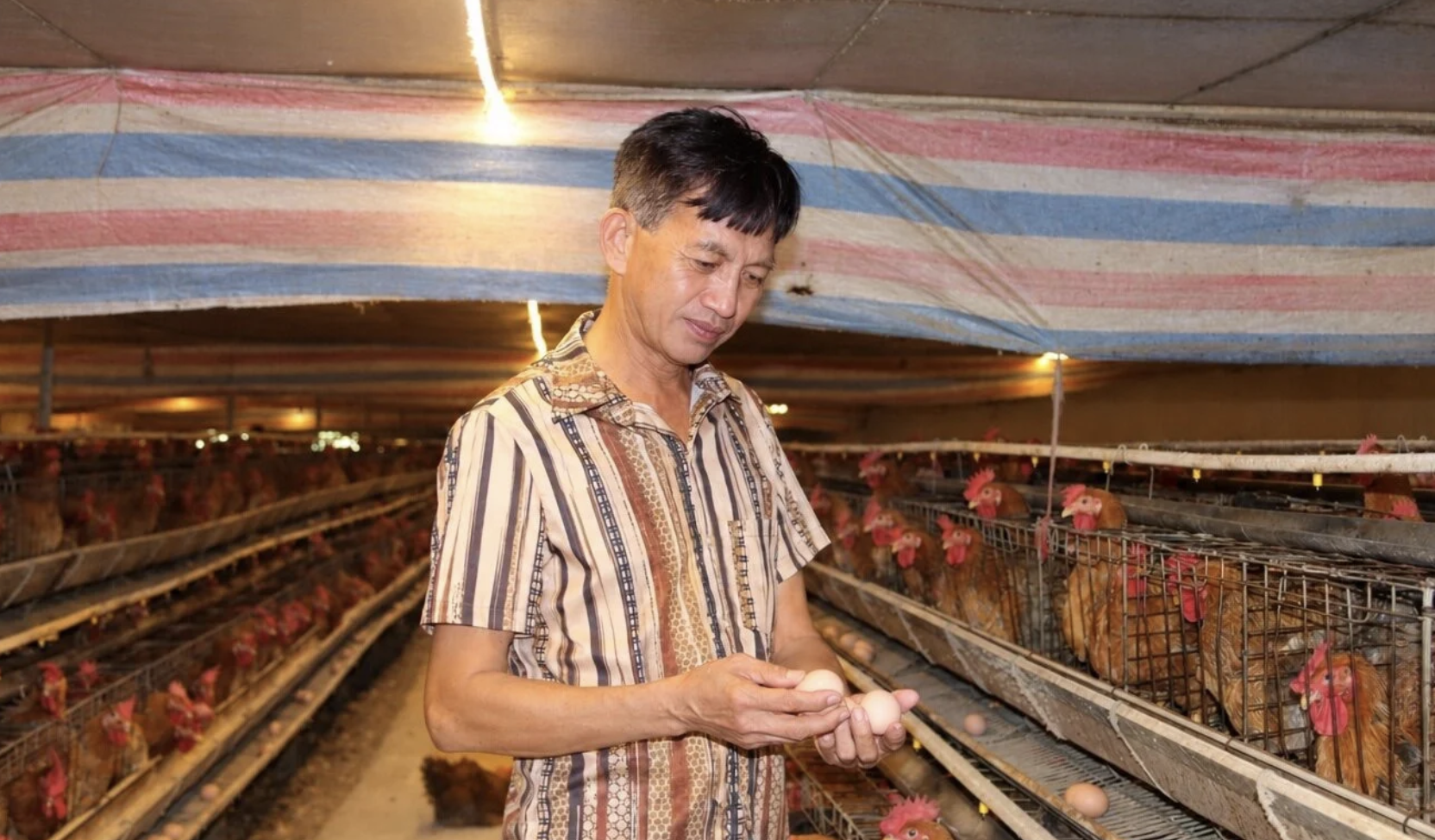

Dao Huu Thuan (Courtesy of Vietnam.VN)
Microbial manure treatment creates an additional revenue stream
With 70,000 layers, the farm generates a very large volume of manure every week. To curb pollution, Mr Thuan installed manure belts beneath the cages, which carry waste to a separate treatment area. There, the manure is mixed with microbial inoculants and composted aerobically.
During decomposition, the temperature of the compost pile rises to roughly 60-70°C, which helps reduce pathogens and odors when the process is managed properly. The finished product is sold as organic fertilizer to growers of citrus and vegetables.
This approach eases the farm’s waste management burden, meets environmental protection requirements and turns a livestock by-product into economic value. According to Mr Thuan, if fresh manure is left to accumulate, toxic gases such as ammonia and hydrogen sulfide can harm the health of the flock as well as nearby residents.
The farm currently provides stable employment for 12 full-time workers, earning roughly USD 270-380 per person per month, along with six seasonal workers.
Beyond farming, Mr Thuan is also a Tier 1 distributor, supplying about 2,500 tons of animal feed annually. He also shares his experience in climate-controlled house design and disease prevention, and supports struggling farm households by offering feed on interest-free deferred payment.

Production linkages expand market outlets for clean eggs
In 2020, Mr Thuan’s eggs received 3-star OCOP certification and were listed on e-commerce platforms. This marked a step forward in brand building and in improving market access for safely produced livestock products.
According to the Hai Phong Department of Fisheries, Livestock Production and Animal Health, the city’s annual egg output is close to 1 billion eggs. However, unstable demand and volatile egg prices remain major challenges for producers.
To improve market access, Mr Thuan and other farmers in Mao Dien commune established the Cam Dong Poultry Egg Cooperative. The cooperative has four member farms investing in closed-system production, supplying tens of thousands of eggs daily to wholesalers, retailers and industrial kitchens in the western part of the city.
Alongside traditional distribution channels, the cooperative is advancing digital transformation, using QR codes for traceability and selling through e-commerce platforms. Linking farms with distribution networks helps standardize quality, improve transparency and broaden the market.
According to the Mao Dien Commune Office of Construction, Agriculture and Environment, Mr Thuan’s farm is one of the area’s leading examples of high-tech agriculture. Beyond improving production efficiency, the model demonstrates the role of waste treatment, value chain linkages and digital transformation in moving toward sustainable production.