Animal Health & Pathology
Newcastle Disease: One Hundred Years On, Why Transmission Control Matters More Than Ever
To read more content about aviNews International June 2026
Animal Health & Pathology
To read more content about aviNews International June 2026

A century after its discovery, Newcastle disease remains a defining challenge for poultry health worldwide.
Newcastle disease (ND) was first described in 1926, almost simultaneously in Java (Bogor, Indonesia) and in the United Kingdom.
Despite major advances, Newcastle disease continues to remind the industry that control is never static.
What has changed over the past century is not the importance of the disease, but the way it is understood and managed. Today, the focus is no longer limited to preventing mortality.
Newcastle disease is caused by avian paramyxovirus type 1 (APMV‑1). While the virus exists as a single serotype, it displays extensive genetic diversity.
This diversity explains why outbreaks can look very different from one situation to another, even though the disease name remains the same.

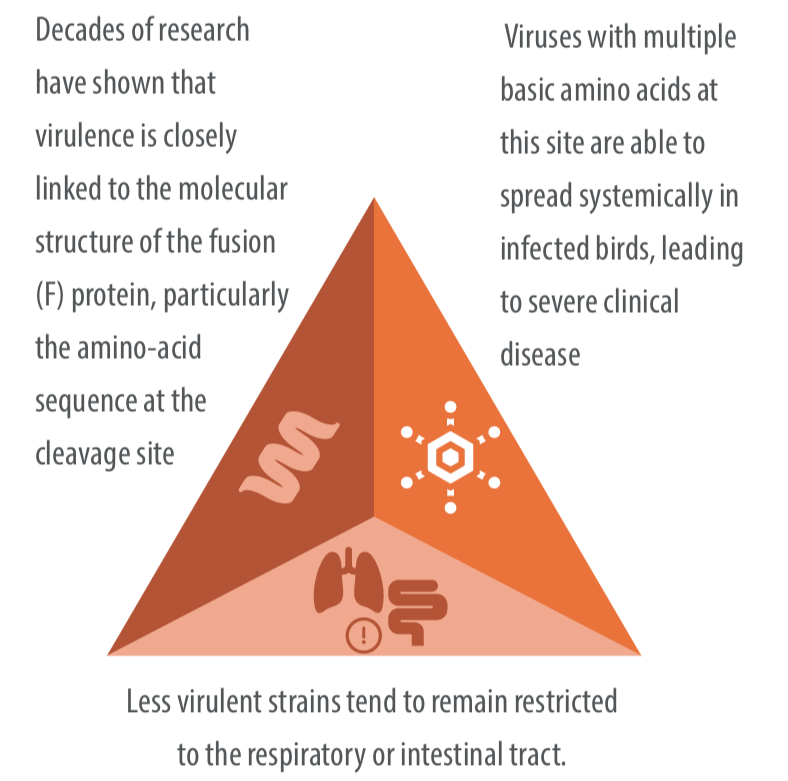
This molecular mechanism helps explain why some Newcastle disease viruses cause high mortality with neurological signs, while others result in milder disease—or no visible signs at all.
Importantly, not all APMV‑1 viruses meet the international definition of Newcastle disease, a distinction that is essential for diagnosis, reporting, and trade.



In the last decade, Genotype VII has emerged and become dominant globally. Due to its virulence, it has been causing severe outbreaks with high mortalities.

Recent scientific studies have shown that Genotype VII can spread much more than the other genotypes. Therefore, it is essential to have not only effective solutions to protect but also to have a vision to take control of transmission.
Modified live vaccines can significantly reduce transmission when high flock immunity levels are achieved. However, reaching consistently protective antibody levels across all birds is challenging in practice, particularly in broilers.
Maternal antibodies, uneven administration, and field variability make the theoretical performance of live vaccines difficult to reproduce consistently at scale.
Vaccination has been central to Newcastle disease (ND) control for decades, yet the limits of traditional live and inactivated vaccines became increasingly evident as poultry production systems intensified.

Vector vaccines emerged not as replacements, but as a new generation of tools designed to address real‑world constraints:
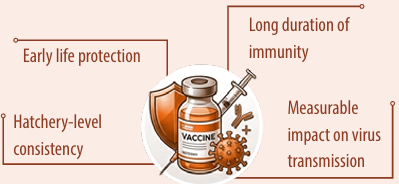
Among these, herpesvirus of turkey (HVT)based vector vaccines have taken a central role in modern ND prevention programs.
Virus shedding—both oro‑nasal and cloacal— is a primary driver of ND spread. Reducing shedding is therefore central to lowering r.
Data from challenge studies show that vaccination strategies inducing strong cell-mediated immunity can drastically reduce virus excretion, including complete prevention of cloacal shedding in some cases.
Traditionally, Newcastle disease vaccines were evaluated primarily on their ability to prevent mortality and clinical signs. While this remains important, it is no longer sufficient.
Modern poultry production is highly interconnected. When virus circulation is not adequately controlled, even subclinical infections can maintain infection pressure within and between flocks.
In epidemiological terms, the objective is to reduce the effective reproduction number (r) to below 1.
When r is below 1, each infected bird infects fewer than one other bird on average, and the outbreak gradually dies out rather than expanding.
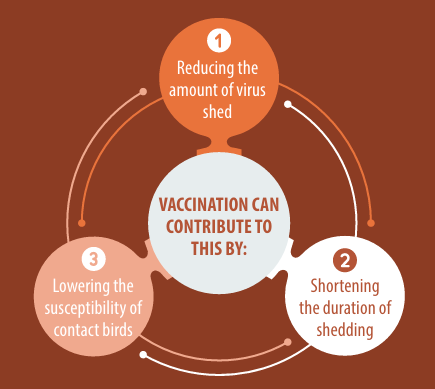
Controlled transmission experiments described in recent research show that properly designed and applied vaccination programs can significantly reduce virus transmission—even when birds have maternally derived antibodies.
The scientific study made by Utrecht University in 2020 is clearly demonstrating the capability of rHVT-ND vaccine to take control of transmission of Genotype VII by reducing the r value below 1.
One of the strongest insights from transmissionfocused research is the importance of hatchery precision. Because vector vaccines do not spread bird‑to‑bird, every chick must receive a full, correct dose.
One of the major advances in Newcastle disease control has been the ability to measure what actually happens in the field.

Sequencing provides further insight by distinguishing field viruses from vaccine-related signals and tracking virus evolution over time.

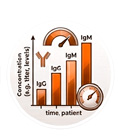
Antibody levels, timing of seroconversion, and vaccine-induced immune profiles all influence how results should be read.
In this context, DIVA‑oriented approaches (Differentiating Infected from Vaccinated Animals) add value by helping identify whether a serological signal reflects vaccination only or exposure to field virus. For regions aiming at freedom from disease—or maintaining trade status—this distinction is increasingly important.
Despite strong scientific progress, recent outbreaks in different parts of the world confirm that Newcastle disease remains a real operational risk.
Investigations consistently identify similar contributing factors:
These findings reinforce a critical principle: risk is not uniform. Control strategies must be adapted to local production systems, poultry density, and interfaces with wild or non‑commercial birds. A strategy that works well in one region may be insufficient in another.
As global poultry production continues to expand, especially in regions where Newcastle disease is endemic, the challenge is no longer whether the disease can be controlled—but how sustainably and consistently that control can be maintained.
The next phase of Newcastle disease management will rely on:
After one hundred years of research and field experience, several conclusions are clear:
As global poultry production continues to expand, especially in regions where Newcastle disease is endemic, the challenge is no longer whether the disease can be controlled—but how sustainably and consistently that control can be maintained.
A century after Newcastle disease was first described, success is no longer defined by survival alone. It is defined by control—measurable, sustained, and repeatable control.
Transmission control is not an academic ambition. It is the logical evolution of ND prevention in modern poultry production. And, we have the proven reference rHVT‑ND vaccine for this important objective.






RECOMMENDED