


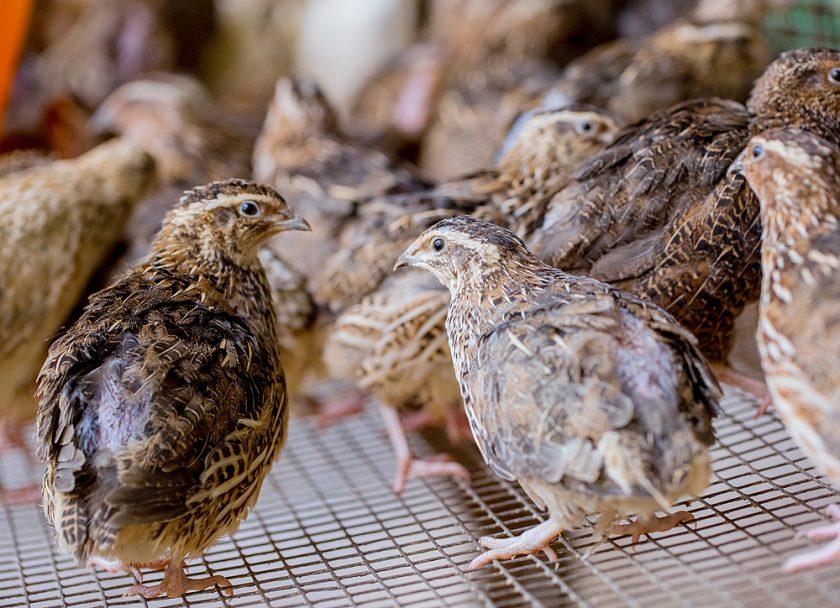
The farming of Japanese quail presents a promising alternative for meat and egg production worldwide. Quail meat is highly regarded for its superior nutritional profile, characterized by high-quality protein, low-fat content, high biological value, and a lower calorie content compared to other poultry products.
A study, led by Seyed Davood Sharifi and his team from the Department of Animal and Poultry Science at the University of Tehran and the Institute of Agricultural Education and Extension, Agricultural Research, Education and Extension Organization (AREEO) in Iran, assessed the effects of different rearing systems and diet types on growth performance, carcass characteristics, pH levels, fatty acid files, and overall meat quality in Japanese quails (Coturnix japonica).
Materials and methods
A total of 608 seven-day old quail chicks were arranged in a 2 × 2 factorial design, with two raising systems (cage and free-range) and two diet types (conventional and organic).
The experiment employed a completely randomized design with four treatments, four replicates per treatment, and 38 birds per replicate. Quail chicks were raised for 42 days in cages and 51 days in free-range systems, depending on the treatment.
Feed intake (FI), live body weight (LBW), and mortality were recorded weekly, and daily feed intake (DFI), body weight gain (BWG), and feed conversion ratio (FCR) were calculated.
At the end of the experiment, the birds were slaughtered to analyze fatty acid profiles, malondialdehyde (MDA) concentrations, and pH in meat.
Results
Results showed FCR from 8 to 42 days of age improved in quails fed a conventional diet in cage system compared to those fed an organic diet raised in either free-range or cage systems (P < 0.05).
During the periods of 8 to 42 days and 8 to 51 days, BWG was higher in quails raised in the cage system fed a conventional diet compared to quails fed an organic diet raised in either free-range or cage systems (P < 0.05).
Intestine length was higher in male quails raised in cages and fed a conventional diet compared to male quails raised in the free-range system fed an organic diet (P < 0.05).
The gut relative weight decreased in female quails raised in cage system compared to both male and female quails raised in free-range and cage systems, respectively (P < 0.05).
Meat pH decreased in quails fed an organic diet compared to those fed a conventional diet (P < 0.05). Free-range quails had higher levels of beneficial long-chain fatty acids and a more favorable n-6: n-3 ratio in their meat compared to cage-reared quails (P < 0.05).
Organic diets increased alphalinolenic acid but also elevated MDA levels, indicating greater lipid oxidation. MDA was lower in free-range quails, especially those fed organic diets, than in caged quails (P < 0.05).
In conclusion, quails fed conventional diets in cage systems showed better growth and feed efficiency, while free-range quails exhibited improved meat fatty acid profiles and oxidative stability.
Organic diets increased lipid oxidation, especially in caged quails, highlighting the trade-off between production performance and meat quality across rearing systems.
These findings emphasize the complexity of balancing production efficiency, meat quality, and animal welfare in quail production systems and underscore the necessity of optimizing diet formulation and management practices to meet diverse industry and consumer demands.