
Modern farming models drive livestock sector growth in Hue
Farmers across Hue are adopting closed barns and circular farming models, supported by policies, technology, and corporate partnerships.
Available in other languages:
This post is also available in:
Hue City’s livestock livestock sector is undergoing a significant transformation as farmers adopt modern, biosecure, and more sustainable production systems. Supported by technology investments, value-chain partnerships, and government incentives, the shift is improving productivity, reducing environmental impacts, and helping stabilize farm incomes.
The shift is evident across both poultry and livestock operations, where farmers are increasingly adopting automated facilities, contract farming arrangements, and circular production models designed to improve long-term sustainability.
Poultry farmers invest in automation and contract farming
Across Hue, poultry producers are making substantial investments in closed-house systems, automated equipment, and partnerships with large agribusiness companies to improve productivity and reduce production risks.
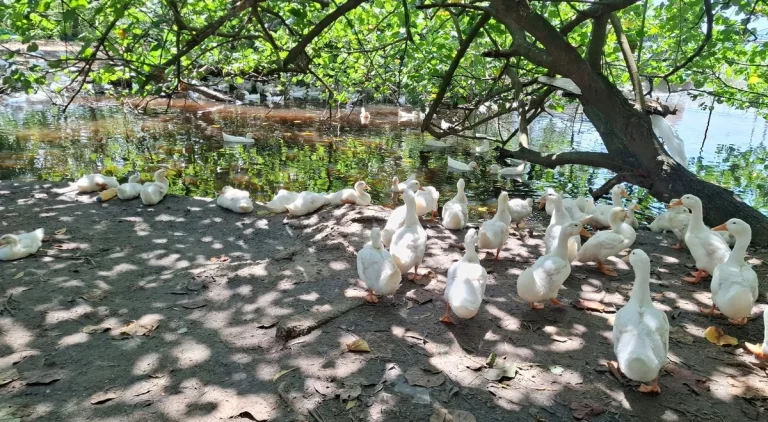
One example is Ho Duy Tuyen of Dan Dien commune, who invested nearly USD 117,600 in early 2025 to build a duck farm on inland sandy land. The facility operates under a contract farming agreement with CP Vietnam Corporation and focuses on raising super-lean ducks.
He also received nearly USD 19,600 in support through Resolution No. 03, issued by the Hue City People’s Council on January 7, 2025, as part of the city’s agricultural development program.
Mr Tuyen noted that feeding, watering, and sanitation are fully automated. His farm raises 10,000 ducks per batch and completes five to six overlapping production cycles annually. Ducks are marketed after 42 days, and Tuyen reports annual net profits of USD 5900-7800 after expenses.


Beyond individual commercial operations, poultry production also plays an important role in Hue’s value-chain development efforts. Under the organic and biosecure farming model promoted by Que Lam Group, participating households and cooperatives currently manage about 10,000 poultry, alongside 5000 organic pigs and 100 yellow cattle.
The network includes 70 households that raise chickens, pigs, and cattle according to standardized production protocols linked to an integrated value chain. At the same time, large-scale biosecure breeding facilities in Hue supply an average of 3 million day-old chicks and 40,000 piglets each year to farmers within the province and in neighboring areas.
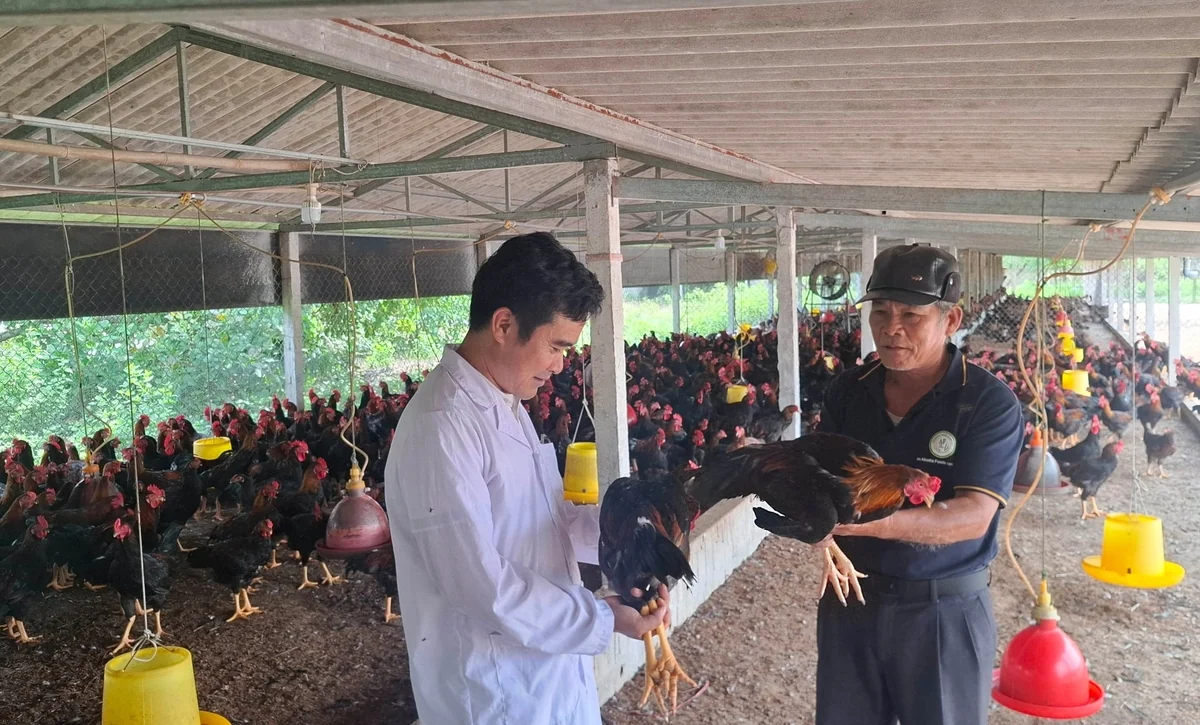
Farmers in Hue City are developing livestock and poultry production
toward safety and sustainability. Photo: Van Dinh – Nong nghiep Moi truong.
Que Lam’s circular farming model gains traction
A prominent example of Hue’s modernization efforts is the ‘4F Biosecure Livestock Complex’ developed by Que Lam Group in Phong Dien ward. The model integrates farming, food, feed, and fertilizer production into a closed-loop system that promotes both productivity and environmental sustainability.
Built on a 2-hectare site, the complex contains three rows of barns covering 3600 sqm each. The facility currently houses 100 sows and approximately 2200 piglets and finisher pigs.
The open-sided barns rely on natural ventilation and are designed to remain cool during the summer and warm in the winter. Automated feeding and watering systems operate throughout the facility, while biological bedding lines roughly three-quarters of each pen.
Probiotics are incorporated into both feed and drinking water to strengthen animal health and improve resistance to disease. Livestock waste is recycled into organic fertilizer, creating a circular production system that supports crop cultivation.
This closed-loop system cuts greenhouse gas emissions, controls odors, reduces disease transmission risks, and maximizes farm resource efficiency. Equally important, the model connects production directly to market demand.
Que Lam Group provides technical training, production inputs, and market access for its network of 120 participating households and cooperatives. These arrangements reduce uncertainty for farmers and encourage wider adoption of modern production practices.
For instance, Nguyen Van Lich, a participating farmer in Phong Dien ward, invested nearly USD 39,200 to build closed-house facilities. His operation maintains 10 sows and raises 100 finisher pigs per batch, producing more than 12 tons of live-weight pork annually.
He said the use of biological bedding and probiotics significantly reduces the need for washing pens. As a result, the farm saves water, minimizes odors, and generates organic fertilizer that is used in his family’s 2-hectare green-skin pomelo orchard.
Strong sector performance supported by policy
According to the Hue City Sub-Department of Animal Husbandry and Veterinary Medicine, close coordination between government agencies and local authorities has contributed to strong production results and effective disease control.
The city currently hosts over 400 commercial farms, including four large-scale pig farms, 87 medium-scale operations, and 315 small-scale farms.
Nguyen Van Hung, Director of the Sub-Department of Animal Husbandry and Veterinary Medicine, said the sector will continue strengthening its organizational capacity through training programs, particularly for veterinary personnel at the commune and ward levels.
The agency is also accelerating high-tech, biosecure, and organic production to ensure strict disease control and food safety.
Municipal leaders recognize animal husbandry as a vital pillar for job creation, income growth, and rural economic development.
Moving forward, Hue will continue implementing coordinated support policies to encourage expansion, technology adoption, and production restructuring – prioritizing concentrated, biosecure, and organic models integrated into value chains with a sharp focus on disease surveillance and waste treatment.
Related to Market

Article 31 Jul


Poultry Feed Challenges Amid Strait of Hormuz Closure

News 11 Jun
Frozen Poultry Exports Surge at Georgia Ports

Article 30 May
When the Supply Chain Breaks: Poultry Prices and the Economics of Maritime Disruption in the Middle East

News 25 Mar
Turmoil Hits Poultry Sector in Syria

News 18 Mar
Middle East War Shakes Poultry Supply Chains

News 16 Mar
Egg Exports from Ukraine Rise by Over 60%
Article 16 Mar
The Reality of the South African Egg Industry

News 11 Mar
Defining forces in the U.S. egg market in 2026