The global poultry feed organic trace minerals market is expanding as producers increasingly prioritize bird health, productivity, and resilience under challenging production conditions. A DataM Intelligence report projects strong growth for the broader animal feed organic trace minerals segment between 2023–2030, with poultry emerging as one of the fastest-adopting sectors.
Organic trace minerals are increasingly replacing inorganic sources in poultry diets. Their superior bioavailability, improved absorption, and lower excretion rates translate into better feed efficiency, stronger immune responses, and improved production outcomes. These benefits are particularly valuable as climate stress and disease pressure intensify across major poultry-producing regions.
Tackling heat stress
In December 2025, Ajinomoto Animal Nutrition launched a fermentation-derived organic selenium designed to help poultry manage oxidative stress linked to heat exposure.


The yeast-based selenium targets the physiological challenges caused by rising summer temperatures, particularly in Japan, where prolonged heat events have negatively impacted poultry performance and welfare. Organic selenium is critical to antioxidant defense systems, protecting cells and sustaining productivity in heat-stressed flocks.
Eggshell quality and layer performance
In November 2025, Zen-Noh (JA Group) added organic zinc to its standard layer feed formulation.

The update aims to improve eggshell quality and reduce breakage during transport, a key cost factor in egg production and distribution. Stronger shells not only reduce losses but also enhance efficiency and profitability for layer producers.
Precision mineral nutrition strategies
Feed manufacturers and nutritionists are increasingly adopting precision mineral strategies tailored to specific poultry production stages.
Organic trace minerals allow for lower inclusion rates while maintaining or improving performance. This approach supports sustainable feed formulation and reduces environmental mineral loading.
Innovation driving adoption
While organic trace minerals were once viewed as premium inputs, recent innovations are accelerating their mainstream adoption in poultry feed.
Advances in fermentation technology, chelation processes, and delivery formats are improving consistency and cost-effectiveness. These developments make organic minerals more accessible to commercial producers and strengthen their role in modern feed programs.
Outlook for poultry producers
Poultry operations face rising input costs, tighter biosecurity requirements, and growing scrutiny over animal welfare and environmental impact. Organic trace minerals are increasingly positioned as strategic nutritional tools that support immunity, shell quality, and stress resilience. Their alignment with operational challenges makes them vital for modern poultry systems.
With continued research, product innovation, and proven on-farm results, organic trace minerals are expected to play an expanding role in poultry nutrition worldwide through the end of the decade.



Subscribe now to the poultry technical magazine
AUTHORS

Setting the Global Standard for Soy
Isa Tan
Importance of Eggshell Temperature, Checking and Record Keeping in a Commercial Poultry Hatchery
Rasel Ahmed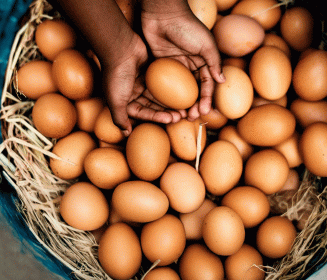
The Reality of the South African Egg Industry
Abongile Balarane
Mycoplasmosis update: Antimicrobial Resistance, Vaccines, and Control Challenges
Edgar O. Oviedo Rondón
Future Flock: Antibiotic-Free Solutions for a Rising Population
Dr Ahmad Safi Dr. Faran Hameed
Interview Dr. Nivin Nasser
Dr. Nivin Nasser
Disinfection of Fertile Broiler Breeder Eggs
Edgar O. Oviedo Rondón
Precision Matters: Tackling Quality Issues in on‑Farm Vaccination
Jaime Sarabia Fragoso Kevin Gandon Pascal Paulet
Process Control: 30 Specific Aspects to Evaluate from Pre-Slaughter to Slaughter
Eduardo Cervantes López
Ishikawa Diagram Applied to Processing of Chickens
Eduardo Cervantes López