Sources: Available upon request




In 2025, poultry farmers face both challenges and opportunities. Rising feed costs, climate variability, and market fluctuations have made it essential for poultry farms to diversify their income streams. Fortunately, several proven strategies can help farmers stabilize and grow their revenue.
One of the most effective ways to increase income is by processing poultry into value-added products. Instead of selling whole chickens or eggs, farmers can offer marinated cuts, smoked meats, or specialty egg products like salted or pickled eggs. These products often fetch higher prices and appeal to niche markets.
Opening your farm to the public can be a lucrative venture. In 2025, consumers are more interested than ever in where their food comes from. Hosting farm tours, egg-collecting experiences, or poultry-raising workshops can generate additional income while building community trust and brand loyalty.
Adding other livestock such as ducks, quail, or goats can complement poultry operations. Similarly, integrating crop production—like growing corn for feed or herbs for seasoning poultry products—can reduce input costs and create new revenue streams.


Direct-to-consumer models are thriving. Offering weekly or monthly egg or meat subscriptions with home delivery can build a loyal customer base. In 2025, digital platforms make it easier than ever to manage subscriptions and logistics.
Installing solar panels or biogas systems can reduce energy costs and even generate income by selling excess power back to the grid. These systems also appeal to environmentally conscious consumers and may qualify for government incentives.
A strong online presence is crucial. Farmers can use social media, websites, and e-commerce platforms to sell products, share their story, and connect with customers. Offering online ordering and farm pickup options can expand market reach significantly.
Experienced farmers can monetize their knowledge by creating online courses, writing eBooks, or offering consulting services to new poultry entrepreneurs. This not only diversifies income but also strengthens the farming community.
Conclusion
Diversifying income is no longer optional—it’s a necessity for poultry farms in 2025. By embracing innovation, leveraging technology, and tapping into consumer trends, farmers can build resilient, profitable operations that thrive in a changing world.
Sources: Available upon request


White-Egg Layers Rise in UK



Subscribe now to the poultry technical magazine
AUTHORS

Setting the Global Standard for Soy
Isa Tan
Importance of Eggshell Temperature, Checking and Record Keeping in a Commercial Poultry Hatchery
Rasel Ahmed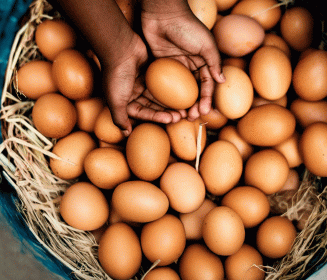
The Reality of the South African Egg Industry
Abongile Balarane
Mycoplasmosis update: Antimicrobial Resistance, Vaccines, and Control Challenges
Edgar O. Oviedo Rondón
Future Flock: Antibiotic-Free Solutions for a Rising Population
Dr Ahmad Safi Dr. Faran Hameed
Interview Dr. Nivin Nasser
Dr. Nivin Nasser
Disinfection of Fertile Broiler Breeder Eggs
Edgar O. Oviedo Rondón
Precision Matters: Tackling Quality Issues in on‑Farm Vaccination
Jaime Sarabia Fragoso Kevin Gandon Pascal Paulet
Process Control: 30 Specific Aspects to Evaluate from Pre-Slaughter to Slaughter
Eduardo Cervantes López
Ishikawa Diagram Applied to Processing of Chickens
Eduardo Cervantes López