






Why India Must Transition from Live Bird Sales to Processed Chicken and How to Do It Right
The Unseen Cost of Price Fluctuation
Poultry farmers and integrators live with constant uncertainty. One day, the live bird price is INR 100/kg; the next day, it’s INR 70. Despite careful planning and biosecurity, they find themselves at the mercy of a market without controls, hedging tools, or predictability.
This snake-and-ladder game isn’t just a minor inconvenience. For thousands of farmers and integrators, it means boom-or-bust cycles, mounting debt, and emotional distress.
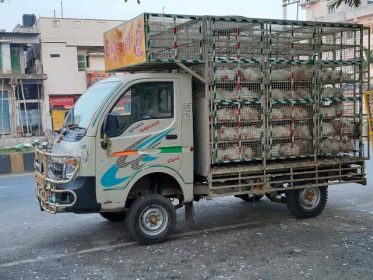
Why does this happen? Because over 90% of India’s chicken is sold as live birds, through a fragmented network of local traders, mandi agents, and retailers. This leaves producers completely exposed to short-term demand shocks and regional price wars.
Trapped in the Wet Market Loop
Unlike dairy or eggs, chicken has never found its way into India’s formal, organized retail sector in a big way. The reasons are many:
This dependence on the wet market ecosystem has led to an industry that is technologically advanced at the backend (feed, genetics, hatcheries) but archaic at the point of sale.
Why Processed Chicken is the Only Way Forward
Processed chicken offers what live bird trading can never provide: control, hygiene, quality, traceability, and pricing power. When producers can cut, pack, chill or freeze, and distribute chicken through modern channels, they create value — not just for consumers, but for themselves.
Countries like Brazil and the US moved long ago to processed systems — enabling them to stabilize prices, control diseases, reduce waste, and expand exports. India is still playing catch-up, but the tide is turning.

What About the Retailers and Traders
This is where caution — and compassion — are needed.
Lakhs of small traders, retailers, and butchers depend on the live bird system. They are not the problem; they are part of the ecosystem. The challenge is that the transition to processed chicken threatens their livelihood unless they are included in the solution.
If the industry turns its back on them, they will resist the change — and rightfully so.
Challenges in Scaling Up Processed Chicken
Even large integrators, who have invested in modern processing units, are unable to process more than a fraction of their total live bird production. Why?
This creates a bottleneck: plants exist, but markets don’t.
A Roadmap for Transition: Step-by-Step, Inclusive, Scalable
So how do we solve this? Not with revolutions, but with evolution. Here’s a phased roadmap:
Establish small to mid-sized chicken processing plants in every district, owned by producers, integrators, and stakeholders.
Encourage co-operatives (like Amul) or private limited companies with investor-farmer partnerships.
Train existing butchers and live bird retailers to run processed chicken outlets.
Launch nationwide campaigns to promote hygienic, processed chicken.
Provide subsidies for cold chains, tax incentives, and simplified food safety licensing.
The Future is Processed, but the Path Must Be Humane
India cannot afford to let its poultry farmers suffer in silence any longer. Nor can it ignore the global demand for hygienic, traceable chicken. The live bird model is outdated — it’s time to build a new system that rewards producers, empowers retailers, and protects consumers.
But this must be done with empathy. Every stakeholder — from hatchery to handler, from trader to tech — must find a place in this new ecosystem.
The future isn’t about cutting out the old. It’s about carving space for everyone in a smarter, stronger, and safer poultry value chain.
Sources: Available upon request
Subscribe now to the poultry technical magazine
AUTHORS

Setting the Global Standard for Soy
Isa Tan
Importance of Eggshell Temperature, Checking and Record Keeping in a Commercial Poultry Hatchery
Rasel Ahmed
The Reality of the South African Egg Industry
Abongile Balarane
Mycoplasmosis update: Antimicrobial Resistance, Vaccines, and Control Challenges
Edgar O. Oviedo Rondón
Future Flock: Antibiotic-Free Solutions for a Rising Population
Dr Ahmad Safi Dr. Faran Hameed
Interview Dr. Nivin Nasser
Dr. Nivin Nasser
Disinfection of Fertile Broiler Breeder Eggs
Edgar O. Oviedo Rondón
Precision Matters: Tackling Quality Issues in on‑Farm Vaccination
Jaime Sarabia Fragoso Kevin Gandon Pascal Paulet
Process Control: 30 Specific Aspects to Evaluate from Pre-Slaughter to Slaughter
Eduardo Cervantes López
Ishikawa Diagram Applied to Processing of Chickens
Eduardo Cervantes López