Sources: Available upon request





Iran’s poultry industry, once a cornerstone of domestic food security, is now facing an unprecedented crisis. Severe feed shortages, currency collapse, and economic instability have pushed farms to the brink. Disturbingly, reports indicate that chickens deprived of adequate nutrition have begun engaging in cannibalism, underscoring the depth of the sector’s challenges.
The most alarming consequence of these shortages has been the rise of cannibalism in poultry farms. Chickens, stressed and underfed, have reportedly begun attacking and eating each other. This behavior is not only a sign of extreme deprivation but also a serious animal welfare issue. It highlights the biological stress placed on birds when basic nutritional needs are unmet.
Beyond feed shortages, the industry faces a cascade of economic pressures. Rising production costs, inflation, and the removal of government subsidies have left many farms financially unsustainable. Policy volatility and inconsistent support measures have further undermined confidence in the sector. Without immediate intervention, experts warn that widespread bankruptcies could devastate one of Iran’s most vital agricultural industries.
The situation in Iran’s poultry sector illustrates the devastating impact of economic collapse on agriculture. Feed shortages have triggered cannibalism among flocks, farmer protests, and fears of industry-wide collapse. Unless decisive measures are taken to stabilize currency flows and secure feed imports, the future of Iran’s poultry industry—and the food security of millions—remains in grave jeopardy.

Sources: Available upon request
Subscribe now to the poultry technical magazine
AUTHORS

Setting the Global Standard for Soy
Isa Tan
Importance of Eggshell Temperature, Checking and Record Keeping in a Commercial Poultry Hatchery
Rasel Ahmed
The Reality of the South African Egg Industry
Abongile Balarane
Mycoplasmosis update: Antimicrobial Resistance, Vaccines, and Control Challenges
Edgar O. Oviedo Rondón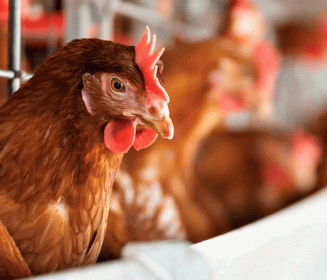
Future Flock: Antibiotic-Free Solutions for a Rising Population
Dr Ahmad Safi Dr. Faran Hameed
Interview Dr. Nivin Nasser
Dr. Nivin Nasser
Disinfection of Fertile Broiler Breeder Eggs
Edgar O. Oviedo Rondón
Precision Matters: Tackling Quality Issues in on‑Farm Vaccination
Jaime Sarabia Fragoso Kevin Gandon Pascal Paulet
Process Control: 30 Specific Aspects to Evaluate from Pre-Slaughter to Slaughter
Eduardo Cervantes López
Ishikawa Diagram Applied to Processing of Chickens
Eduardo Cervantes López