Available in other languages:
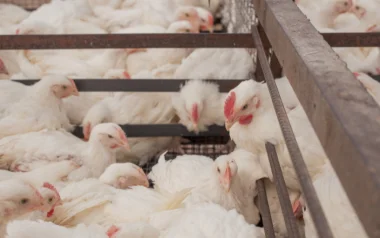
Poultry production continues to face mounting pressures from high feed costs, disease risks, and harsh environmental conditions. Broilers are particularly vulnerable to heat stress due to their feather covering, high metabolic rate, and dense housing. Elevated temperatures and humidity reduce feed intake, alter metabolism, and increase fat deposition, all of which compromise meat quality.
Despite advances in cooling technologies, preslaughter operations remain a critical stage where losses occur through mortality, injuries, and downgraded carcasses.
Fasting is the first step in preslaughter operations, intended to reduce gastrointestinal contents and contamination during processing. Studies recommend fasting periods of 6 to 12 hours, balancing digestive tract cleaning with minimal body weight loss. Prolonged fasting beyond 12 hours can lead to dehydration, fragile intestines, and carcass condemnation.
In hot climates, fasting must be carefully scheduled, often beginning later in the evening to avoid compounding stress during peak heat hours. Poorly managed fasting can result in meat with undesirable texture and color, increasing economic losses.

Catching broilers is widely recognized as the most stressful stage. Manual capture remains common, often involving birds being held by their legs or inverted, practices that increase risks of fractures, bruises, and suffocation. Studies report wing fractures and liver ruptures among birds dead on arrival, highlighting the severity of injuries linked to poor handling.
To reduce harm, catching should occur during cooler nighttime hours, when birds are less active and visibility is reduced, lowering the likelihood of carcass damage. Mechanical methods, though less widespread, may shorten loading times and reduce injury risks.
Transport is another critical stage where stress accumulates. Stocking density, crate microclimate, and external weather conditions all influence mortality. High densities reduce costs but increase heat stress, while low densities may cause birds to be thrown around, leading to injuries. Research suggests optimal densities vary with temperature, with fewer birds per crate during hot afternoons and slightly higher densities during cooler periods.

Weather conditions strongly affect outcomes. Trucks without climate control expose birds to extreme heat or cold, both of which raise death-on-arrival percentages. Studies show mortality rises sharply when external temperatures exceed 30 ℃ or fall below 18 ℃. Ventilation layouts and airflow management inside trucks are therefore crucial. Transport duration also matters: mortality rates increase significantly on journeys longer than two hours, with risks rising further on trips exceeding 300 kilometers.
After transport, birds enter lairage, the waiting period before slaughter. This stage should allow recovery in climate-controlled environments equipped with fans and foggers. However, lairage must remain brief, ideally one to two hours, since prolonged waiting depletes energy reserves and worsens bruising.
Short lairage is particularly important after long journeys, when birds are already in critical condition. Seasonal variations also play a role, with higher mortality rates observed during summer. Proper lairage management reduces deaths, improves meat quality, and lowers costs.
The study emphasizes that preslaughter operations in hot environments demand precise planning and logistics. Each stage—fasting, catching, transport, and lairage—adds cumulative stress that undermines welfare and meat quality. Real-time monitoring technologies, improved handling practices, and optimized transport layouts are essential to reduce losses.
With global temperatures rising and production demands increasing, advancing animal logistics is not only a welfare issue but also an economic necessity for the poultry industry.


Subscribe now to the poultry technical magazine
AUTHORS

Newcastle Disease: One Hundred Years On, Why Transmission Control Matters More Than Ever
Mustafa Seckin Sandikli
Egg Size Versatility in Nick Chick – Part I
H&N Technical Department
Interview with Khaled Abdel Nasser Awwad
Khaled Abdel Nasser Awwad
When the Supply Chain Breaks: Poultry Prices and the Economics of Maritime Disruption in the Middle East
Dima Chatila
Reovirus Infections in the Broiler Industry
Edgar O. Oviedo Rondón
Egg Condensation in Hatcheries: A Hidden Risk for Embryo Development, Hatchability and Chick Quality
Rasel Ahmed
From Chat to Farm Insight: Bridging the Social Data Gap in Indonesian Broiler Farming
Setiawan Guntarto
Labor Shortage in the Poultry Industry: Potential Solutions
Edgar O. Oviedo Rondón
A Comparison of Soybean Meal from Different Origins in Terms of Nutrient Composition, Amino Acid Profile, and Protein Quality
Güner GÖVENÇ
When Algorithms Start to Control Feed Composition
Henri E. Prasetyo DVM. M.Vsc