


23 Apr 2026

Egg prices fall as oversupply, weak demand hits Vietnam farmers

The market faces oversupply, weak exports, and falling demand, pushing prices down while farmers struggle with rising costs.

Available in other languages:

Content available at:

Tiếng Việt (Vietnamese)

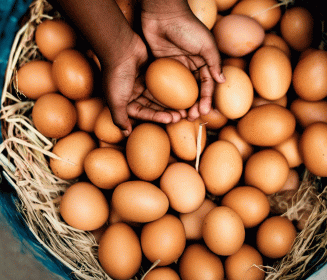
After holding at high levels in late 2025, Vietnam’s egg market faced mounting pressure in early April  2026 as prices fall, demand slowed, and oversupply strained both farmers and businesses.

Oversupply pushes prices down

The most apparent driver is an oversupply situation. Egg prices in Hanoi have fallen by USD 0.04-0.12/egg, now averaging between USD 0.92-1.04/dozen. Online sellers have offered prices below USD 0.80/dozen.

In Ho Chi Minh City, prices fell sharply. Premium native chicken eggs fell from around USD 1.68 to USD 1.36/dozen, while industrial eggs are trading at USD 1-1.20/dozen.


Weaker export demand, particularly to Cambodia, has redirected supply back into the domestic market, intensifying downward price pressure.

High inventory levels worsen the situation. Eggs must be sold quickly to recover capital, forcing traders to accept lower prices and further depress the market.

Broader food market softens

The decline in egg prices is not an isolated case. Other fresh food products also show declining prices due to abundant supply and sluggish consumer demand.

Continue after advertising.

Following the early-year consumption peak, demand has yet to recover strongly enough to absorb the large volume of goods.

This has pushed the market into a short-term adjustment phase, with eggs among the most visibly affected commodities.

Farmers struggle with rising costs

Lower egg prices do not reduce production costs. Feed remains expensive, accounting for more than 70% of total expenses.

Rising input costs can push overall production costs up by 35%. Meanwhile, demand has dropped by about 30%, preventing businesses from raising selling prices.

Producers are forced to keep prices low to maintain sales, narrowing profit margins significantly. Consumers benefit, but farmers face mounting financial strain.

Market sensitivity exposed

Vietnam’s egg market shows high sensitivity to demand shocks. Even small disruptions in exports or domestic consumption can trigger rapid price declines.

More broadly, the April downturn reflects a familiar paradox in the food sector: lower selling prices do not necessarily ease pressure on producers. Oversupply, weak exports, and high inventories drive losses despite cheaper eggs.

Unless consumption improves soon, farmers and businesses will continue to face heavy financial pressure in the coming months.


Related to Market

MAGAZINE AVINEWS INTERNATIONAL

Subscribe now to the poultry technical magazine

DISCOVER
agriNews Play - Los podcast del sector ganadero en español
agriCalendar - The events calendar of the agricultural worldagriCalendar
agrinewsCampus - Training courses for the livestock sector