








Available in other languages:
Content available at:
Despite meeting rigorous quality standards, many Vietnamese rice bran exporters continue to face administrative hurdles as they seek to penetrate the Chinese market—particularly following the signing of a new bilateral protocol.
China is currently one of the world’s largest consumers of animal feed ingredients, with consistent and long-term demand for products such as rice bran.
This presents a key opportunity for Vietnam to tap into its export potential, especially as the domestic livestock industry is working to reduce reliance on imports while promoting the export of value-added by-products.

On April 15, 2025, during Chinese President Xi Jinping’s official visit to Vietnam, the two countries signed a protocol outlining safety and quarantine requirements for rice bran and defatted rice bran exported from Vietnam to China.
The agreement is regarded as a significant turning point, paving the way for Vietnam’s rice bran to officially enter a market of over 1.4 billion consumers.
According to Pham Kim Dang, Deputy Director General of the Department of Livestock Production and Veterinary Medicine under the Ministry of Agriculture and Environment, the signing of the protocol not only opens new export channels but also reinforces Vietnam’s role in the global agricultural supply chain.


However, he emphasized that sustainable access to the Chinese market demands strict adherence to stringent standards.
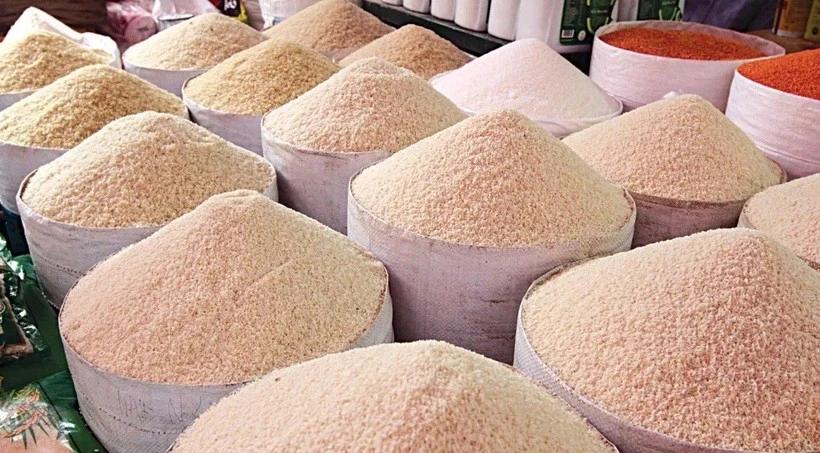
Vietnamese rice bran must comply with rigorous regulations to gain entry into China. Photo: VietnamPlus.
Under Chinese import regulations, exported rice bran must not contain harmful organisms such as Salmonella, mold, or any genetically modified substances not approved by Chinese authorities. The entire production, processing, and transportation chain must meet the importing country’s national food safety standards.
In addition, each shipment must be accompanied by a phytosanitary certificate and a food safety declaration issued by a competent Vietnamese authority.
Exporting companies must also undergo inspection and evaluation by the Department of Livestock Production and Veterinary Medicine, which then recommends eligible businesses to China’s General Administration of Customs (GACC).
Furthermore, producers and exporters are required to implement HACCP-based quality management systems and establish a comprehensive traceability process to ensure transparency and food safety.
Promoting rice bran exports is not only economically beneficial—it also helps enhance agricultural production standards, attract investment in processing technologies, protect the environment, and make better use of by-products from rice cultivation.
According to several exporters, Vietnam is fully capable of meeting China’s technical requirements. However, the main bottleneck lies in administrative procedures.
Regulatory changes between the two countries can be frequent, while updates are often inconsistent or delayed, making it difficult for businesses to complete documentation on time.
The pressure intensifies as shipping schedules leave little margin for error—there are only 3 to 4 days from packaging to port arrival in China. Any delay in documentation could result in customs clearance being denied.
Faced with this reality, exporters have proposed further simplification of administrative processes and shorter processing times for export documents.
With timely support, Vietnamese businesses are well-positioned to enhance competitiveness and fully capitalize on opportunities in the Chinese market.



Subscribe now to the poultry technical magazine
AUTHORS

Newcastle Disease: One Hundred Years On, Why Transmission Control Matters More Than Ever
Mustafa Seckin Sandikli
Egg Size Versatility in Nick Chick – Part I
H&N Technical Department
Interview with Khaled Abdel Nasser Awwad
Khaled Abdel Nasser Awwad
When the Supply Chain Breaks: Poultry Prices and the Economics of Maritime Disruption in the Middle East
Dima Chatila
Reovirus Infections in the Broiler Industry
Edgar O. Oviedo Rondón
Egg Condensation in Hatcheries: A Hidden Risk for Embryo Development, Hatchability and Chick Quality
Rasel Ahmed
From Chat to Farm Insight: Bridging the Social Data Gap in Indonesian Broiler Farming
Setiawan Guntarto
Labor Shortage in the Poultry Industry: Potential Solutions
Edgar O. Oviedo Rondón
A Comparison of Soybean Meal from Different Origins in Terms of Nutrient Composition, Amino Acid Profile, and Protein Quality
Güner GÖVENÇ
When Algorithms Start to Control Feed Composition
Henri E. Prasetyo DVM. M.Vsc







